

Routine Maintenance of UV Sterilizers
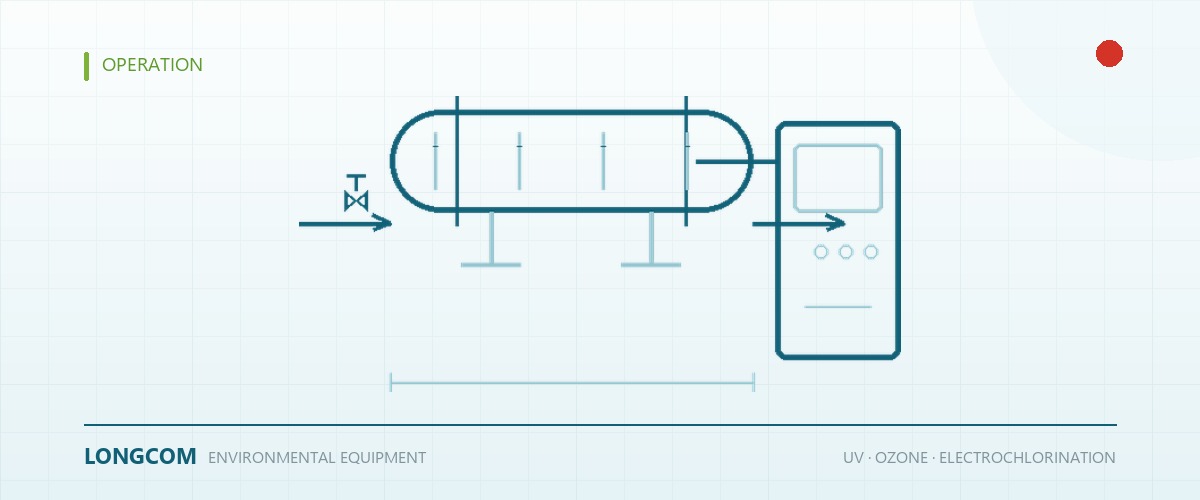
Routine maintenance is the foundation of long-term, stable operation of a UV sterilizer. A planned maintenance program extends equipment service life, sustains disinfection performance, and reduces failure rates. Longkang provides detailed maintenance guidance. This article explains the maintenance tasks and their intervals in detail.
1. Why routine maintenance matters
1.1 Maintaining disinfection performance
- Lamp ageing: UV output declines gradually
- Quartz sleeve scaling: UV transmittance decreases
- Without maintenance, the delivered UV dose may fall short of the required level
- Regular maintenance sustains disinfection performance
1.2 Extending equipment service life
- Replace lamps on schedule to avoid operation beyond their rated life
- Clean quartz sleeves regularly to maintain transmittance
- Inspect seals regularly to prevent water leakage
- Inspect electrical components regularly to prevent faults
- A well-maintained unit can achieve a service life of more than 10 years
1.3 Reducing failure rates
- Regular inspections identify hidden problems at an early stage
- Ageing components are replaced in good time
- Unexpected failures are avoided
- Downtime is reduced
1.4 Ensuring water safety
- Disinfection performance remains stable
- Treated water meets the applicable quality standards
- Hygiene incidents are avoided
- Health authority supervision requirements are satisfied
2. Daily inspection (every day)
2.1 Operating status check
- Power indicator: on (power supply normal)
- Run indicator: on (unit operating)
- Fault indicator: off (no fault present)
- Lamps: all lit, with uniform brightness
- No flickering, no abnormalities
2.2 Parameter check
- Inlet pressure: 0.1–0.6 MPa (pressure gauge)
- Outlet pressure: no more than 0.05 MPa below inlet pressure
- Flow: normal (flow meter)
- UV intensity: ≥70% (intensity monitor)
- Lamp operating hours: record the cumulative running time
2.3 Visual inspection
- Unit surfaces: no leakage, no corrosion
- Control cabinet: properly closed, no water ingress
- Pipework: no leakage
- Valves: correct position
- Surroundings: clean, no standing water
2.4 Noise check
- Operating noise: normal (≤50 dB)
- No abnormal noise (humming or clicking)
- Ballast: no unusual sound
2.5 Records
- Complete the operating log
- Record the operating parameters
- Log any abnormal conditions
- Sign off for confirmation
3. Weekly maintenance
3.1 Cleaning equipment surfaces
- Wipe unit surfaces with a clean cloth
- Remove dust and water stains
- Keep the equipment clean
- Check surfaces for signs of corrosion
3.2 Seal inspection
- Check lamp holder seals for water seepage
- Check flange seals for water seepage
- Check pipe connections for water seepage
- Rectify any leakage promptly
3.3 Electrical inspection
- Check cables for damage or ageing
- Check wiring terminals for looseness or overheating
- Check that earthing is reliable
- Check the control cabinet for water ingress or condensation
3.4 Valve inspection
- Valves open and close freely
- Valves show no leakage
- Valve identification labels are legible
4. Monthly maintenance
4.1 UV intensity measurement
- Measure with a UV radiometer
- Compare the reading with the initial value
- Prepare for lamp replacement when intensity drops to 70%
- Record the intensity value
4.2 Lamp operating hours check
- Read the lamp elapsed-time counter
- Prepare for replacement as the rated life (8,000 h) is approached
- Record lamp operating hours
4.3 Strainer cleaning
- Y-type strainer installed upstream of the unit
- Close the upstream and downstream valves
- Open the strainer drain
- Remove the filter screen and clean it
- Refit the filter screen
- Reopen the valves and check for leakage
4.4 Electrical tightening
- After switching off the power
- Tighten the wiring terminals
- Tighten the circuit-breaker connections
- Tighten the earth terminals
- Prevent overheating caused by poor contact
4.5 Control cabinet cleaning
- After switching off the power
- Remove dust from the cabinet with a dry cloth or an air blower
- Check components for signs of overheating
- Check that the ventilation openings are clear
5. Quarterly maintenance
5.1 Quartz sleeve visual inspection
- Switch off the power and isolate the water supply
- Inspect the sleeve through the sight port or by removing the lamp
- Check the sleeve surface for scaling
- Clean the sleeve if scaling is severe
- Check the sleeve for cracks or damage
5.2 Seal inspection
- Check O-rings for ageing, deformation, or cracks
- Check the seal seat for damage
- Replace aged seals
- Prevent water leakage
5.3 Water quality testing
- Test the quality of the treated water
- Total bacterial count and total coliforms
- Turbidity and colour
- Compare with the applicable standard
- Record the test results
5.4 Monitor calibration
- Calibrate the UV intensity monitor
- Compare against a reference radiometer
- Adjust the reading
- Record the calibration data
6. Semi-annual maintenance
6.1 Quartz sleeve cleaning
- Switch off the power, isolate the water, and drain the chamber
- Remove the lamps
- Remove the quartz sleeves
- Soak in citric acid or a dedicated cleaning agent
- Wipe the inner and outer walls with a soft cloth
- Rinse thoroughly with clean water
- Reinstall the sleeves and lamps
- Refill with water and carry out a pressure test
- Restore power and resume operation
6.2 Chamber interior inspection
- With the sleeves removed, inspect the chamber inner wall
- Check for scaling and corrosion
- Check for sediment deposits
- Clean the chamber if necessary
- Inspect the polished finish of the inner wall
6.3 Full electrical inspection
- Insulation resistance test: ≥2 MΩ
- Earth resistance test: ≤4 Ω
- Tighten all wiring connections
- Inspect electrical components
- Test the circuit breaker and residual-current protection
6.4 Valve maintenance
- Apply grease to the valves
- Test valve open/close operation
- Replace aged packing
- Check valve identification labels
7. Annual maintenance
7.1 Lamp replacement
- Lamps reach the end of rated life (8,000–12,000 h)
- Or UV intensity has fallen to 70%
- Replace all lamps
- Record the replacement date
- Dispose of used lamps properly (they contain mercury and are classified as hazardous waste)
7.2 Quartz sleeve inspection and replacement
- Check sleeve transmittance
- Replace when transmittance is <80%
- Replace sleeves that are cracked or damaged
- Replace the O-rings
7.3 Full seal replacement
- Replace all O-rings
- Replace the sealing gaskets
- Ensure reliable sealing
7.4 Full performance testing
- Hydrostatic pressure test
- Electrical testing
- UV intensity measurement
- Water quality testing
- Issue an annual inspection report
7.5 Third-party testing (where required)
- Testing by a qualified third-party laboratory
- Disinfection efficacy testing
- Water quality testing
- Issue a test report
8. Maintenance schedule summary
| Maintenance task | Interval | Main activities |
|---|---|---|
| Daily inspection | Daily | Operating status, parameters, visual condition |
| Weekly maintenance | Weekly | Cleaning, seal inspection, electrical inspection |
| Monthly maintenance | Monthly | Intensity measurement, strainer cleaning, electrical tightening |
| Quarterly maintenance | Quarterly | Sleeve inspection, seal inspection, water quality testing |
| Semi-annual maintenance | Every six months | Sleeve cleaning, chamber inspection, electrical inspection |
| Annual maintenance | Annually | Lamp replacement, full testing, third-party testing |
9. Maintenance precautions
- Isolate the power: switch off the power before any maintenance to prevent electric shock
- Isolate and drain the water: shut off the water supply and drain the chamber when replacing lamps or sleeves
- Wear gloves: wear gloves when handling lamps and quartz sleeves
- UV protection: UV radiation is harmful to the eyes and skin, so never look directly at a lit lamp during maintenance
- Hazardous waste handling: used lamps contain mercury and must be handled as hazardous waste, never discarded with general waste
- Records: archive maintenance records to ensure traceability
- Spare parts: keep lamps, sleeves, O-rings and other spares in stock
- Qualified personnel: complex maintenance should be carried out by qualified personnel
10. Longkang maintenance services
Longkang provides the following maintenance support for UV sterilizers:
- A detailed maintenance manual
- Technical support and troubleshooting guidance
- Scheduled maintenance service (monthly, quarterly, or annual)
- On-site maintenance service
- Genuine original spare parts supply
- Lamp replacement service
- Annual inspection service
- Maintenance training
- Lifetime technical support