

Step-by-Step: Replacing a UV Lamp and Quartz Sleeve
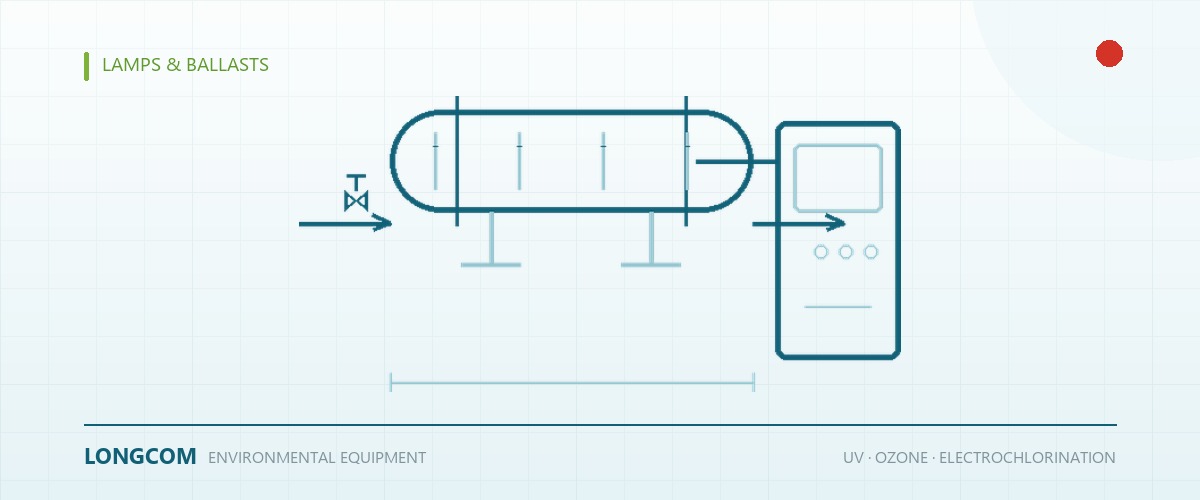
Replacing a lamp takes minutes. Doing it wrong costs a sleeve. The procedure below applies to a pressurised in-line reactor; channel modules follow the same sequence one frame at a time.
What a lamp assembly looks like
A low-pressure, ozone-free germicidal lamp emitting around 254 nm, with a through-rod filament design that resists vibration damage, and a four-pin plug matched to a preheat ballast. Preheating reduces the high-voltage, high-current shock at ignition and is one of the reasons lamp life reaches 9,000 hours or more. That 254 nm output damages DNA and RNA directly and also photolyses residual ozone and some chlorinated compounds.
When
Roughly 9,000 hours of continuous use, or once a year if you do not track hours — see replacement intervals. The quartz sleeve is a separate item: clean it annually during the lamp change and replace it at about three years to keep transmission high.
The sequence
- Isolate power at the breaker. Close inlet and outlet valves. Drain the chamber.
- Remove the silicone caps at both ends and withdraw the old lamp.
- Wipe the new lamp with a clean lint-free cloth. Never touch quartz with bare fingers — skin oils carbonise under UV-C and permanently cut transmission.
- Insert the new lamp, refit the seals and O-rings, and check for leaks before restoring power.
- Reset the hour meter and log the date, hours and intensity reading.
If the sleeve is being replaced too
Align the new quartz tube with the water seals at both ends, leaving equal allowance on each side, then tighten the caps gently. Run water through and check for seepage; adjust until it is dry. Over-torquing cracks quartz, which is the most common cause of the “sudden heavy leak” described in field fault fixes.
Wear UV-rated eye protection and gloves throughout, and never look at a lit lamp directly. The whole job is routine — but the clean-room discipline around quartz is what keeps the reactor at its validated dose.
Need a system sized for your water? Send us your flow rate, UV transmittance (UVT) and the target log reduction, and our engineers will specify the reactor and validated dose. Explore the product range or browse the Technical Library.
Condensed from our Chinese technical article. Read the full Chinese version.