

Does UV-C Escape the Reactor Chamber?
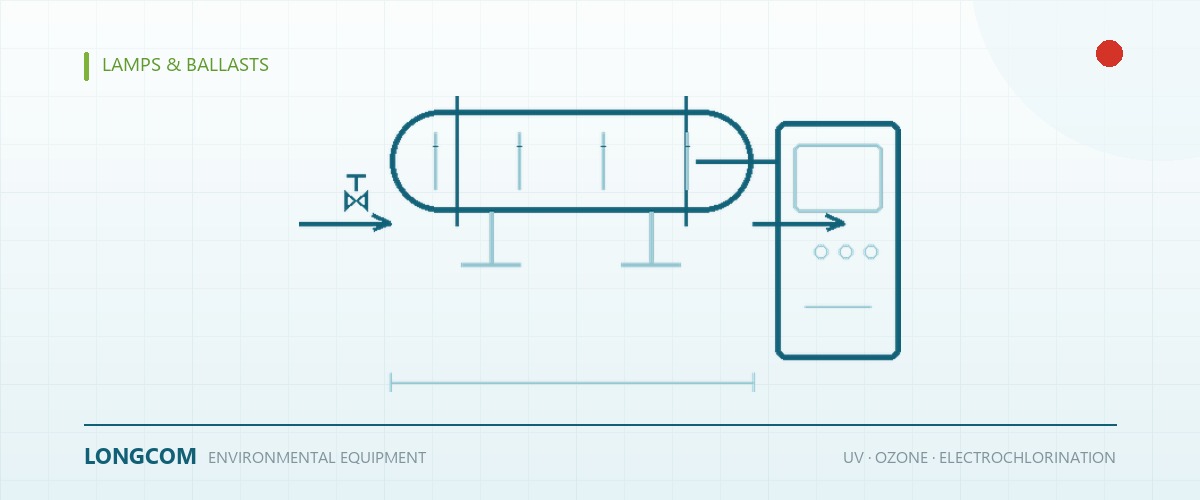
UV-C is invisible, which makes it easy to worry about. The concern is understandable and misplaced: germicidal UV is one of the easiest forms of radiation to stop.
Why the shell is a complete barrier
UVC at 253.7 nm is attenuated strongly by paper, ordinary glass and most plastics. A reactor chamber is a welded 304 or 316L stainless vessel with a polished inner face — orders of magnitude more shielding than a sheet of paper. Radiation stays inside. There is no exposure pathway from a closed, intact unit.
The components that do transmit UV are deliberately chosen: the fused-quartz sleeve around the lamp, with a clean UVT of 90% or more at 253.7 nm. Everything else in the optical path is metal or sealed. That is also why you should never operate a reactor with the chamber open or an inspection port uncovered.
The real risk is dose, not leakage
Scale on the quartz sleeve is what quietly ruins performance. Calcium, magnesium, iron and manganese deposit on the water side and block transmission. Wipe the sleeve with 75% alcohol on a lint-free cloth during service; where hardness is high, set a cleaning interval. After reassembly, check the O-rings for leaks before restoring power, and wear clean gloves — fingerprints burn into quartz under UV-C.
Turbidity deserves the same attention. Above roughly 5 NTU, flocculation, sedimentation or filtration belongs upstream. Particles shield organisms; no amount of lamp power fixes that.
Never judge by visible light
The blue-violet glow from a low-pressure mercury lamp is a discharge artefact. It correlates loosely with lamp condition and not at all with germicidal output. Use a calibrated UV sensor or a validated intensity monitor. And during any maintenance, isolate power first and wear UV-rated eye protection and gloves — the hazard exists when the lamp is exposed, not when the chamber is closed.
Need a system sized for your water? Send us your flow rate, UV transmittance (UVT) and the target log reduction, and our engineers will specify the reactor and validated dose. Explore the product range or browse the Technical Library.
Condensed from our Chinese technical article. Read the full Chinese version.