

UV Sterilizers for Water Supply Equipment
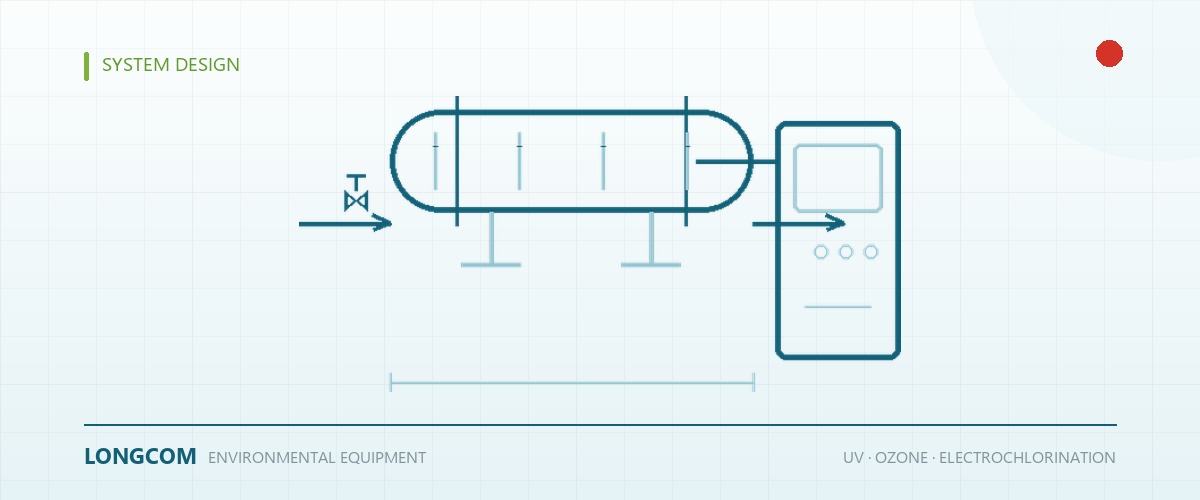
Human use of UV technology took more than 100 years to develop from an unstable early process to today’s mature applications, and our understanding of ultraviolet radiation goes back more than 200 years. UV disinfection has remained a mainstream technology that users continue to refine. It is now widely applied in air, surface and water disinfection, and water treatment was the field targeted from the beginning. Dedicated UV sterilizers for water supply equipment are now available.
1. UV in water supply systems
In cities whose water supply systems use surface water, disinfection needs to combine UV with chlorine and chloramine to secure the microbiological quality of water in the distribution network. Because surface water has a relatively high organic content, UV disinfection can effectively break down organic matter and residual chlorides from chlorine disinfection, protecting water quality.
UV radiation is divided into bands A, B, C and D; the band with real germicidal effect is UV-C, which is readily absorbed by the DNA of organisms, especially at 253.7 nm. UV sterilizers are designed around this wavelength: radiation destroys and alters microbial DNA so that bacteria die immediately or cannot reproduce.
1.1 Small groundwater systems
In towns using groundwater, these small supply systems can rely on UV disinfection alone. Design and equipment for UV disinfection must be properly qualified. As a physical disinfection method with no residual, UV offers simple operation, broad-spectrum efficiency, high effectiveness, no secondary pollution, easy management and automation. It is now widely used in water supply treatment and offers high value.
2. Low-pressure and medium-pressure lamps
The UV lamps commonly used in dedicated water supply sterilizers are low-pressure and medium-pressure types, with medium-pressure lamps now more widely adopted.
2.1 Advantages of medium-pressure lamps
Medium-pressure lamps deliver very high UV output from each individual lamp, so fewer lamps are needed to achieve disinfection and the equipment occupies the smallest area. With high-intensity medium-pressure light and strong penetration, they are better suited to disinfecting low-quality water.
Fewer lamps also mean fewer lamp-related components to replace, lower replacement cost and, to a degree, a lower failure rate. Investment in equipment, land acquisition and civil works is greatly reduced, giving economies of scale that suit large municipal wastewater plants, especially where land is scarce.
2.2 Trade-offs
Because they are medium-pressure lamps, electro-optic conversion efficiency is relatively low and power consumption is high. However, for a well-designed sterilizer, operating and maintenance cost is mainly the cost of electricity and lamp replacement; with few lamps, replacement cost is low, so medium-pressure lamps are generally more economical overall.
3. Lamp selection
When selecting lamps for a dedicated water supply UV sterilizer, factors such as space occupied and auxiliary equipment should be considered first, and different lamp types then compared, in order to choose the sterilizer that is truly suitable.