

Rural Sewage Treatment: Facilities and Fee Systems
Rural sewage treatment has always been a topic of wide concern. Nine government departments, including the Ministry of Agriculture and Rural Affairs and the Ministry of Ecology and Environment, recently jointly issued the “Guiding Opinions on Promoting the Treatment of Rural Domestic Sewage,” which requires that by 2020, eastern regions, peri-urban areas of central and western cities, and other regions with a foundation and favorable conditions should markedly raise their rural domestic sewage treatment rates. Achieving this target hinges on two issues that cannot be ignored: the construction of rural sewage treatment facilities and the establishment of a sewage treatment fee system.
Less than 10% coverage: breaking the “build but neglect to manage” pattern
According to incomplete statistics, less than 10% of villages nationwide have built sewage treatment facilities. Moreover, some facilities that have been built do not perform well: lacking follow-up maintenance funding and operations personnel, they have shut down. Villagers jokingly say they “sunbathe by day and moonbathe by night” — idle facilities built at considerable cost have become mere decorations.
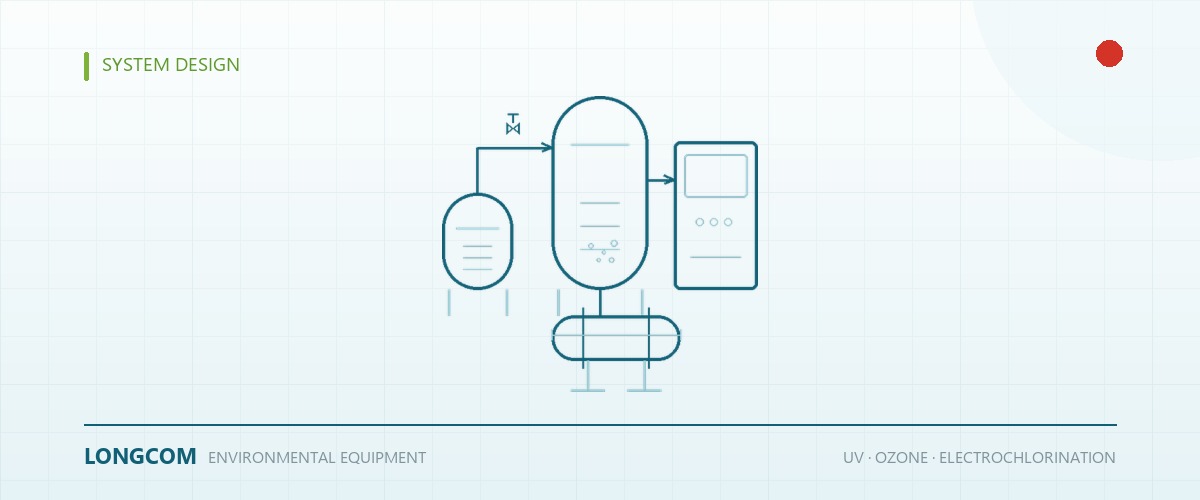
Rural sewage treatment is in fact not as simple as it may seem. It cannot be achieved with a handful of products or equipment; it requires the close coordination of multiple components. A rural sewage treatment system mainly consists of five parts: an equalization tank, anaerobic treatment, aerobic treatment, a membrane bioreactor (MBR), and a sewage disinfection tank. Beyond this, innovative combinations of treatment processes, technologies and principles are also necessary conditions for running rural sewage treatment equipment at high efficiency. And if the system can run normally without anyone watching over it, the “build but neglect to manage” problem can also be solved.
A practical example is worth sharing: the rural sewage treatment equipment of Chengdu Youpu Water Technology Co., Ltd. deployed in Sichuan. It adopts an optimized A/O process with a biofilm as the main purification body, integrating septic tanks, biogas fermentation, stabilization ponds, land treatment of sewage, constructed wetlands, biofilm processes, activated sludge, oxidation ditches and other processes. It features constant-water-level continuous inflow and outflow, good treatment performance, stable operation, unattended operation, and the flexibility to handle all kinds of domestic sewage. Fully considering the characteristics of rural sewage — large volumes and many impurities — it is a replicable and promotable rural sewage treatment solution.
Charges first, subsidies second: how to design the fee system
The other issue is the design of the rural sewage treatment fee system. Statistics show that in 2016 China had 2.617 million villages. Compared with urban sewage, rural sewage is more complex in composition and difficult to collect and treat centrally. Placing this financial burden entirely on government funding would hardly allow nationwide, effective promotion — the strength of the people themselves must be mobilized to win the battle of rural sewage treatment.
Professional institutions suggest splitting rural sewage fees into two concepts: the sewage treatment fee and the sewage treatment service fee. The sewage treatment fee is what the government charges users, while the sewage treatment service fee is what the government pays to social capital for treatment services. Some localities have already set corresponding fee standards. Statistics from more than 10 provinces and municipalities covering selected organized towns show an average sewage treatment fee of nearly 0.7 yuan, with fees ranging from 0.5 to 1.0 yuan.
Industry insiders believe that the funding source for rural sewage treatment should adhere to the principle of “charges as the mainstay, public subsidies as the supplement.” When setting rural sewage fee standards, three aspects should be considered: facility operating costs, the principle of “reasonable profit,” and the establishment of a dynamic adjustment mechanism for sewage treatment fees. The fee level should then be determined reasonably in light of village collective economic conditions, farmers’ ability to pay, and treatment costs.
What matters most is making villagers willing to pay. Two constraints stand in the way: first, users have not experienced the improvement in quality of life that sewage treatment should bring; second, construction of rural sewage treatment facilities is progressing slowly, with plans failing to keep pace with reality — if people have not received the service, why would they pay? This remains a mandatory checkpoint in building the rural sewage fee system. Improving facility construction capacity, combined with unified pricing, payment based on status and water supply mode, and fee reductions or exemptions, may become a fast track for rural sewage fee collection.
Contact Longkang for sewage treatment equipment selection and quotations.