

How to Choose a UV Self-Cleaning Water Tank
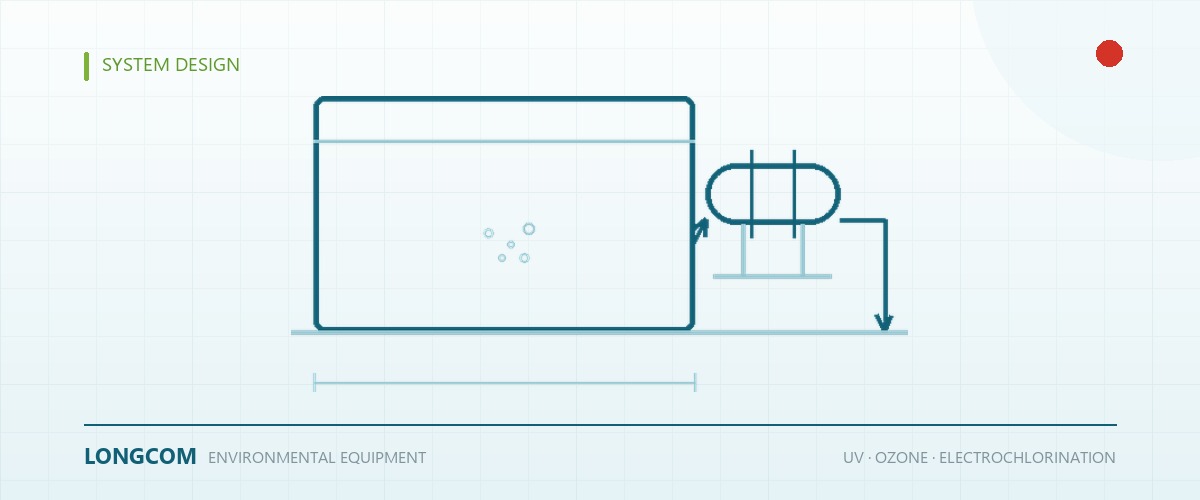
UV sterilizers have a long history and are available in an increasing number of forms; the UV self-cleaning water tank is one of them. This article explains how to select a tank self-cleaning sterilizer.
1. The development of UV disinfection equipment
The first UV disinfection system was an open-channel system. Through continued evolution, innovation and development, many more types of UV disinfection equipment have appeared, showing that the application of UV disinfection technology keeps expanding. Used to disinfect rural well water and tap water, it can raise the hygiene standard of rural domestic water. Used to disinfect wastewater, it can effectively kill viruses, bacteria and other microorganisms so that discharge meets biosafety standards.
UV disinfection equipment covers a wide range of applications and is suitable for disinfecting municipal wastewater, industrial wastewater, domestic wastewater and medical wastewater. With broad applicability, high germicidal efficiency, low cost and convenient installation and maintenance, it is a safe and professional solution for modern water disinfection.
2. Why a self-cleaning water tank is needed
The UV self-cleaning water tank is quite different from conventional UV sterilizers: it combines UV disinfection with a water supply tank. In a high-rise building, tap water is piped into the secondary supply tank and comes into contact with air; microorganisms breed in the dead-water zone at the tank bottom and water quality deteriorates. According to national health and epidemic-prevention authorities, the rate of failed hygiene indices in secondary pools and water tanks accounts for more than 90% of all cases of substandard user water. Fire tanks in high-rise buildings are mandatory, yet the water in them is unused for long periods; without treatment it is more likely to breed bacteria and microorganisms and develop unpleasant odors.
In the past the only remedy was regular tank cleaning, usually every 3 to 6 months. Cleaning requires the water supply to be stopped, and yellow water or residual chemical reagents can appear in the pipes, threatening users’ health. In this way the hygiene indices of the water cannot be guaranteed to fully meet national standards, and the quality of domestic water cannot be assured at all times.
Against this background, the UV self-cleaning water tank appeared. It has entered the water tank and sterilizer markets and is widely welcomed and adopted, greatly reducing losses of labor and resources. So how should it be selected?
3. Selection criteria
3.1 Disinfection principle
How a tank self-cleaning sterilizer is chosen depends on its disinfection principle. Common units use chemical methods, UV or ozone. Relatively speaking, UV disinfection is safer and more reliable than chemical methods, and cheaper, more efficient and more thorough than ozone disinfection. The UV self-cleaning water tank is the most widely used tank disinfection technology. Its principle is to affect the DNA or RNA of microorganisms in the tank so that they cannot reproduce, achieving a germicidal effect.
3.2 Manufacturer and qualifications
Secondly, a capable manufacturer should be chosen. The sterilizer market is mixed, and both quality and price deserve attention. Reputable manufacturers generally hold a complete set of qualifications, and this is worth checking carefully. For large orders it is worth visiting the factory, because the quality of the tank self-cleaning sterilizer directly affects the disinfection result later.
3.3 Appearance and footprint
Appearance also matters. The design should be reasonable and suit the actual installation site: the unit should be compact and not take up too much space. Provided the germicidal result is met, a smaller unit is generally better, and a more refined design can improve the user experience to a greater extent.