

What Is UV Disinfection?
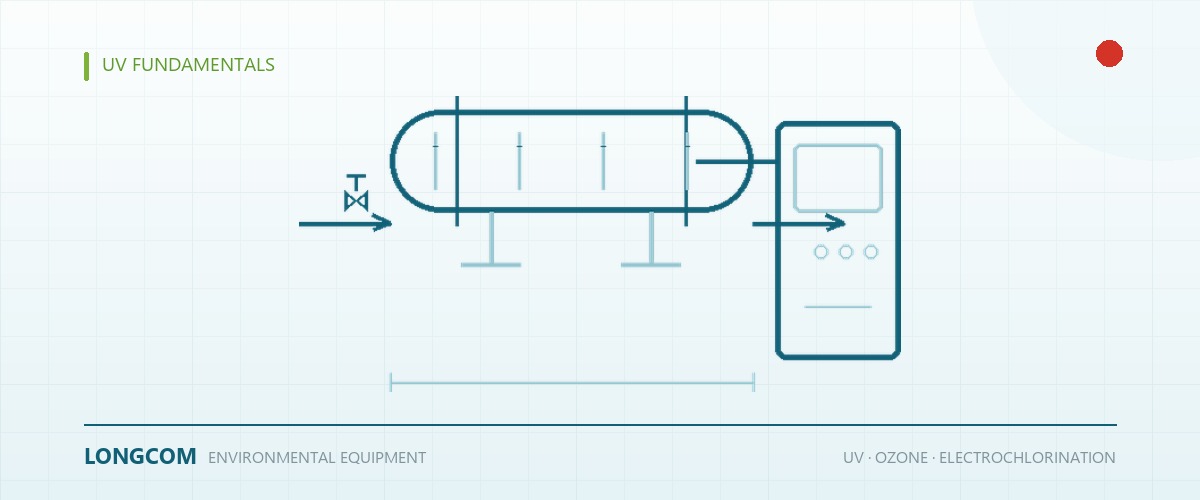
UV disinfection uses intensely irradiated water from specially designed high-intensity, high-efficiency, long-life UV-C lamps at 254 nm. The UV light destroys the DNA structure in the cells of pathogens in the water, rendering them inactive and achieving disinfection and sterilization. Compared with chlorination, UV disinfection is simple to operate and low in cost.
1. What is UV disinfection technology?
UV disinfection technology uses strong ultraviolet light generated by specially designed high-intensity, high-efficiency, long-life UV-C devices at 254 nm to irradiate water flow. The DNA structure of pathogen cells in the water is damaged and loses activity, achieving disinfection and sterilization. Compared with chlorination, UV disinfection is simple to operate and inexpensive. More than 4,000 UV disinfection systems are now in service worldwide in municipal wastewater treatment, tap water production, and related fields.
2. Key technical points of UV disinfection
2.1 Effective wavelength range
The most effective range is UV-C. Ultraviolet light at 200–280 nm coincides with the inactivation spectrum of microorganisms, and 254 nm is the peak of that spectrum.
2.2 Lamp and ballast design
It is possible to design and manufacture a 254 nm UV lamp system with low energy consumption, high efficiency, and simple operation and management. The UV lamp, its ballast (with a power factor above 0.98), and a monitoring and control system that calibrates and adjusts UV intensity form the core of UV disinfection.
The structure of a UV lamp is similar to that of a fluorescent lamp, with a solid mercury source inside the tube. Some overseas manufacturers produce low-pressure high-intensity UV lamps meeting these requirements, with a full-load service life of over 12,000 hours. The monitoring and control system allows the lamp intensity to be adjusted continuously between 50% and 100%, so output can be matched to changes in water flow — saving energy while maintaining disinfection performance.
2.3 UV dose
UV dose is the key determinant of microbial inactivation. An insufficient dose may only damage the DNA of pathogenic microorganisms rather than destroying it; such injured organisms can gradually repair themselves and revive when exposed to visible light. UV dose = UV intensity × exposure time.
Where the contact tank shape and size — and therefore the exposure time — are fixed, the dose delivered to the water depends on three factors: lamp power, the cleanliness of the quartz sleeve, and the transmittance of the wastewater. All three must be considered together to deliver an appropriate dose and ensure adequate disinfection.
2.4 Fouling control
Because UV lamps are in direct contact with the water, scale will gradually build up on the tube surface when water hardness is high, reducing the UV intensity entering the water, lowering efficiency, and increasing energy consumption.
Chemical cleaning consumes reagents and requires the disinfection unit to be shut down. Automatic cleaning to prevent scale buildup on the lamp surface is therefore the most practical operational issue in UV disinfection.
2.5 Flow regime in the contact channel
The water in the contact channel must be in a turbulent state, with a flow velocity generally not below 0.2 m/s. Under laminar flow, because UV lamps cannot be distributed perfectly uniformly, some microorganisms may pass through zones of weaker UV intensity. Turbulence brings the water into closer contact with the lamps and produces better disinfection.
3. Advantages of UV disinfection
- No chemicals are added during disinfection and no toxic substances are produced or left in the water, so there is no secondary pollution.
- When pathogenic microorganisms such as bacteria and viruses are exposed to UV-C, the photochemical reactions occurring within as little as 6 seconds cause fatal damage to their DNA. Contact time is therefore short and the required footprint is small. The world’s largest UV disinfection project, in New Zealand, treats more than 1.2 million m³ of water per day in a disinfection hall measuring only 20 m × 40 m.
- Hypochlorite and chlorine dioxide disinfectants work by destroying cell structures, so even at higher dosages they are less effective against viruses with imperfect cell structures. UV-C destroys pathogen DNA and is therefore highly effective against viruses, giving a strong overall disinfection result.
- The equipment is simple to install and maintain, safe and reliable in operation, and requires almost no action other than periodic lamp replacement. Automatic control is available and management is straightforward.
- UV has almost no destructive effect on inorganic substances, so the contact channel can be built of ordinary concrete and does not need the more demanding construction required for chlorine-based disinfectants.
Contact Longkang for sizing support and quotations.