

How to Judge UV Sterilizer Quality
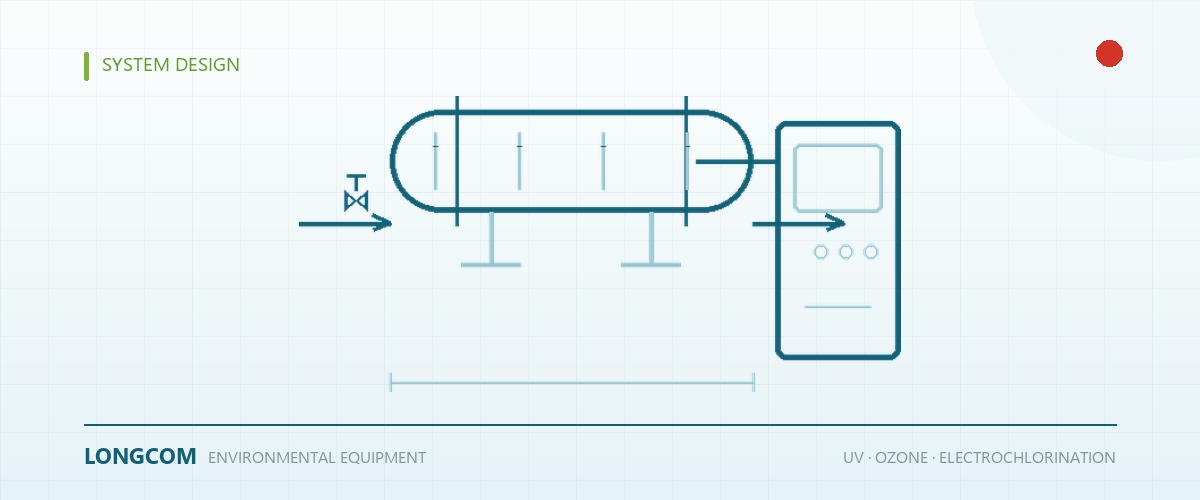
As one of the mainstream disinfection devices in use today, UV sterilizers perform well in germicidal effect, efficiency, cost and safety, and are an ideal replacement for many traditional chemical disinfection technologies.
1. Why UV sterilizer quality matters
Many buyers are still relatively unfamiliar with UV sterilizers. Choosing one without understanding the basics can easily lead to a poor purchase. This article shares practical selection tips and methods for judging the quality of a UV sterilizer.
A useful approach is to consider where a supplier can save money. To do that, you first need to understand how a UV sterilizer is built.
2. Main components of a UV sterilizer
A UV sterilizer generally consists of a UV lamp, a quartz glass sleeve, a ballast power supply, a stainless steel body and a control box. In addition, most units on the market today are equipped with an elapsed-time display and a UV intensity monitor. These two devices are now common but not essential, and can be specified according to need. Understanding the construction makes it clear which parts are prone to corner-cutting or inferior substitution, so this point is very important.
3. The two components that matter most
Of the five main parts, the stainless steel body and the UV lamp are the most likely to cause problems. These two are the key to judging quality and deserve the closest attention. They are also the main determinants of price. If two units are intended for similar flow and water quality yet their prices differ greatly, caution is warranted, because these are the parts that unreliable suppliers most often tamper with.
4. Identifying the stainless steel chamber
The stainless steel body, or shell, should be made of food-grade SUS 304 stainless steel. Some suppliers substitute 201 stainless steel for 304 to earn a higher margin, which greatly reduces shell quality. After appropriate treatment, 201 can look much like 304 and is hard to tell apart by eye alone. As a UV sterilizer manufacturer, Longkang Environmental Equipment recommends two methods for identifying 304 stainless steel:
4.1 Chemical identification solution
Simple to use: drop the solution onto the steel and judge the grade from the colour and speed of the reaction. Results appear within seconds. 201 stainless steel turns deep red, 202 red, 301 light red, while 304 shows no colour or a pale yellow.
4.2 Magnet test
A common misunderstanding is that a magnet only attracts iron, so stainless steel that a magnet sticks to is “stainless iron” and one it does not stick to is stainless steel, and that good stainless steel has no magnetism at all. In fact, the magnetism of 304 is not on the same level as other stainless steels: 304 always shows only weak magnetism. If the steel is weakly magnetic or non-magnetic, it should be 304 or 316; if it is strongly magnetic like carbon steel, it is not 304.
5. Identifying the UV lamp
The UV lamp is the core of the sterilizer, and its quality must be judged carefully. Many so-called UV disinfection lamps on the market are little more than ordinary tubes emitting blue light, with no germicidal effect at all.
The simplest check is to measure UV intensity with an instrument; if the intensity meets the requirement, the lamp is acceptable. This instrument is called a UVC intensity meter, or germicidal lamp intensity meter. Qualified UV sterilizers generally come with one built in. For this reason, we recommend specifying an elapsed-time display and a UV intensity monitor when purchasing.