

Which Wastewaters Can Ozone Treat
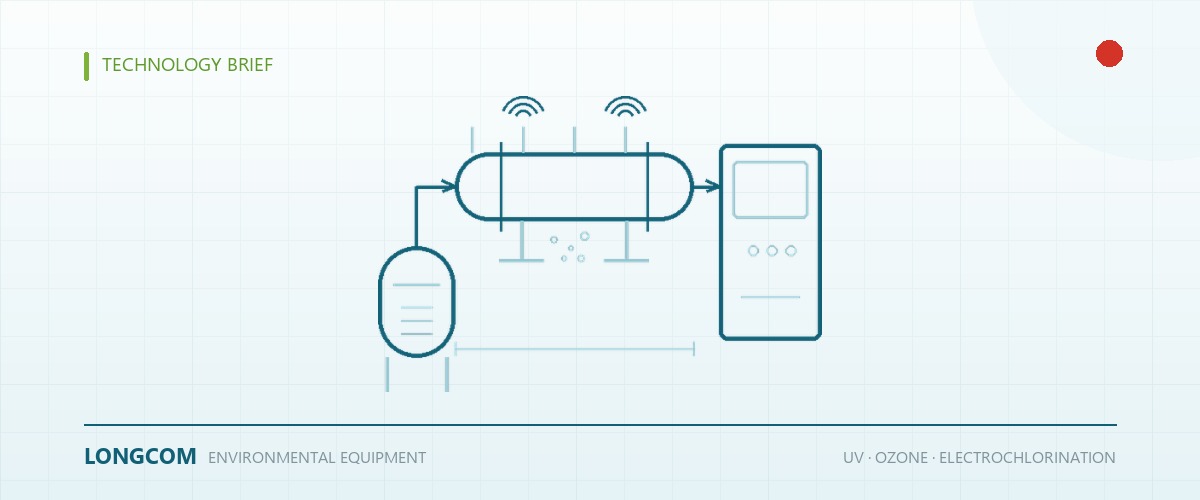
Landscape water contains small amounts of algae and faecal coliforms, with a colourity well above 25 and a distinct odour. These substances and odours are also highly biodegradable. Years of practice have shown that for landscape water, which is prone to algal growth, and for malodorous water with dissolved oxygen ≥5 mg/L, ozone treatment is the most effective and economical technology — an advanced, modern method commonly used in Europe and the United States. Ozonated water provides disinfection, decolourisation, deodorisation and algae removal, exactly the effects needed to improve landscape-water quality. After decomposing in water, ozone leaves no secondary pollution or harmful residues, and it can also increase the oxygen content of the water.
Killing harmful bacteria and viruses on fish in landscape pools ensures that the water is clean, odour-free and free of algae. For these reasons, an ozone generator using ozone technology offers major advantages in energy, investment and treatment performance. Based on extensive project experience and the characteristics of landscape sites, the ozone process is selected for its low investment, low operating cost and simple operation and management. The process delivers good treatment performance, stable operation, quick start-up, intermittent operation, mobile operation, small footprint, no sludge production (so no separate sludge-disposal installation is needed), low operating cost, and simple operation and management.
1. Wastewater applications of ozone
- Petroleum wastewater
- Industrial wastewater
- Hospital wastewater
- Papermaking wastewater
- Textile dyeing and printing wastewater
- Tannery and garment wastewater
- Chemical wastewater
- Food-processing wastewater
- Domestic wastewater
2. Role of ozone in wastewater treatment
- Degradation of refractory macromolecules and organic matter. Ozone can decompose non-biodegradable organic compounds and carcinogenic, mutagenic and teratogenic substances, improving the biodegradability of wastewater.
- Decolourisation and deodorisation. Ozone removes colour, odour, taste, phenol and chlorine pollutants from wastewater, increases dissolved oxygen and improves water quality.
- Disinfection. Ozone is an excellent oxidant and can kill chlorine-resistant viruses and spores.
- Reduction of COD and BOD.
3. Principle of ozone in wastewater treatment
Ozone has very strong oxidising power and is one of the strongest oxidants known. Its use in wastewater treatment is the most widespread of all its applications, and in every case the principle is the same: the strong oxidising power of ozone. After decomposition, ozone becomes oxygen and causes no secondary pollution.

4. Factors influencing the ozone reaction process
4.1 Factors affecting ozone concentration and yield
The humidity, temperature, flow rate and pressure of the air (oxygen-enriched air or oxygen), together with generator power and other conditions, all cause changes in ozone concentration and yield.
4.2 Reaction pathways for ozone oxidation of refractory organic matter
First, ozone participates directly in the reaction through nucleophilic or electrophilic action. This pathway is characterised by direct oxidation of organic matter, a slower reaction, selectivity and the formation of oxidation by-products.
Second, under the influence of factors such as an alkaline environment, ozone generates active free radicals — mainly ·OH — which react with pollutants. This pathway oxidises organic matter rapidly, is non-selective and yields direct oxidation products.
4.3 Effect of contact time on the oxidation reaction
Tests show that at an ozone concentration of ≥40 mg/L, a contact time of 5–10 minutes is generally appropriate. Too short a time leaves the reaction incomplete and burdens downstream processes; too long a time — beyond 15 minutes — overreacts the water, deepens the colour and reduces treatment efficiency. An appropriate reaction time should therefore be selected.
4.4 Effect of ozone dosage on the oxidation reaction
Ozone dosage plays an important role in pollutant removal. At a fixed pollutant concentration, a larger ozone dosage generally gives a higher removal efficiency and removal rate. For ozonation of this type of organic wastewater, the preferred commissioning data are 2.8–4.2 mg of ozone per mg of pollutant. Therefore, treating refractory organic pollution with high concentration and high yield is required; high concentration with low yield is clearly unsuitable, and low concentration with low yield is even less suitable.
Contact Longkang for sizing support and quotations.