

How to Select a Swimming Pool UV Sterilizer
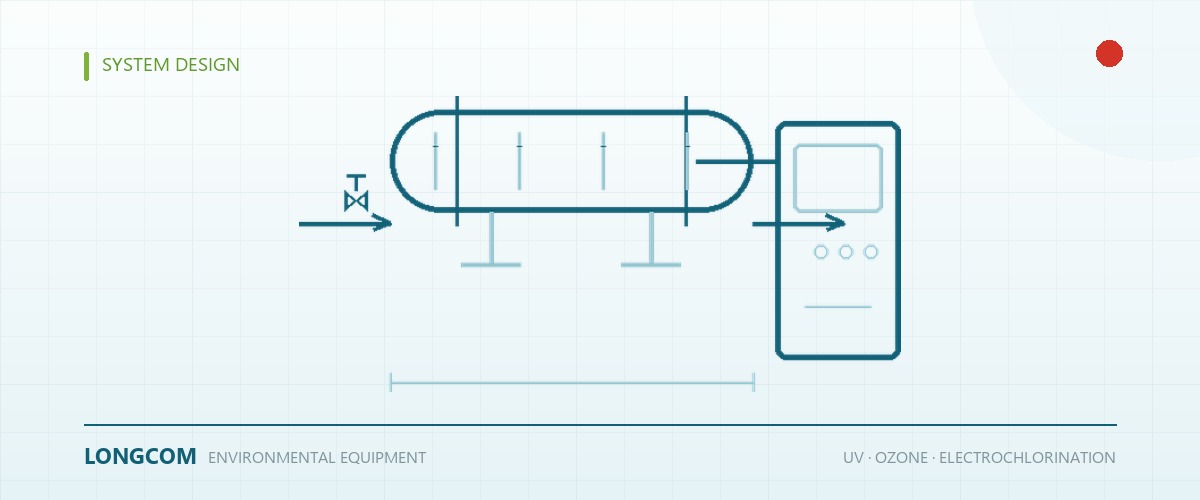
Swimming is a sport performed in water, and it places strict demands on its environment — the water quality. If the water in a swimming facility is poor, it not only defeats the purpose of exercise but can become a place where diseases spread and swimmers’ health is endangered.
Countries set strict water quality standards for swimming pools. China has issued two technical regulations for this purpose: the Hygienic Standard for Swimming Places and the Code for Design of Swimming Pool Water Supply and Drainage. At the end of the water treatment process, a UV sterilizer is used to safeguard the safety of pool water.
How should a UV sterilizer be sized for pool water? As a rule, each cubic meter of pool water requires 20–30 W of UV sterilizer power.
Pool water is warm and rich in organic matter, making it a breeding ground for pathogens such as typhoid, dysentery and hepatitis bacteria, acute conjunctivitis and pyoderma organisms. In addition to bacteria, many viruses are present — hepatitis viruses and sexually transmitted viruses, for example, often spread through water. Disinfection of pool water is therefore essential; if this step is not handled well, a swimming pool can become a place where diseases are transmitted.
Watch for the decay of UV lamp output
After a lamp has been in use for some time, people tend to judge it like a fluorescent lamp — estimating the invisible UV intensity from the visible glow. This approach easily leads to errors that affect disinfection performance. Assess it from the following aspects:
- UV penetration is not as high as imagined. Any sheet of paper, plastic or ordinary glass greatly reduces the irradiation intensity, so the lamp tube and glass sleeve must be kept clean. Wipe them regularly with 75% alcohol. If the water is hard (calcium or magnesium) or contains iron or manganese, the quartz sleeve needs periodic cleaning. After cleaning, wearing dedicated plastic gloves, refit the quartz sleeve carefully into the reactor, check the seal ring for leaks after installation, connect the power, and confirm that the detection lamp glows steadily.
- Pretreat turbid water. If the water at the site is turbid — turbidity ≥5 degrees — it should be treated by flocculation, sedimentation, filtration or similar methods to remove impurities; otherwise the germicidal effect will be greatly reduced.
- Choose the right material. Both the lamp envelope and the sleeve should be quartz glass made from natural crystal. Although several times more expensive than ordinary high-borosilicate glass, its UV transmittance exceeds 80%, while high-borosilicate glass is below 50%.
- Respect the dose requirement. Every microorganism has its own UV kill dose: K (germicidal dose) = I (irradiation intensity) × T (exposure time). High intensity for a short time and low intensity for a long time give the same result, so as lamps age and their output decays, the disinfection time should be extended to maintain quality.
Longkang is a manufacturer of high-quality open-channel UV sterilizers, pipeline UV sterilizers, tank self-cleaning sterilizers, ozone generators, constant-pressure water supply equipment and other water treatment equipment, integrating R&D, design and manufacturing. With advanced production and testing equipment, Longkang can customize and build products to customer requirements. Contact Longkang for sizing support and quotations.