

How Long Does an In-Line UV Sterilizer Last
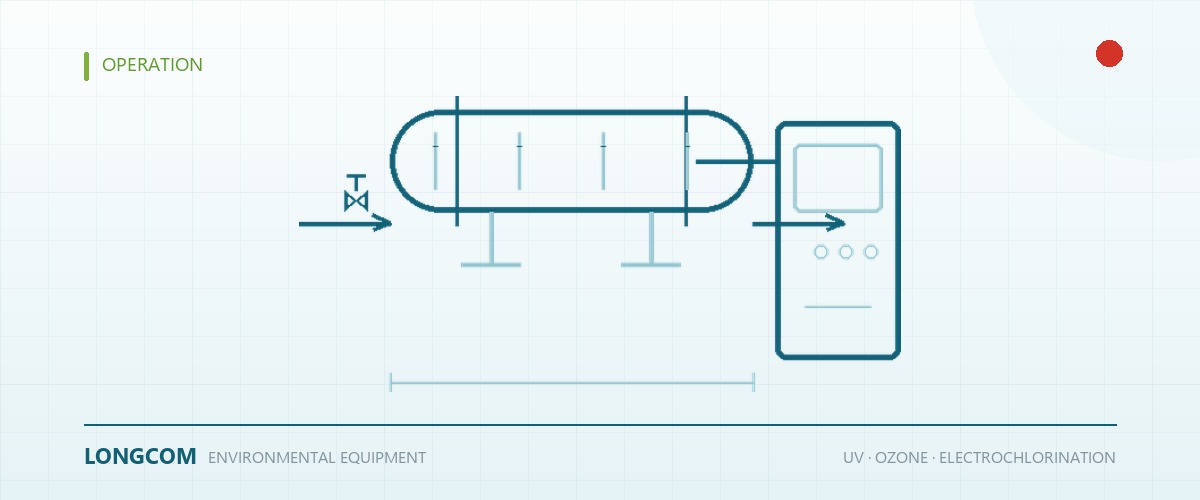
UV sterilizers are being adopted rapidly across many industries. The two main types on the market are in-line and open-channel systems, with in-line units more widely used. Buyers often focus on price, but a more important question is how long an in-line UV sterilizer will last.
1. Product quality
An in-line UV sterilizer, also called an internal UV sterilizer, is the more common form on the market today: compared with traditional open-channel equipment, its disinfection performance, safety and applicability are improved. Service life is determined mainly by product quality — particularly the UV lamp and ballast — and by the operating environment and later maintenance.
1.1 Chamber quality
Chamber life depends on the material selected and on manufacturing quality. Chambers are generally made of 304 stainless steel with a service life of about 5 to 10 years. In special coastal environments, 316 stainless steel is recommended.
1.2 Lamp quality
Good imported lamps last more than 12000 hours; good domestic lamps are guaranteed for more than 8000 hours. Household or small sterilizers use low-pressure mercury lamps, typically rated at 8000–9000 hours. Longer-life versions with a special coating can reach 12000 or even 16000 hours, at a higher price.
To maintain effective disinfection, the UV lamp in drinking-water service is normally replaced about once a year and the quartz sleeve once every three years. Where the sterilizer is fitted with a self-cleaning device, the quartz sleeve replacement interval can be longer.
1.3 Ballast quality
Ballasts generally have a long life, but they constrain the life of the UV lamp. A poor-quality ballast may fail to stabilize current at lamp start-up, shortening lamp life or causing premature lamp failure; operation can be restored by replacing the lamp or the ballast. Ballast life is generally 2 to 3 years.
Product quality depends on the manufacturer. Lamps with many impurities are hard to start and may have insufficient intensity and rapid decay; a substandard ballast can easily burn out a lamp, and the equipment may not even show a warning. Choosing a reliable manufacturer therefore matters. Longkang is a high-tech environmental enterprise specializing in the production of UV water disinfection equipment, with R&D and production staff who have worked in water disinfection for more than ten years.
2. Operation and maintenance
To a large extent, service life depends on how the equipment is operated and maintained in practice.
2.1 Reduce switching cycles
The more continuously a UV lamp runs and the fewer starts it makes, the longer it lasts. A UV lamp is a gas-discharge lamp: every start shocks the filament and sputters the electron-emissive coating, which is consumed before the filament itself fails. Even with a preheat function, starts should be kept to a minimum.
2.2 Regular cleaning
A stainless-steel body is not completely immune to rust. Food residue or other acidic or alkaline deposits may cause no visible problem in the short term, since corrosion develops gradually; without attention and regular cleaning, however, overall performance and service life are easily affected.
3. Expected service life
Taken together, an in-line UV sterilizer in normal use can last up to 10 years — a service life that compares favorably with other disinfection equipment.