

UV Sterilizer Use in China and Abroad
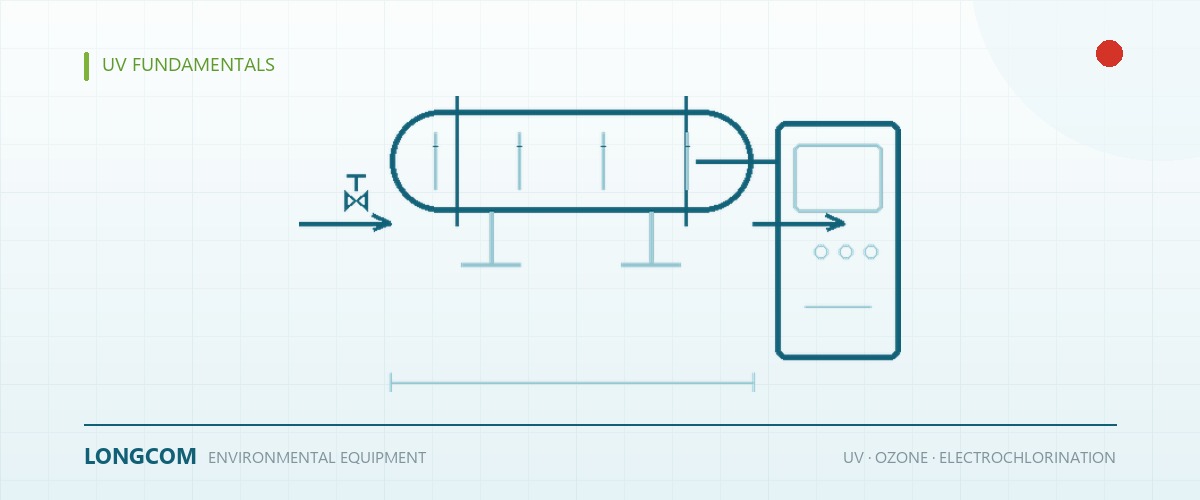
1. Product overview (working principle)
A UV sterilizer uses UV light of an appropriate wavelength to destroy the molecular structure of DNA (deoxyribonucleic acid) or RNA (ribonucleic acid) in microbial cells, causing the death of growing and/or reproducing cells and achieving disinfection. Based on modern epidemiology, medicine and photodynamics, the technology uses specially designed, high-efficiency, high-intensity, long-life UVC-band UV light to irradiate flowing water and directly kill bacteria, viruses, parasites, algae and other pathogens, achieving disinfection.
2. Development and use in China and abroad
2.1 Outside China
UV adoption is concentrated mainly in developed countries.
In Europe, more than 3,000 drinking water facilities use UV disinfection. Large installations include the Rotterdam water plant in the Netherlands (470,000 m³/d), the St. Petersburg water plant in Russia (860,000 m³/d) and the Styrum-Ost water plant in Germany (192,000 m³/d). In North America, new drinking water standards with strict limits on Cryptosporidium, Giardia and disinfection by-products have brought unprecedented attention to UV technology. After the U.S. Environmental Protection Agency (EPA) established that UV is the most effective and feasible technology for controlling Cryptosporidium and Giardia, it rapidly developed application standards for UV in drinking water treatment. The second-stage Long Term 2 Enhanced Surface Water Treatment Rule (LT2ESWTR), published in the United States in 2006, requires 3-log removal or inactivation of Giardia, 4-log of viruses and 4-log of Cryptosporidium in drinking water treatment. Because chlorination is almost ineffective against Cryptosporidium, LT2ESWTR requires existing plants to use filtration plus UV or ozone, while new plants must use filtration combined with multi-stage disinfection. Large North American drinking water plants using UV include Chicago’s Central Lake plant (180,000 m³/d), the Seattle plant (680,000 m³/d), the Victoria plant in Vancouver (510,000 m³/d) and the Montreal plant in Canada (3,000,000 m³/d). The Walkerton plant in Ontario, Canada also adopted UV technology after the pathogenic microorganism incident in 2000. The UV disinfection system under construction for New York City has a capacity of 8,360,000 m³/d, making it the world’s largest drinking water UV disinfection project. According to statistics, no large or medium-sized U.S. water plants used UV in 2000, but by 2006 the share had risen to 10%, with more UV projects under construction or in service. The use of UV in drinking water disinfection represents the international trend in disinfection technology.
2.2 China
China’s first municipal water plant to adopt UV disinfection was the Daqing Dongfeng water plant (50,000 m³/d). The system originally used chlorine dioxide disinfection and switched to a domestic UV system to reduce operating costs. However, the project lacked prior feasibility studies and follow-up application research, so it did not yield valuable data. Since 2004, Tsinghua University and partner teams have systematically studied UV disinfection for drinking water. In 2005 they established a UV pilot system in Dongguan, Guangdong (500–600 m³/d), which has been in operation ever since. From 2007 to 2010, a 100 m³/d pilot study was conducted at the Beijing No. 9 Water Plant. On the basis of this research, the UV disinfection project at Tianjin Development Zone Water Plant, Phase III (150,000 m³/d), was completed in July 2009. It was designed and commissioned together with the plant’s main treatment process. To safeguard the water supply for the World Expo, Shanghai’s Linjiang water plant also added a UV disinfection system (600,000 m³/d) during its retrofit [1].
Contact Longkang for sizing support and quotations.