

How to Select a UV Sterilizer
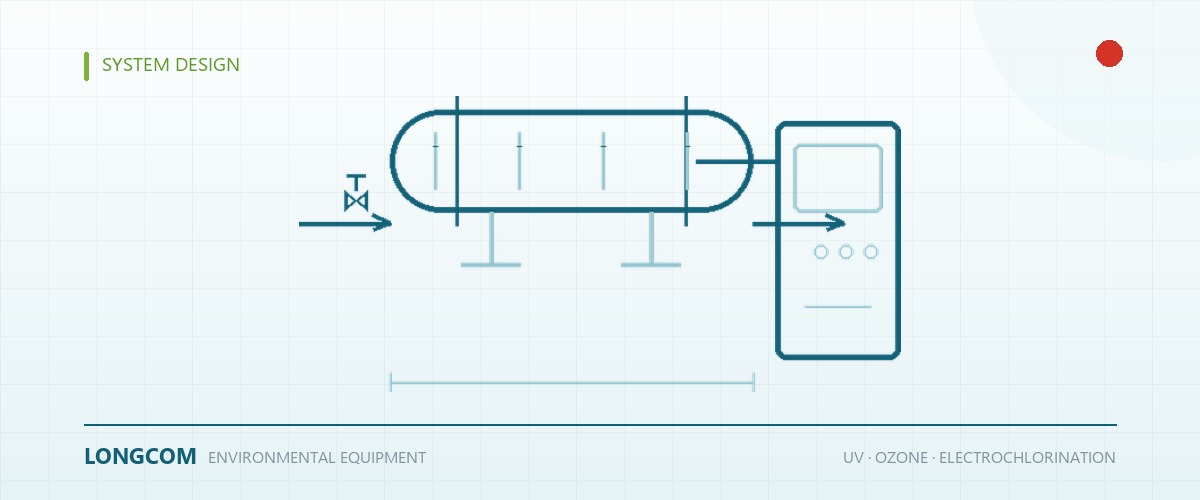
UV sterilizers are available in many types and models. When choosing one, four main factors should be considered: flow rate, water quality, target microorganisms, and the required treatment standard. This article explains how each factor affects selection.
1. Water flow rate
At a given UV dose, the cells of bacteria, viruses, algae, and other microorganisms are destroyed only after contact with UV light for the corresponding time. The factor governing contact time is flow rate: the higher the flow, the shorter the contact time; the lower the flow, the longer the contact time. Different flow rates therefore require different UV power to meet the required standard. Selection should be based on water flow rate and generally must meet disinfection requirements at peak flow.
2. Water quality characteristics
The key water quality characteristic is UV transmittance (UVT), which determines how deeply UV light penetrates the water. Pathogens must receive sufficient short-wave UV to be fully inactivated. UVT is measured by collecting a sample in a quartz tube and passing 254 nm UV light through it; the percentage of UV that passes through the sample is its UVT. The tubes commonly used have a 10 mm path length, in which case the reading is referred to as T10. Biochemical oxygen demand (BOD), chemical oxygen demand (COD), turbidity, and total suspended solids (TSS) all affect UVT. Once TSS exceeds 50 mg/L, a “shadowing” effect occurs: suspended particles shield pathogens and prevent short-wave UV from reaching them. Customers should provide their water quality characteristics so that the manufacturer can supply a UV sterilizer with suitable power and materials.
3. Microorganisms to be inactivated
Different microorganisms in water have different resistance to UV light, so inactivating different organisms requires different doses of short-wave UV. The target pathogens must be identified before a sterilizer can be selected and manufactured to suit actual conditions. Note that no disinfection method — UV, chlorine, or any other — can inactivate all pathogens. What can be achieved is a predictable reduction in pathogen numbers, known as a “log” reduction. A one-log reduction (usually written “1 log”) means a 90% reduction in the target pathogen count; a 2-log reduction means 99%, and a 3-log reduction means 99%, and so on. The required UV dose is calculated from the target organisms and the desired log reduction.
4. Required treatment standard
Different treatment standards require different UV doses, and therefore different power levels. Drinking water, food-plant water, and domestic water have relatively high disinfection requirements; swimming pool and landscape water are less demanding; and wastewater disinfection must follow the relevant discharge standards.
Customers can select a suitable UV sterilizer based on these factors. By providing flow rate, treatment standard, pipe diameter, and other parameters, the manufacturer can recommend the appropriate product. Contact Longkang for sizing support and quotations.