

How UV Disinfection Modules Work
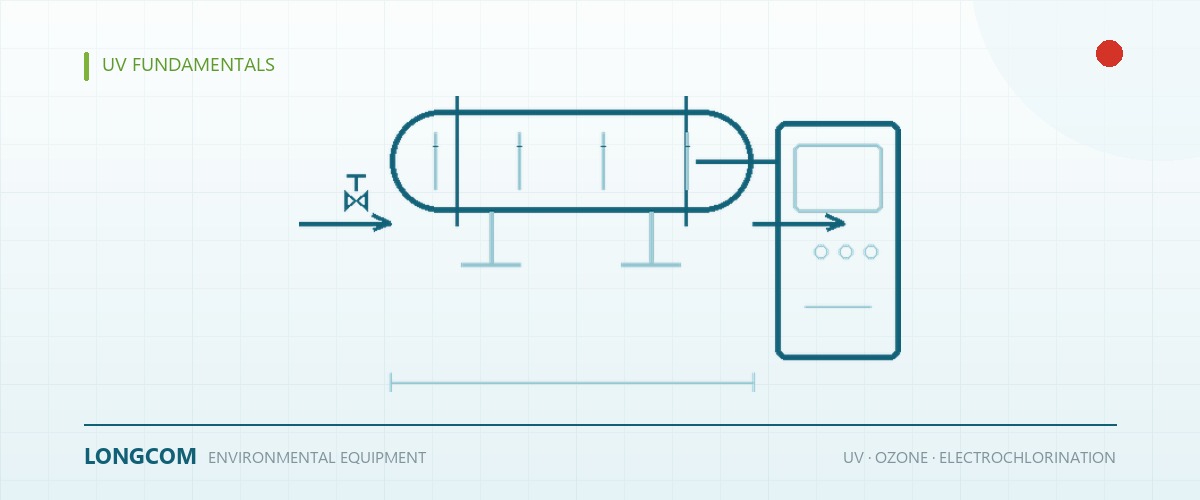
At present, UV disinfection module methods fall into two categories: chemical disinfection and physical disinfection. Chemical methods include chlorination and ozone disinfection; physical methods include UV disinfection.
1. Disinfection principle of UV modules
The principle of UV germicidal disinfection modules is that UV of an appropriate wavelength can destroy the molecular structure of DNA (deoxyribonucleic acid) or RNA (ribonucleic acid) in microbial cells, causing vegetative cell death and/or reproductive cell death and achieving the effect of UV sterilization and disinfection. Experiments show that the effective germicidal wavelength range can be divided into four bands: UVA (400–315 nm), UVB (315–280 nm), UVC (280–200 nm) and vacuum UV (200–100 nm). Only UVA and UVB can pass through the ozone layer and clouds to reach the Earth’s surface. In terms of germicidal speed, UVC lies within the microbial absorption peak range and can kill viruses and bacteria within 1 second by destroying microbial DNA, while UVA and UVB lie outside that peak and act very slowly, often requiring hours — within the seconds-scale hydraulic retention (irradiation) time of practical engineering, this part is effectively useless UV. Vacuum UV has extremely weak penetration; lamp tubes and sleeves require quartz with very high transmittance; it is generally used in the semiconductor industry to degrade TOC in water, not for sterilization or disinfection. Therefore, UV disinfection as referred to in water supply and drainage engineering actually means UVC disinfection. UV disinfection module technology, based on modern epidemiology, medicine and photodynamics, uses specially designed high-efficiency, high-intensity, long-life UVC light to irradiate flowing water, directly killing bacteria, viruses, parasites, algae and other pathogens in the water to achieve disinfection.
| Band | Wavelength | Germicidal relevance |
|---|---|---|
| UVA | 400–315 nm | Reaches Earth’s surface; slow germicidal action |
| UVB | 315–280 nm | Reaches Earth’s surface; slow germicidal action |
| UVC | 280–200 nm | Within the microbial absorption peak; kills within 1 s |
| Vacuum UV | 200–100 nm | Very weak penetration; used for TOC degradation, not disinfection |
2. Action on nucleic acids and combined processes
Research shows that UV disinfection modules kill microorganisms (bacteria, viruses, spores and other pathogens) mainly through radiation damage and destruction of nucleic acid function. The action of UV on nucleic acid can cause breakage of bonds and chains, interstrand crosslinking and the formation of photoproducts, changing the biological activity of DNA so that microorganisms cannot replicate themselves; such UV damage is lethal. UV disinfection is a physical method: it adds no substance to water and has no side effects, which is where it surpasses chlorination. It is often used in combination with other substances; common combined processes are UV+H₂O₂, UV+H₂O₂+O₃ and UV+TiO₂.
3. UV bands and effects on the human body
UV is an invisible light wave lying beyond the ultraviolet end of the spectrum, hence the name. According to different wavelength ranges, it is divided into three bands: A, B and C. The C band has wavelengths between 240 and 260 nm and is the most effective germicidal band.
UV is light with a wavelength shorter than visible light and can be divided into three types by wavelength:
- A light: short-term effects include redness, tanning and photosensitivity reactions; long-term effects include wrinkles, dark spots and skin aging.
- B light: short-term effects are redness, tanning and sunburn; long-term effects include wrinkles, dark spots and skin cancer.
- C light: cannot reach the ground because of the ozone layer; short-term effects are not visible, but long-term exposure can cause skin cancer.
We can clearly understand that B light is what easily causes sunburn. When you go happily to the beach, come back red, sore and peeling, that is the short-term effect of UVB. “Indoor UV tanning” uses the principle of avoiding the bad and taking the good: it avoids UVB and uses only UVA, so a tanning effect can be achieved in the short term without the worry of sunburn. In machines fitted with many UVA lamps, exposure time is increased gradually to achieve progressive tanning.
Modern UV disinfection module technology is based on modern epidemiology, optics, biology and physical chemistry. A specially designed high-efficiency, high-intensity, long-life C-band UV generator produces strong UVC light that irradiates air or solid surfaces. When bacteria, viruses, parasites, algae and other pathogens in the air or on solid surfaces receive a certain dose of UVC radiation, the DNA structure in their cells is destroyed, killing bacteria, viruses and other pathogens without any chemical agent and achieving disinfection and purification. It has the advantages of high efficiency, broad spectrum, low price, long life, simple operation, low operating cost and no secondary pollution.
4. Advantages of UV disinfection modules
- UV disinfection requires no chemical agent and produces no THM disinfection byproducts.
- Sterilization is fast and the effect is good.
- No odor, no noise, and no effect on the taste of water.
- Easy operation, simple management, and low operating and maintenance costs.
5. Practical application
Most UV disinfection modules use traditional low-pressure UV lamp technology; some large water plants use low-pressure high-intensity UV lamp systems and medium-pressure high-intensity UV lamp systems. Because high-intensity UV can reduce the number of lamps by more than 90%, the footprint is smaller and installation and maintenance costs are saved.
6. Scope and conditions of application
- UV disinfection can kill all kinds of microorganisms, including vegetative bacteria, spores, mycobacteria, viruses, fungi, rickettsiae and mycoplasmas; any surface, water or air contaminated by these microorganisms can be treated with UV disinfection module technology.
- UV irradiation energy is low and its penetration weak; only microorganisms receiving direct irradiation are killed, so the target must be fully exposed to UV during disinfection.
- When disinfecting rough surfaces such as paper and fabric with UV, the irradiation time should be extended appropriately and both sides should be irradiated.
- The optimum temperature range for UV disinfection modules is 20–40°C; temperatures too high or too low affect the disinfection result, so irradiation time may be extended appropriately. For air disinfection, a relative humidity below 80% is preferable; otherwise irradiation time should be extended appropriately.
- When using UV modules to kill microorganisms protected by organic matter, the irradiation dose should be increased. Suspended particles in the air can also affect the disinfection result.
7. Methods of use
7.1 Disinfection of item surfaces
Irradiation method: preferably use a portable UV sterilizer for close-range mobile irradiation; suspended UV lamp irradiation may also be used. Small items can be placed in a UV disinfection box for irradiation.
Dose and time: different kinds of microorganisms have different sensitivity to UV, so the irradiation dose used must reach the level required to kill the target microorganism. To kill general vegetative bacteria, the dose should reach 10000 µW·s/cm²; to kill bacterial spores it should reach 100000 µW·s/cm²; the resistance of viruses lies between that of vegetative bacteria and spores; fungal spores are more resistant than bacterial spores and sometimes require irradiation up to 600000 µW·s/cm²; when the target microorganism is unknown, the dose should not be lower than 100000 µW·s/cm². The radiation dose is the product of the irradiance of the UV lamp at the surface of the item and the irradiation time. Therefore, from the irradiance of the UV disinfection module light source, the required irradiation time can be calculated. For example, using a UV surface sterilizer with an irradiance of 70 µW/cm² at close range on an item surface, and choosing a dose of 100000 µW·s/cm², the required irradiation time is: 100000 µW·s/cm² ÷ 70 µW/cm² = 24 minutes.
| Target | Irradiation dose |
|---|---|
| General vegetative bacteria | 10000 µW·s/cm² |
| Bacterial spores | 100000 µW·s/cm² |
| Viruses | Resistance between vegetative bacteria and spores |
| Fungal spores | Sometimes up to 600000 µW·s/cm² |
| Unknown target microorganism | Not lower than 100000 µW·s/cm² |
7.2 Disinfection of indoor air
Indirect irradiation: a high-intensity UV air sterilizer is recommended; it provides a good disinfection effect and can be used while people are active in the room. Generally, 30 min of operation achieves qualified disinfection.
Direct irradiation: with no one in the room, suspended or mobile UV lamps may be used for direct irradiation. When an indoor suspended UV disinfection module is used, the number of UV lamps installed (a 30 W UV lamp with intensity >70 µW/cm² at 1.0 m) should average not less than 1.5 W per cubic meter, and the irradiation time should be not less than 30 min.
8. Precautions when using UV disinfection modules
- During use, keep the surface of the UV lamps clean; generally wipe once a week with a 95% absolute ethanol cotton ball, and wipe at any time when dust or oil is found on the lamp surface.
- When using UV lamps to disinfect indoor air, keep the room clean and dry and reduce dust and water mist; when the temperature is below 20°C or above 40°C, or the relative humidity exceeds 60%, extend the irradiation time appropriately.
- When using UV modules on surfaces, the irradiated surface must receive direct UV irradiation and reach a sufficient dose.
- Do not allow the UV source to irradiate people, so as to avoid injury.
Contact Longkang for sizing support and quotations.