

Boiler Scale Treatment: Sodium Ion Exchange Softening
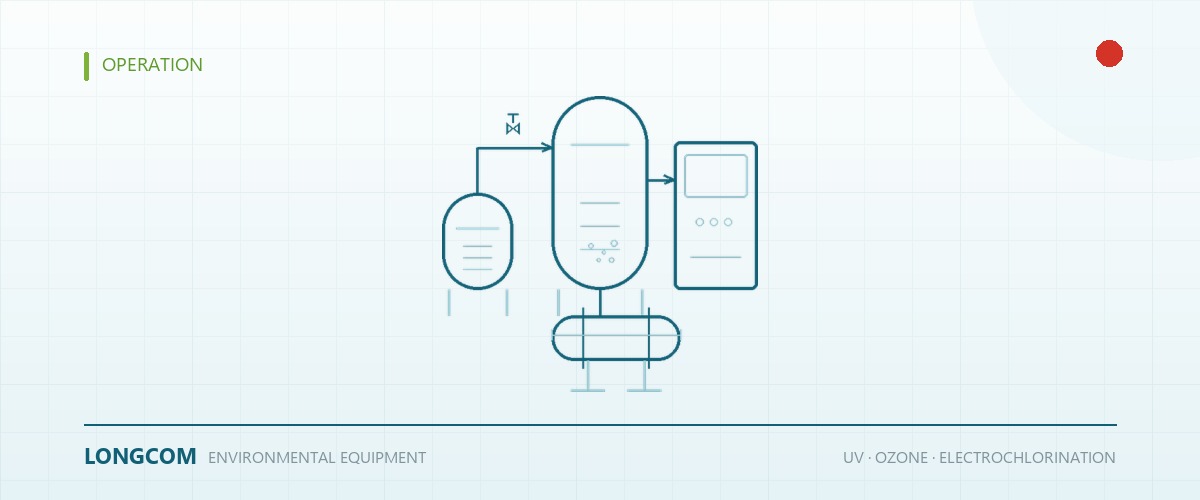
A sodium ion exchange softener reduces water hardness and is a proven method of treating scale in boilers. A soft water system consists of three parts: the softener (water softening equipment), the brine regeneration unit, and the control unit. Ion exchange is the working principle of the softening system, and its core is ion exchange resin. Since water hardness is mainly caused and indicated by calcium and magnesium, strongly acidic cation exchange resin is generally used to replace the Ca2+ and Mg2+ ions (the main components of scale) in the water. As the Ca2+ and Mg2+ content within the resin increases, the resin gradually loses its ability to remove them. Therefore, after the water softening equipment has been in service for some time, the resin must be regenerated with brine to restore its capacity and extend its service life. The control unit enables fully automatic operation of the whole system, triggering brine regeneration based on system running time or the volume of water treated.
1. Technical requirements
| No. | Parameter | Specification |
|---|---|---|
| 1 | Raw water hardness | 3–10 mmol/L |
| 2 | Residual hardness of treated water | ≤0.03 mmol/L |
| 3 | Working pressure / working temperature | 0.2–0.6 MPa / 2–50 °C |
| 4 | Automatic control power supply / power consumption | 220 V 50 Hz / 10 W |
| 5 | Resin model | 001×7 strongly acidic cation exchange resin |
| 6 | Inlet pressure below 0.2 MPa | An inline pipeline pump must be installed |
| 7 | Total pressure loss of the equipment | 0.03 MPa |
| 8 | pH range | 1–14 |
| 9 | Maximum operating temperature (sodium form) | ≤120 °C |
| 10 | Volume-change expansion rate on conversion (H+→Na+) | 8–10% |
| 11 | Regenerant concentration | NaCl 3–10%; HCl 4–5%; NaOH 4–5% |
| 12 | Regenerant dosage (NaCl 8–10%) | Solution volume : resin volume = 1.5–2 : 1 |
| 13 | HCl (4–5%) dosage | Solution volume : resin volume = 2–3 : 1 |
| 14 | NaOH (4–5%) dosage | Solution volume : resin volume = 2–3 : 1 |
| 15 | Regenerant flow rate / regeneration contact time | 5–8 m/h / 30–60 min |
| 16 | Forward wash (rinse) flow rate / rinse time | 10–20 m/h / approx. 30 min |
| 17 | Service flow rate | 10–40 m/h |
2. Factors affecting fully automatic sodium ion exchange softening
2.1 Service flow rate (gpm/ft², m/h)
The higher the flow rate, the larger the working zone required for ion exchange and the lower the effective utilization of the resin, although the water output of the equipment per unit time increases. Conversely, a lower flow rate requires a smaller working zone and improves resin utilization, but reduces the water output per unit time. An excessively high flow rate causes the raw water to exchange ions only at the resin surface, preventing water from penetrating into the resin interior. The resin surface typically provides only 20% of the exchange capacity, while the resin interior provides 80%. A reasonable exchange flow rate is therefore very important for improving both the water output and the exchange capacity of the equipment. In general, a service flow rate of 20–30 m/h (i.e. 4–10 gpm/ft²) is recommended; for two-stage softening and small units, it may be increased appropriately to below 60 m/h.
2.2 Water–resin contact time (gpm/ft³)
The longer the contact time between water and resin, the more complete the exchange and the higher the exchange capacity per unit volume of resin, but the lower the water output of the resin per unit time. The shorter the contact time, the less complete the exchange and the lower the exchange capacity per unit volume of resin, but the higher the water output per unit time. A reasonable contact time is therefore essential for the economical operation of the softener. In general, 1.0–5.0 gpm/ft³ of resin is recommended (an hourly water flow of 8–40 times the loaded resin volume).
2.3 Resin bed depth
The shallower the resin bed, the greater the influence of flow rate on its exchange capacity. Once the resin bed reaches 762 mm (about 30 in.) or more, the effect of flow rate on exchange capacity caused by bed depth can be reduced to a relatively low level. A resin bed depth of more than 800 mm is therefore recommended.
2.4 Feed water salt content
The salt content of the feed water affects the quality of the treated water, and the total content of K+ and Na+ in the feed water has a particularly strong influence on effluent quality.
2.5 Resin exchange capacity
Note: different resins provide different exchange capacities.
Correct selection and operation of a sodium ion exchange softener is the key to reliable boiler scale control. Contact Longkang for sizing support and quotations.