

UV Sterilizers for Swimming Pool Water Treatment
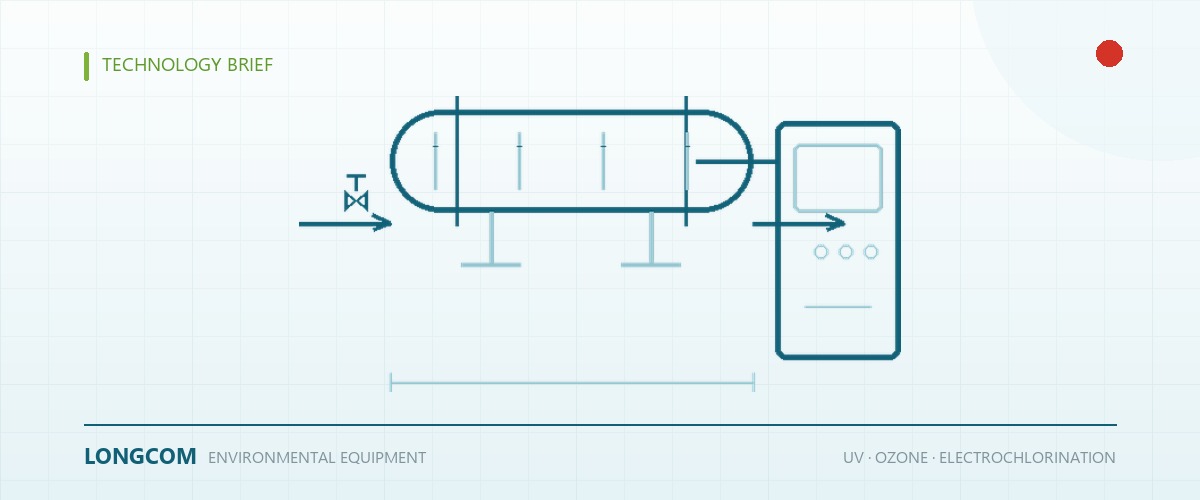
UV disinfection is widely regarded as the ideal technology for swimming pool water treatment. A UV sterilizer not only efficiently breaks down chloramines in the water but also inactivates microorganisms, leaving the water clear with no irritating chlorine smell. UV sterilizer disinfection systems can be adjusted to treat flows of many different rates, from the maximum flow of a main competition pool of 1,600 m³/h down to the small flows required for rainwater treatment.
Chloramines are harmful by-products associated with chlorine-treated pools. They produce the unpleasant odor that hangs like vapor above the pool surface, irritate the eyes and skin, and make both swimmers and pool staff uncomfortable. Chloramines not only keep people away from indoor pools; if inhaled regularly, they can also harm human health. A paper in the European Respiratory Journal has linked severe asthma in children to swimming in outdoor chlorinated pools. Chloramines are also highly corrosive and are known to cause visible damage to the structures of some indoor pools, creating safety risks. Because its broad-spectrum output almost completely destroys mono-, di- and trichloramines in the water, a UV sterilizer eliminates the chloramine problem. Reducing chloramines not only lessens corrosion of indoor pool facilities and makes the building safer, but also cuts maintenance and repair costs.
Advantages over other disinfection equipment
- High-efficiency disinfection: UV typically achieves a kill rate above 99.9% against bacteria and viruses within one to two seconds.
- Broadest germicidal spectrum: UV is effective against virtually all bacteria and viruses.
- No secondary pollution: UV disinfection adds no chemicals, so it does not create secondary pollution in the water or surroundings and changes no component of the water.
- Safe, reliable operation: with traditional technologies such as chlorination or ozone, the disinfectant itself is highly toxic and flammable; UV disinfection systems have no such safety hazards.
- Low operating cost: UV equipment occupies little space and requires simple construction, so total investment is modest and running costs are low. At a treatment scale of 1,000 tonnes of water, its cost is only about half that of chlorine disinfection.
The value of UV lies in decomposing chloramines while its physical disinfection complements chemical disinfection, avoiding the development of microbial resistance and reducing the amount of disinfectant used. It provides a healthier pool environment for swimmers and facility staff. With fewer chloramines, the pool needs less water for dilution and flushing, lowering water charges. UV disinfection is also a clean technology that produces no by-products of its own, and its applied cost is far below that of other disinfection technologies.
Another notable advantage of UV sterilizer systems is their powerful power-switching function: the system can be switched on only when actually needed, optimizing energy use and significantly reducing energy bills for pool operators. UV systems are easy to use and low in maintenance. Compared with conventional ozone treatment, a UV sterilizer costs only about one fifth as much to buy and maintain, installs in-line in the pipework, and needs no additional space.
Using UV sterilizers for rainwater treatment is a new and rapidly growing application, especially suitable for regions with relatively heavy rainfall such as Hong Kong. Collecting and reusing rainwater not only benefits the environment but also saves municipal supply for domestic and industrial users, bringing positive economic benefits to local authorities. All such UV systems are installed after the sand filter in the pool circuit and after the rainwater treatment process.
Contact Longkang for sizing support and quotations.