

How UV Sterilizers Work
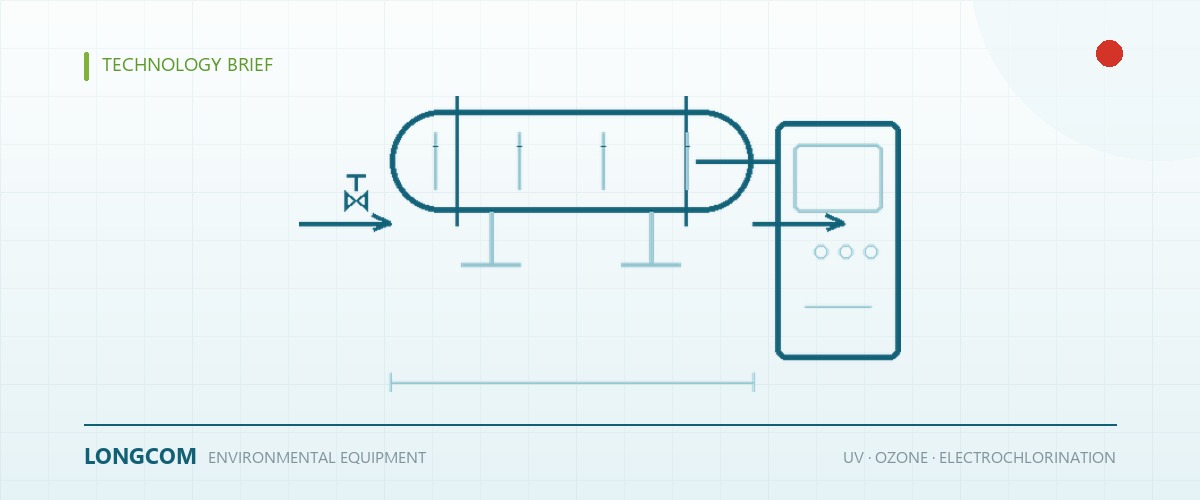
The mechanism of ultraviolet disinfection is that UV irradiation causes thymine dimers to form in microbial DNA, preventing replication and leading to death or elimination by the immune system. UV has a strong inactivation effect on pathogenic microorganisms in water. This article describes the working principle, equipment features, applications, and selection rules of Longkang UV sterilizers.
1. Disinfection mechanism
Microbial DNA exposed to ultraviolet light forms thymine dimers, which inhibit DNA replication. The typical disinfection dose for secondary-treated effluent is 15–22 mW·s/cm², and for reclaimed water it is 24–30 mW·s/cm². The formation of thymine dimers in microbial DNA suppresses replication and inactivates the organisms.
2. UV bands used in water treatment
According to differences in biological effect, ultraviolet light is classified as UV-A (320–400 nm), UV-B (275–320 nm), UV-C (200–275 nm), and vacuum UV. Water treatment actually uses the UV-C band, within which wavelengths around 260 nm have been confirmed to have the highest bactericidal efficiency.
3. Longkang UV sterilizer features
- High-efficiency UV-C lamps (LL or LH): internationally advanced low-pressure, high-intensity UV tubes with a guaranteed service life of more than 8,000–10,000 hours.
- High-transmittance, high-purity quartz sleeves, ensuring UV transmission above 90%.
- World-advanced constant-output, high-intensity dedicated UV ballasts, keeping the whole system running reliably under complex conditions.
- Premium stainless-steel reactor (304 or 316) with specially polished inner walls to improve bactericidal performance.
4. Advantages of Longkang UV sterilizers
- High bactericidal efficiency. UV kills bacteria and viruses within one to two seconds, achieving a sterilizing rate above 99.9%.
- Broad spectrum. UV has the broadest bactericidal spectrum of any disinfection method and kills almost all bacteria and viruses efficiently.
- No secondary pollution. No chemical agents are added, so the water and surrounding environment are not contaminated and no water constituents are changed.
- Safe and reliable operation. Conventional technologies such as chlorination or ozone use disinfectants that are themselves highly toxic and flammable; a UV sterilizer system has no such safety hazards.
- Low investment and operating cost. The equipment has a small footprint and simple structural requirements, so capital cost is low, as are running costs. At a throughput of 1,000 tonnes, its cost is only half that of chlorination.
5. Application areas
- Disinfection of water for food, beverages, beer, edible oil, canned goods, and cold drinks
- Ultrapure water for the electronics industry, military camps, and field water supply systems
- Hospital and laboratory water, and wastewater with high pathogen content
- Disinfection of water in residential buildings, communities, office buildings, hotels, restaurants, and waterworks
- Aquaculture processing and purification, shellfish purification, and fish processing disinfection
- Municipal wastewater disinfection
- Swimming pools and other recreational water disinfection
6. Selection principles and precautions
- The equipment only disinfects and sterilizes; it cannot change other water quality indicators such as color or turbidity. If these indicators exceed limits, other treatment methods are required first.
- Where raw water exceeds national drinking-water standards — for example, color above 15 degrees, turbidity above 5 degrees, or iron above 0.3 mg/L — pre-treatment is required before UV disinfection. If total bacteria exceed 3,000/mL or coliforms exceed 800/mL, use multiple units in series or reduce the flow as appropriate to meet disinfection standards.
- UV lamps are consumable parts and must be replaced when their service life is reached.
Contact Longkang for sizing support and quotations.