

Where UV Disinfection Lamps Are Used
UV disinfection lamps use ultraviolet light to kill bacterial vegetative forms, spores, mycobacteria, coronaviruses, fungi, Rickettsia, Chlamydia and other microorganisms. Surfaces, water and air contaminated by these organisms can all be disinfected with UV light. UV disinfection lamps are classified as high-pressure, medium-pressure and low-pressure types, although low-pressure lamps dominate most practical applications. Where are UV disinfection lamps used? This article gives a brief overview.
1. Surface sterilization
UV surface sterilization equipment is used in food, electronics, semiconductors, liquid crystal displays, plasma televisions, crystal oscillators, precision components, chemicals, medicine, health care, biology, beverages and agriculture. UV light applied to food and material surfaces provides fast, efficient, pollution-free sterilization while maintaining product quality. Compared with conventional sterilization methods, it works faster, allows continuous and batch processing, is simple to operate and causes no secondary pollution.
2. Water treatment
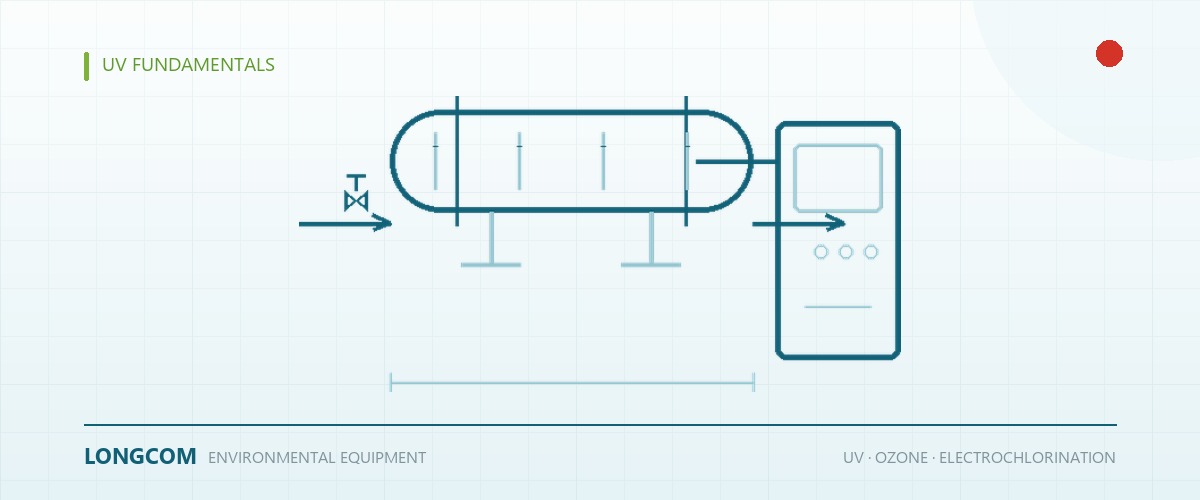
There are two main UV water treatment configurations: the immersion type, in which the UV lamp is placed directly in the water, and the flow-through type, in which the lamp is installed inside a quartz sleeve. The flow-through type is now used in most applications. Water is driven by a pump and flows outside the UV-transparent quartz sleeve, where UV radiation from the lamp disinfects the water. Flow velocity is high, with residence time in the quartz sleeve generally no more than 1 s, so the UV lamp must provide high radiation intensity.
3. Medical and healthcare applications
In healthcare, UV lamps are used mainly for air disinfection, either by direct irradiation of static air or by dynamic air disinfection. Direct irradiation of still air kills microorganisms where the light reaches, but cannot treat shadowed areas and people must not be present during disinfection. Dynamic air disinfectors overcome both limitations by circulating indoor air and sterilizing it in the process. Such units generally use the housing of a household air conditioner. Originally used only in hospitals, mobile air disinfectors are now widely used in homes, offices and public places. Their functions have diversified to include health care and prevention, making them health-related products.
4. Food hygiene in processing, filling and packaging
Hygiene and disinfection are required during food processing, filling and packaging. UV lamp disinfection is a common, low-cost and environmentally friendly method that can replace frequent chemical treatment.
4.1 Disinfection of packaging materials
Bacteria in a filling plant are killed immediately on contact with short-wave UV-C radiation. UV is therefore used to check the purity of packaging materials and determine whether they are acceptable.
4.2 Conveyor belts
UV is applied to conveyor belts transporting meat, fish, potato products, fruit and vegetables. Improving economic efficiency requires stronger hygiene control throughout food processing.
4.3 Food surface disinfection
Examples include surface disinfection of fruit and vegetable products and hard cheese.
Contact Longkang for sizing support and quotations.