

UV Sterilizer Operating Manual
1. UV disinfection requirements
- The ultraviolet used for disinfection is C-band (UV-C) radiation, with a wavelength range of 200–280 nm; the strongest germicidal band is 260–265 nm. UV sources used for disinfection must be germicidal lamps whose output meets national standards.
- At a supply voltage of 220 V, a relative humidity of 60% and a temperature of 20 °C, the 253.7 nm UV intensity of a disinfection lamp must not be lower than 70 μW/cm². Ordinary 30 W straight-tube lamps are measured at 1 m from the tube; special-purpose lamps are measured at the operating distance. The UV intensity meter used must be calibrated.
- UV output gradually declines during operation, so the intensity of the disinfection UV should be measured regularly. Once it falls below the required level, the lamp should be replaced promptly.
- The service life of a UV disinfection lamp — the time for the output of a new lamp to fall to 70 μW/cm² (for lamps ≥30 W) or to 70% of the new-lamp output (for lamps <30 W) — should be no less than 1,000 h.
2. Scope of application
- UV can kill a wide range of microorganisms, including vegetative bacteria, spores, mycobacteria, viruses, fungi, rickettsia and mycoplasma. Any surface, water or air contaminated by these microorganisms can be disinfected with UV.
- UV radiation is low in energy and penetrates poorly; it kills only the microorganisms it directly reaches. The area to be disinfected must therefore be fully exposed to the UV light.
- When disinfecting rough surfaces such as paper or fabrics, extend the exposure time appropriately and make sure both sides are irradiated.
- The optimum temperature range for UV disinfection is 20–40 °C; temperatures that are too high or too low reduce effectiveness, in which case the disinfection time may be extended. For air disinfection, a relative humidity below 80% is preferred; otherwise extend the exposure time.
- When killing microorganisms protected by organic matter, increase the UV dose. Suspended particles in air and water also affect disinfection performance.
3. Operating methods
3.1 Disinfection of object surfaces
- Exposure method: preferably use a portable UV disinfection lamp for close-range irradiation, moving the lamp over the surface; suspended UV lamps may also be used. Small items can be placed in a UV disinfection cabinet.
- Dose and exposure time: different types of microorganisms differ in sensitivity to UV. The applied dose must reach the level required to kill the target microorganism.
3.2 Disinfection of indoor air
- Indirect irradiation: a high-intensity UV air sterilizer is recommended. It delivers reliable disinfection and can operate while people are present; typically 30 min of operation achieves compliant disinfection.
- Direct irradiation: when the room is unoccupied, suspended or mobile UV lamps may be used for direct irradiation.
3.3 Disinfection of water and other liquids
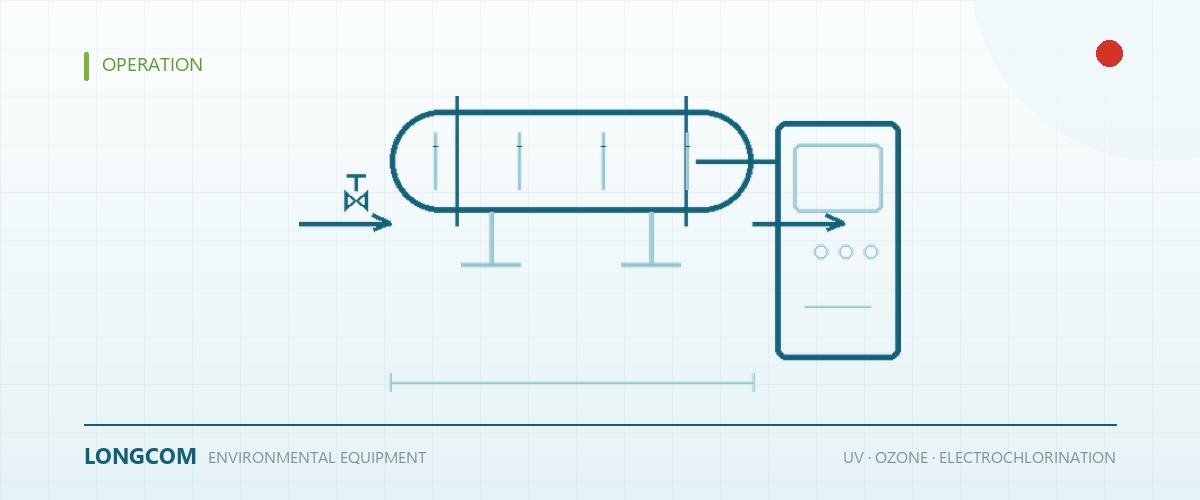
Water may be irradiated from inside the water or from outside. With in-water irradiation, the UV source must be fitted with a quartz glass protective sleeve. With either method, the water layer thickness must be less than 2 cm, and the flow rate is set according to the intensity of the UV source. The treated water must meet national standards.
4. Precautions
- Keep the lamp surface clean during operation. Wipe it once with alcohol gauze every Monday and Thursday, and wipe immediately whenever dust or grease is found on the tube.
- When disinfecting object surfaces, make sure the surface receives direct UV exposure at a sufficient dose.
- Calibrate the UV intensity meter at least once a year. The service life of UV disinfection lamps should be no less than 1,000 h.
- Never allow the UV source to shine on people, to avoid injury.
Contact Longkang for sizing support and quotations.