

What Is a UV Sterilizer
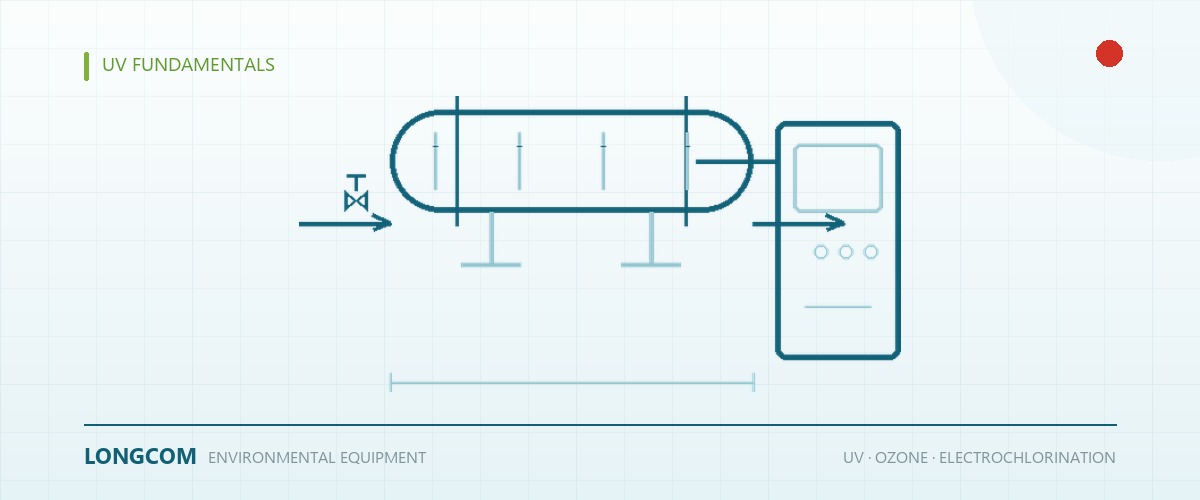
Among other disinfection methods, chlorine dioxide disinfection is known to cause serious secondary pollution, with carcinogenic residues. With ozone disinfection, the dissolution time of ozone in water is at least 40 minutes, so the effect cannot be controlled precisely by contact time. For these reasons, small ultraviolet disinfection chambers are now widely used: with no secondary pollution, water passing through can be drawn directly into a cup and consumed, with no residues and no chemical substances. UV sterilizers are used to disinfect water in aquaculture, pharmaceuticals, residential community water supply, food, beverages, water plants, and similar applications.
UV sterilizers have a very broad range of applications — wastewater plants, pharmaceuticals, industry, agriculture, and anywhere water is treated by UV. Selection and matching are therefore especially important: UV power should be matched to water quantity and quality, and the UV arrangement should be tailored to the size of the pipeline.
When selecting a UV sterilizer, do not blindly demand a particular power or size; match the unit carefully to the relevant parameters. In short, do not choose the most expensive — choose the one that fits.
Integrated wastewater treatment equipment may sometimes need to be paired with integrated wastewater treatment equipment to achieve a satisfactory result.
1. How UV disinfection works
UV radiation is an electromagnetic wave with a wavelength between 16 and 397 nm. Its photon energy is too low to ionize atoms or molecules, so it is non-ionizing radiation. By wavelength, UV is divided into UV-A, UV-B, UV-C, and vacuum UV. In the 160–200 nm range, vacuum UV is highly effective for TOC removal, with the highest TOC removal rate at 185 nm.
The UV used for disinfection and sterilization is UV-C, with a wavelength range of 200–275 nm; the band with the strongest germicidal effect is 250–270 nm. In this band, a sufficient dose of intense UV light irradiating a liquid or air instantly destroys the DNA and RNA in the cellular tissue of bacteria, viruses, and other microorganisms. When a virus or bacterium exposed in this band absorbs a dose above 6000–10000 U.W.sec/cm², its vital DNA (deoxyribonucleic acid) is destroyed, killing it immediately or depriving it of the ability to reproduce.
UV is a broad-spectrum germicidal agent, capable of killing all microorganisms, including bacteria, tubercle bacilli, viruses, spores, and fungi.
2. Applications of UV in water treatment systems
- TOC removal
- Disinfection and sterilization
- Ozone decomposition
- Removal of chlorine and chloramines
3. Features
- Rapidly and effectively kills bacteria, viruses, and other microorganisms
- Effectively degrades chlorides in water through photolysis
- Simple operation and easy maintenance
- Small footprint with large treatment capacity
- No pollution, strongly environmentally friendly, no toxic side effects
- Low investment cost, low operating cost, easy installation
- A unique inner-wall treatment process based on optical principles maximizes the use of UV inside the chamber, multiplying the germicidal effect
4. Precautions and operating instructions
- UV must not be directed at human skin.
- UV has certain requirements for ambient temperature and humidity: above 20 °C, irradiation intensity is relatively stable; between 5 and 20 °C, irradiation intensity increases with rising temperature. At relative humidity below 60%, germicidal capacity is stronger; at 70% humidity, microbial sensitivity to UV decreases; at 90% humidity, germicidal effectiveness declines by 30%–40%.
- When disinfecting water, the water layer should be less than 2 cm thick, and the water must receive an irradiation dose above 90000 µW·s/cm² as it flows through to achieve effective disinfection.
- Dust or oil on the surface of the UV lamp and sleeve obstructs UV transmission, so they should be wiped regularly (generally every two weeks) with alcohol, acetone, or ammonia water.
- When a lamp starts, it takes several minutes to warm up to a stable state, and the terminal voltage is high. Restarting immediately after shutdown is often difficult and can damage the lamp and shorten its service life, so frequent starting should generally be avoided.
Working with Longkang
Contact Longkang for sizing support and quotations.