

How to Tell a Good UV Sterilizer from a Poor One
UV disinfection technology is undeniably powerful: a physical method that acts fast, leaves no residue, and inactivates pathogens efficiently, it has won growing popularity. But in recent years, accidents caused by the improper operation of UV lamps have occurred repeatedly, so many people are particularly concerned about safety.
UV is fundamentally a professional sterilization tool, commonly used in hospitals, drinking water, the food industry, schools, and other fields. Its principle is to use UV-C light from the natural spectrum: irradiation directly damages the DNA strands of harmful microorganisms, depriving them of the ability to reproduce and self-replicate, thus achieving sterilization.
If used improperly — for example, with the lamp switched on in an unenclosed space, with the human body exposed to UV light for a long time — the skin can easily develop redness, itching, and peeling (imagine lying on a sunny beach for hours without sunscreen), while the eye conjunctiva and cornea can be injured, even causing blindness.
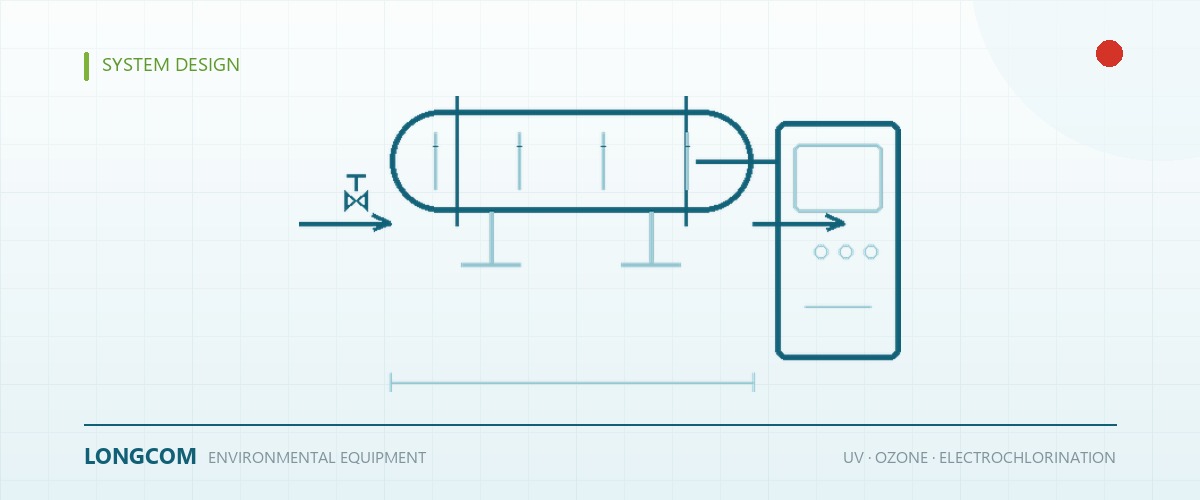
To address this problem, most users today choose UV sterilizers, which firmly enclose the UV rays emitted by the lamps inside the equipment, greatly reducing the possibility of harm to people. Used according to the procedures, they will not injure anyone.
How to judge the quality of a UV lamp
Most UV “germicidal” lamps on the market today are, at best, merely lighting tools that glow blue. The intensity of a UV disinfection lamp must meet certain requirements: to achieve a true germicidal effect, the UV intensity should be no less than 25 μW/cm² at a distance of less than 2.5 m. These figures are difficult for ordinary users to measure.
UV disinfection lamps are widely used and are the core part of every UV sterilizer, so their quality matters. How can the quality of a UV disinfection lamp be judged?
- Confirm it is a genuine UV germicidal lamp. Look up the model naming conventions of UV lamps online; this gives a fairly direct way to distinguish whether a lamp is a germicidal lamp.
- Check the matching control device. The filament and cathode materials of UV germicidal lamps are completely different from those of ordinary fluorescent lamps. To achieve the intended germicidal effect, the lamp must be matched with a dedicated control device designed for UV germicidal lamps, not an ordinary fluorescent-lamp ballast. In practice, products that pair UV germicidal lamps with fluorescent-lamp ballasts are common; the mismatched parameters make real germicidal performance impossible.
- Check the anti-UV treatment of the components. Pay attention mainly to the polished irradiated surfaces and the lamp’s own parts. UV germicidal lamps emit strong UV energy, so the materials used are usually treated to resist UV, reducing damage to the lamp housing and other parts.
In truth, these are only the basic checks an ordinary user can perform. Genuinely assessing UV lamp quality requires a professional UV radiometer costing thousands of yuan — often more than the price of the sterilizer itself — which makes this a difficult problem.
The practical answer is to rely on a reliable manufacturer. Longkang Environmental Equipment is a UV sterilizer manufacturer in South China, with advanced production equipment, strong technical capability, a stable management team, and a complete service system. The company is certified to ISO 9001, and its products have passed inspection by the Guangdong Provincial Health Inspection Center and the Guangdong Provincial Building Materials Product Quality Inspection Center, and hold the Hygiene Permit for Products Related to Drinking Water Safety approved by the Guangdong Provincial Health Department. Integrating development, design, production, installation, and after-sales service, the company provides customers with comprehensive, high-quality service.