

Components of a UV Sterilizer
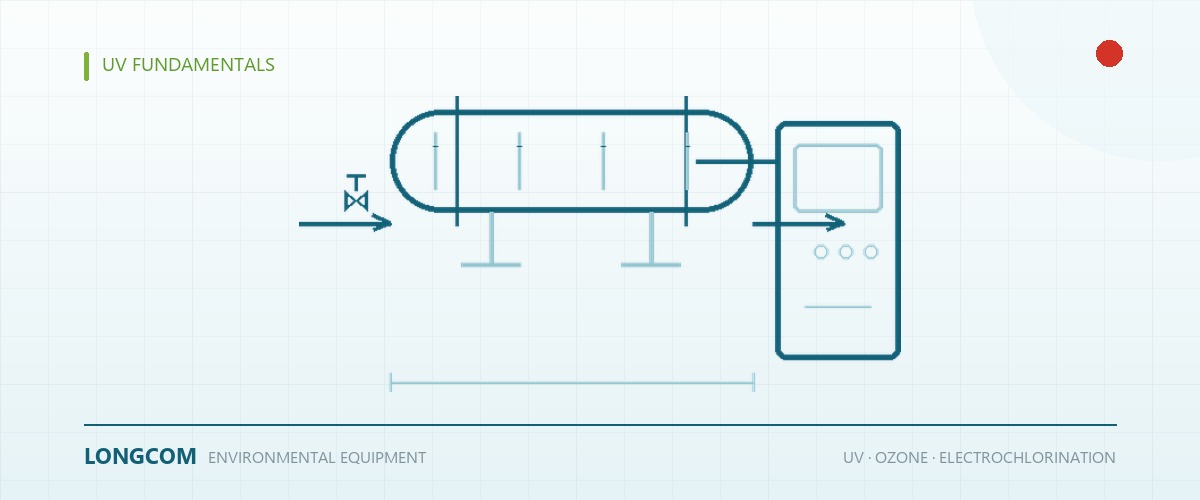
A UV sterilizer generally consists of two parts: the electrical control box and the reactor vessel.
Main body of the UV sterilizer
1. Electrical control box
The enclosure is made of 201 stainless steel, which offers good alkali and acid resistance and polishes without bubbles, with high density and no pinholes. Inside the box are the electronic components. Whether the control box is built as an integral unit with the vessel or as a separate split-type box depends on how the equipment is used.
Split-type electrical control box
2. Disinfection performance of the UV sterilizer
- Seawater, freshwater, or other water bodies treated by the UV sterilizer achieve a removal rate of 99.99% or more for viruses and bacteria, at a treatment cost of CNY 0.004–0.01 per ton of water (depending on water clarity).
- Growth of farmed stock accelerates, and hatchery and culture populations become healthier, producing healthy fry and healthy adults.
- Without changing the taste, color, or composition of beverages and other fluid foods, the removal rate of pathogenic bacteria exceeds 99.9%.
- For swimming pool water treated by UV disinfection, chlorine dosing can drop to 0.5 mg/L while the virus and bacteria removal rate stays above 99.9%.
- With UV disinfection at the point of use, domestic water reaches direct drinking-water standards.
- For municipal wastewater, the total bacterial count falls below 200 CFU/100 mL and coliform bacteria below 20 CFU/100 mL.
3. Reactor vessel
The vessel body is generally 304 stainless steel — a common stainless grade with a density of 7.93 g/cm³, also known as 18/8 stainless steel. It withstands temperatures up to 800 °C and offers high toughness and good workability, widely used in furniture decoration, industry, and the food and medical sectors. 304 is a general-purpose stainless steel used for equipment requiring a good combination of corrosion resistance and formability. To retain its inherent corrosion resistance, the steel must contain at least 18% chromium and 8% nickel. 304 is produced to the American ASTM standard.
Inlet and outlet nozzles are welded onto the vessel; flanged connections are the most common on the market, with threaded and quick-connect types available but less widely used. The flanges are also 304 food-grade stainless steel. Inside the vessel are the sleeves, and inside the sleeves the UV lamps. The sleeve material is quartz tube — a special industrial technical glass made from silicon dioxide and a very fine base material with a range of excellent physical and chemical properties:
- Good electrical insulation: the resistivity of quartz glass is about 10,000 times that of ordinary glass, making it an excellent insulating material even at high temperatures. Because of these properties, quartz glass is widely used in light sources, chemicals, machinery, electric power, semiconductors, optical communications, defense, metallurgy, building materials, and environmental protection.
- Good light transmission: quartz glass transmits well across the whole spectrum from ultraviolet to infrared, with visible-light transmittance above 93% and UV transmittance as high as 98%.
- Good thermal stability: the thermal expansion coefficient of quartz glass is extremely small, and it withstands drastic temperature changes — heated to about 1,100 °C and plunged into cold water, it will not crack.
The germicidal lamps are professional products approved by the national health and epidemic prevention authorities: low-pressure 30 W lamps with a main spectral line at 253.7 nm, a UV germicidal rate above 98%, low energy consumption, and a continuous service life above 3,000 hours.
Contact Longkang for sizing support and quotations.