

How Does a UV Sterilizer Kill Microorganisms?
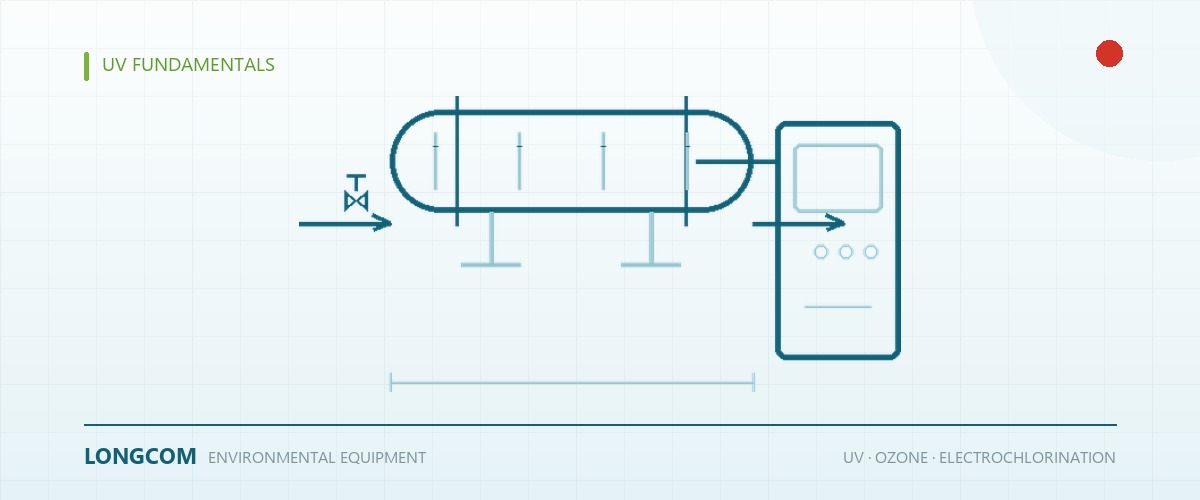
A UV sterilizer controls infection by preventing microorganisms from passing through the water from one fish, coral, or invertebrate to another. It is also used in pond applications to control free-floating algae. Operated correctly, free-floating microorganisms are killed by the UV. Note that the organism must be in the water flowing toward the sterilizer: UV has no residual effect and will not kill organisms attached to fish (such as the adult stage of flukes) or on rocks (such as attached algae).
1. How does a UV sterilizer work?
A UV sterilizer uses a germicidal fluorescent lamp that produces light at a wavelength of about 254 nm (2537 Å). Water carrying bacteria or algae passes around the lamp (or around its quartz sleeve) and is irradiated at that wavelength. As the light penetrates the bacteria or algae, it mutates the DNA (genetic material), preventing the organism from growing and reproducing.
2. What factors affect the effectiveness?
- Size and type of organism: in theory, UV radiation can kill viruses, bacteria, algae, and protozoa. Generally, larger organisms such as protozoa require a higher UV dose than smaller ones such as bacteria. There are also differences within a type: some bacteria resist UV radiation better than others.
- Lamp power: the UV output of the lamp is reflected in its wattage — the higher the wattage, the more UV produced. A germicidal fluorescent lamp’s capacity to produce UV declines with age; in most cases the lamp must be replaced every 6 months. UV is best produced at 104–110 °F (40–43 °C); lower temperatures reduce output.
- UV penetration: if the UV cannot penetrate the water, it will not be effective. Higher turbidity lowers penetration. Place the sterilizer after the biological and mechanical filters so the water entering it is as clean as possible. Salinity also affects penetration: UV penetrates freshwater better than saltwater. Finally, the cleanliness of the lamp or sleeve matters — if a film or mineral deposits cover them, the light is partially or fully blocked. The distance between lamp and water also affects performance: UV penetrates only about 5 mm into clear saltwater.
- Contact time: the longer the water is exposed to the UV, the greater the kill capacity. Contact time, sometimes called dwell time, is influenced by flow rate: the slower the flow, the longer the contact. Lamp length also affects contact time — the longer the lamp, the longer the water stays in contact. Another variable is turnover time (the time for all the water in the tank to pass through the sterilizer). Because “disinfected” water constantly mixes with the tank water as it returns, it is impossible to disinfect all the water in the tank at once; that would require removing, disinfecting, and returning all the water in one go — which would disinfect the water but be disastrous for the inhabitants! Turnover time is mathematically difficult, but can be approximated with a formula.
3. Operating temperature (continued)
UV is best produced at 104–110 °F (40–43 °C); lower temperatures reduce output. The quartz sleeve helps insulate the lamp from the cooler aquarium water, keeping UV output high.
4. Germicidal UV dose* (μW·s/cm²)
| Organism | Required dose |
|---|---|
| Viruses | 15,000 |
| Algae | 22,000 – 30,000 |
| Protozoa | 90,000 |
*Note: these are general figures; specific organisms in each group may require a higher or lower dose than shown.
5. What types of systems should use a UV sterilizer?
A UV sterilizer can be used on any aquarium; however, on small tanks (under 24 gallons) the unit cost may make it impractical. UV sterilizers are most helpful in multi-tank systems sharing one filter. In single-tank systems they help control the spread of disease during an outbreak — especially in heavily stocked tanks and in tanks with lots of live rock and corals, which make catching and quarantining sick fish difficult or rule out certain medications. Disease control is particularly important because 98% of hobbyists do not use a quarantine aquarium.
In ponds, a UV sterilizer is one of the best methods for controlling free-floating algae, letting pond owners see and enjoy their fish. It also kills free-floating bacteria in the pond water.
6. Limitations and possible harmful side effects
- A UV sterilizer is not a substitute for good biological and mechanical filtration, regular water changes, and proper control of the nitrogen cycle. Treat it as an insurance policy.
- It is ineffective against filamentous algae or other harmful or pathogenic organisms that do not swim freely in the water.
- Although it normally causes no harm, it should not be run while a tank is cycling for the first time, because it may kill the beneficial bacteria before they can attach to the biological media or gravel.
7. What is the proper maintenance schedule?
Quartz sleeves should be inspected monthly, removed, and wiped with alcohol. Some larger UV sterilizers include a wiper mechanism that eases maintenance.
For most units, the UV lamp must be replaced after 6 months of continuous use, but this period can vary, so always follow the manufacturer’s recommendations. When installing or replacing a lamp, never look directly at a lit lamp: it can cause permanent eye damage (the injury can occur without any sensation of discomfort).
Disconnect the unit from power before maintenance to prevent possible electric shock. When running, the lamp becomes extremely hot in air; immersion in water can cause it to shatter.
Contact Longkang for sizing support and quotations.