

Common Applications of UV Sterilizers
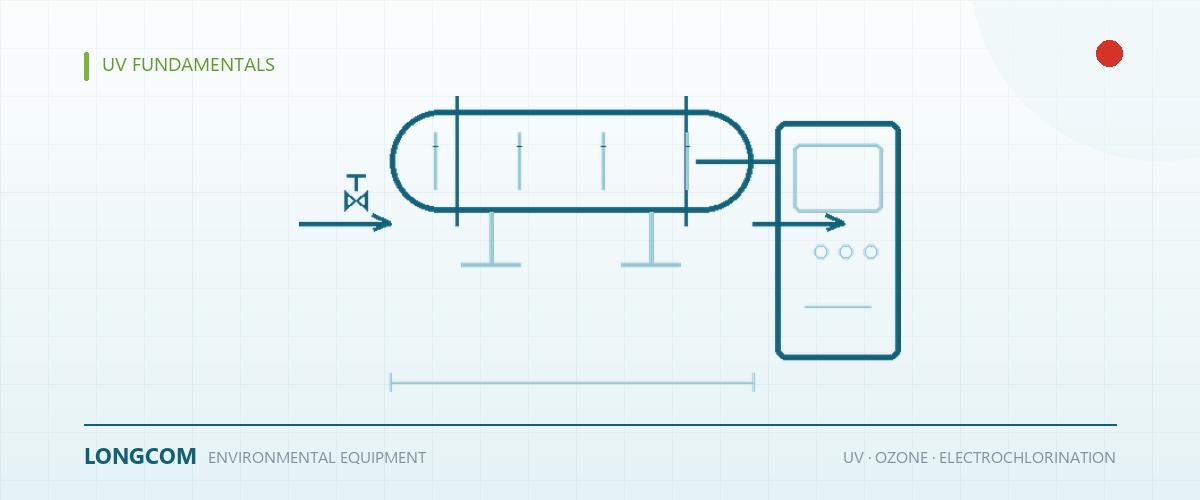
Applications of medium-pressure UV sterilizers under different operating conditions. The advantages and capabilities of UV technology are now widely recognized, and as water quality standards tighten and public safety awareness rises, the prospects for UV disinfection equipment keep expanding.
1. Application areas of UV disinfection
- Advanced oxidation: for industrial wastewater with high concentrations and poor biodegradability, photocatalytic and photochemical oxidation exert strong oxidation power, degrading large organic molecules non-selectively.
- Wastewater disinfection: UV as terminal disinfection for wastewater treatment and reclaimed-water reuse already has many engineering applications and will gain many more.
- Ozone destruction: 254 nm UV is highly effective at breaking down residual ozone, converting it to oxygen and eliminating ozone’s influence on downstream processes.
- Process water oxidation and disinfection: swimming pools and other industrial/commercial process water, plus special fields such as oilfield injection water and hospital effluent.
- Drinking water disinfection: UV effectively kills Giardia and Cryptosporidium, providing a safety barrier in drinking water treatment.
- TOC reduction: mainly in high-tech industries and laboratory systems.
- Surface disinfection: in food and beverage production most raw materials are readily consumed by bacteria and thus promote growth, yet food safety rules prohibit chemical disinfectants, so UV surface disinfection has become one of the preferred processes.
- Air disinfection: UV equipment has been used for air disinfection in hospitals and clinics for decades. With rising living standards, factories, offices, and homes will soon adopt UV air disinfection too — especially in HVAC supply and exhaust ducts, where bacteria easily breed over time and air disinfection is essential.
- Chlorine removal: UV at both 185 nm and 254 nm has been proven to break the chemical bonds of residual chlorine and chloramines.
- Other industries: food, beverages, pharmaceuticals, cosmetics, manufacturing, high-tech industries, and more.
2. Applications by sector
2.1 Wastewater treatment of all kinds
As urbanization and industrialization advance, industry and daily life generate more and more wastewater. Meeting discharge requirements everywhere demands bactericidal treatment. UV disinfection effectively kills the bacteria, viruses, and other microorganisms in wastewater, meeting the biological safety standards for discharge.
2.2 Swimming pool water treatment
In recent years, swimming pools combining leisure, fitness, and even landscape functions have appeared everywhere — in upscale venues, hotels, schools, and residential estates. A pool is a public place whose water quality is affected by many factors, so disinfection demands attention and any contamination must be handled promptly. UV disinfection produces no secondary pollution of the water or surroundings, changes nothing in the water, and protects swimmers’ health.
2.3 Tap water treatment
Tap water is water that has been disinfected and purified at a waterworks to the applicable standards for production and daily life. UV disinfection of tap water adds no chemicals and leaves the water’s pH, taste, and odor untouched.
Contact Longkang for sizing support and quotations.