

What Is an Ultraviolet Germicidal Irradiation Sterilizer?
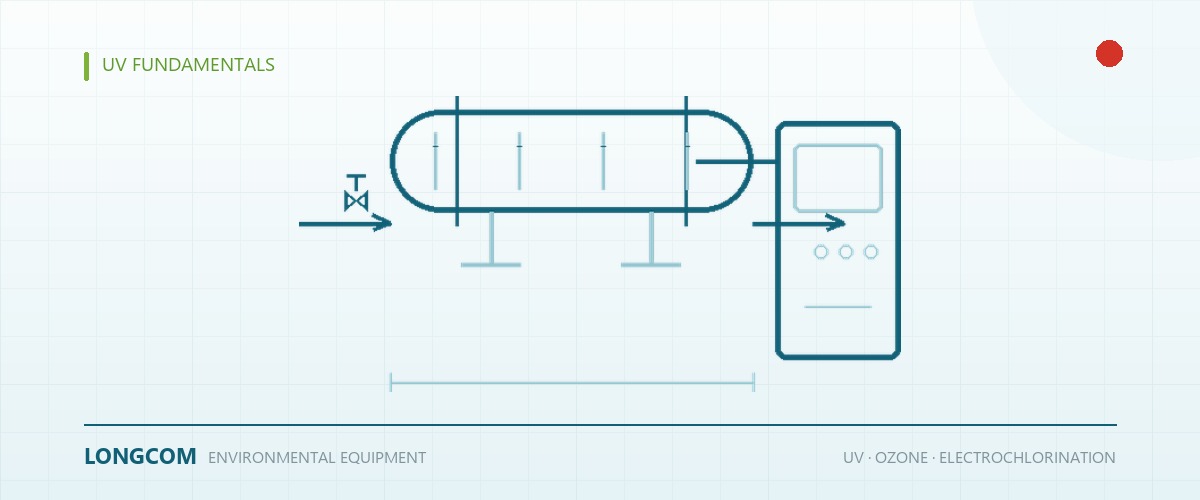
An ultraviolet germicidal irradiation (UVGI) sterilizer is a disinfection method that uses short-wavelength ultraviolet (UV-C) light to kill or inactivate microorganisms by destroying their nucleic acids and disrupting their DNA, leaving them unable to perform vital cellular functions. UVGI is used for a variety of purposes such as food, air, and water purification.
Natural UV at the earth’s surface is weak because the atmospheric ozone layer blocks it. UVGI devices can produce UV-C strong enough to create an environment hostile to microbial growth — bacteria, viruses, molds, and other pathogens — in circulating air or water systems, and can be combined with filtration to purify air and water.
Applying UVGI for disinfection has been an accepted practice since the mid-20th century. It was mainly used in medical sanitation and sterile work facilities; increasingly it disinfects drinking water and wastewater, because the containing facilities are enclosed and can be recirculated to ensure a higher UV dose. In recent years UVGI has also found growing use in air purifiers.
1. Advantages
UV water treatment can disinfect well water and surface water. Compared with other water disinfection systems, UV has advantages in cost, labor, and the need for trained operators. Chlorination treats larger volumes and provides residual disinfection, but these systems are expensive because they require special operator training and a steady supply of potentially hazardous materials. Boiling water is the most reliable treatment but is labor-intensive and costly. UV treatment is fast — in primary energy terms it is about 20,000 times more efficient than boiling.
2. Limitations
UV disinfection works best on clear, filtered water such as reverse-osmosis or distilled water. Suspended particles are a problem: microorganisms buried in particles are shielded from the UV and pass through the unit unaffected. UV systems can therefore be combined with pre-filters that remove larger organisms and clarify the water, improving light penetration and UV dose through the whole water column. Flow rate is another key factor: if the flow is too high, the water passes without sufficient UV exposure; if too low, heat can build up and damage the lamp.
One disadvantage of UVGI is that, whereas chlorinated water resists recontamination (until the chlorine dissipates), UV-treated water does not, so transport and delivery must be arranged to avoid re-infection.
3. Applications
3.1 Air disinfection
UVGI can disinfect air with long-term exposure. The disinfection effect is a function of UV intensity and time, so it is less effective for fast-moving air or when lamps are perpendicular to the airflow, because exposure time is greatly reduced. Air purification UVGI systems can be standalone units with shielded UV lamps and a fan that forces air past the lamps, or installed inside forced-air systems so that air circulation carries microorganisms past the lamps. The keys are lamp placement and good filtration to remove dead microorganisms. Forced-air designs can obstruct sightlines, leaving UV-shadowed areas. However, UV lamps placed at cooling coils and drain pans prevent microbial growth in these naturally damp locations.
3.2 Water disinfection
UV water disinfection is a purely physical, chemical-free process, effective even against parasites such as Cryptosporidium or Giardia that resist chemical disinfectants. UV can also remove chlorine and chloramine from water by photolysis, which requires a higher dose than normal disinfection. Disinfected microorganisms are not removed from the water, and UV does not remove dissolved organics, inorganic compounds, or particles. UV oxidation processes, however, can simultaneously destroy trace chemical contaminants and provide a high level of disinfection — for example, the Catskill-Delaware water UV disinfection facility in New York, the world’s largest indirect potable reuse plant, commissioned on 8 October 2013, with 56 energy-saving UV reactors treating 2.2 billion US gallons (8.3 million m³) per day for New York City.
It was once thought UV disinfection was more effective against bacteria and viruses with more exposed genetic material than against larger pathogens with outer coats or cyst forms (such as Giardia) that shield their DNA. More recent findings show UV radiation is somewhat effective against Cryptosporidium, which led to its adoption as a viable drinking water treatment. When tests are based on infectivity rather than excystation, Giardia in turn proves highly UV-sensitive; protozoa can survive very high UV doses but are sterilized at lower ones.
3.3 Wastewater treatment
UV effluent treatment increasingly replaces chlorination, largely because of concerns that chlorine reacting with organic compounds in wastewater forms potentially toxic and persistent chlorinated organics, and because of the environmental risks of storing chlorine gas or chlorinated chemicals. Each UVGI-treated waste stream must be tested for potential interference from suspended solids, dyes, or other substances that block or absorb UV. According to the World Health Organization, “the cost of UV units treating small volumes (1–several liters) or low flows (1–several liters per minute) of water at community level is estimated at USD 20 per cubic meter, including electricity and consumables and the annualized capital cost of the unit.”
3.4 Aquariums and ponds
UV sterilizers are commonly used to control unwanted microbes in aquariums and ponds. UV radiation ensures pathogens cannot reproduce, reducing the likelihood of disease outbreaks.
Aquarium and pond sterilizers are usually small units with hose fittings that let water from a separate external filter or pump flow through. Inside, water passes as close to the UV source as possible. Pre-filtration is critical because turbidity reduces UVC penetration. Many better UV sterilizers provide longer dwell times and restrict the space between the UVC source and the inner wall of the sterilizer.
Contact Longkang for sizing support and quotations.