

Swimming Pool Ozone or UV Disinfection?
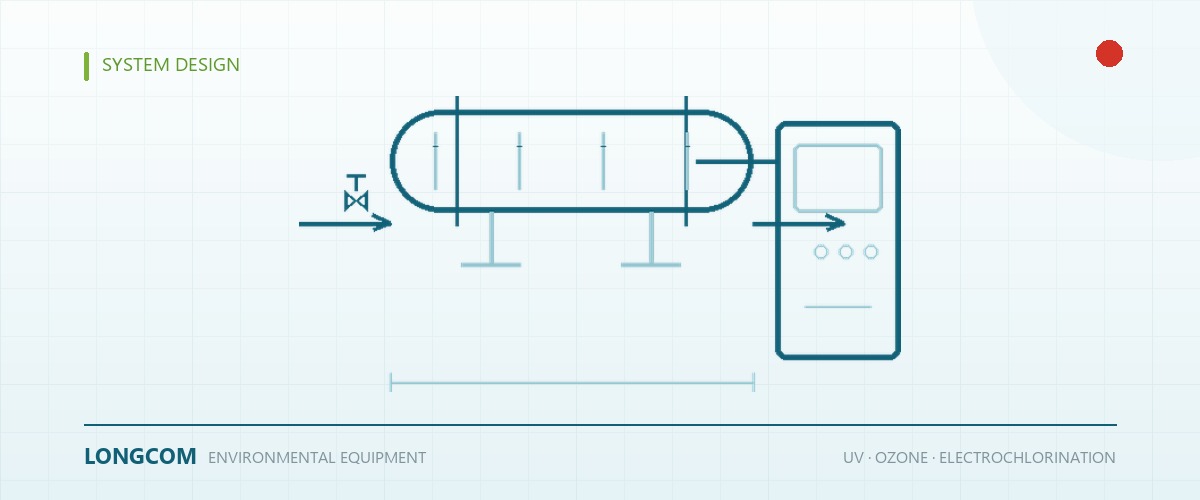
Ozone generators and medium-pressure UV sterilizers have been used for decades to disinfect drinking water and swimming pools. Both are more natural, environmentally friendly alternatives to chemical disinfectants and their by-products — effective, safe, and reliable methods of water sanitation. To truly understand how each system works and the differences and similarities between them, we need to take a chemistry lesson…
1. How each system works
1.1 Medium-pressure UV sterilizer
At short wavelengths (200–400 nm), UV light effectively destroys 99% of microorganisms such as pathogens, viruses, and molds as the pool water passes through the unit.
For a deeper science lesson, read on… UV kills these microorganisms by destroying the nucleic acids inside them, wrecking their DNA so they cannot reproduce and lose their ability to cause disease. In short, UV destroys the viability of microorganisms. UV units are usually plumbed in-line and work with the filter pump circulation; as water passes through the unit, the UV light penetrates the cells of the pathogens, disinfecting the water.
1.2 Ozone generator
An ozone generator kills bacteria and viruses by oxidation — 200 times stronger than chlorine. What is oxidation? Starting from the top… ozone (O₃) contains three oxygen atoms (versus the two atoms of the oxygen we normally breathe); the third oxygen atom makes ozone extremely reactive. That atom eagerly binds to other molecules. When a contaminant such as a bacterium or virus contacts ozone, its chemical structure changes; as more and more ozone attacks these compounds, the viruses and bacteria are ultimately destroyed. The long and short of it: ozone kills bacteria by destroying their cell walls. Once the cell wall is destroyed, the cell cannot survive.
But how does an ozone system produce ozone? There are two methods: UV light and corona discharge. Corona discharge applies high voltage to a metal grid sandwiched between two dielectric materials; the high voltage passes through the dielectric to a grounded screen/plate, generating ozone from the oxygen in the chamber air. UV ozone generation occurs when UV light at a wavelength of 254 nm strikes oxygen atoms. Both processes split oxygen molecules into single oxygen atoms (O); these atoms bind to another oxygen molecule (O₂) to form ozone (O₃).
2. Facts about pool sanitation
Although UV systems and ozone generators are both very effective at killing organisms, inactivating viruses, and breaking down chloramines, neither provides long-lasting residual sanitation. These methods lack the “staying power” of chlorine- and bromine-based disinfectants. Because swimmers and the environment continuously introduce new bacteria and impurities into pool water, you must use a traditional sanitizer (such as chlorine or bromine) alongside your alternative disinfectant. The chlorine or bromine provides a residual level of protection in the pool water and works with the alternative disinfectant to keep the pool free of microorganisms and to keep underwater surfaces free of algae. Using an alternative disinfectant such as UV or ozone can reduce chemical use by up to 75%.
Besides the large reduction in chemicals, both alternative disinfectants can eliminate disinfection by-products (such as chloramines) from pool water — by-products linked to breathing irritation, eye and skin irritation, and even cancer.
3. Which system suits you and your pool?
- Maintenance: with a UV system you only replace the lamp and quartz sleeve about once a year, plus the necessary winterizing precautions so the cold does not harm the equipment. Ozone cells need no replacement but require regular annual cleaning.
- Safety: UV lamps are housed in sturdy enclosures. The UV cannot leave or escape the disinfection chamber, so it never enters the pool. There are no residual effects harmful to people, animals, aquatic life, plants, or the environment. Ozone, used correctly, is also safe; but without proper safety measures, high ozone concentrations cause health problems.
- Residual protection: water is disinfected by UV only while it is in the UV chamber; once it leaves the chamber, no further primary sanitation occurs. With ozone, oxidation happens in the generator; ozone enters the pool at low levels, providing extra oxidation, but its life is very short.
In fact, there is no right or wrong system. UV systems and ozone generators are both effective alternative disinfectants, and relatively expensive. Some pool builders or professionals may prefer one system over the other; certain systems come into or fall out of “fashion” in the industry. The most important consideration is which system will work best with the new pool you have or are planning — something to discuss with your pool builder or professional, or you can always contact our sales team with questions or concerns.
Contact Longkang for sizing support and quotations.