

How to Choose a UV Sterilizer for Your Aquarium
Any aquarium owner knows how important filtration is to keeping the system clean. But one thing an aquarium filter cannot remove is microorganisms — the tiny organisms that usually turn the water green, caused by external factors such as polluted source water and decomposing fish food on the tank bottom. The only way to tackle them is a UV sterilizer: essentially a UV lamp that emits light harmful to microorganisms, making the water cleaner and clearer, good for the fish and for viewing the tank. This article covers the factors to consider when selecting a UV sterilizer for an aquarium, plus FAQs.
1. Selection considerations
1.1 Compatibility
Consider two aspects: tank size and saltwater or freshwater compatibility. For tank size, choose a unit that comfortably matches the existing tank — if you have a 100-gallon tank, make sure the UV sterilizer you buy is rated for at least 100 gallons. Most units work in freshwater aquariums, but not all are saltwater-compatible; a safe approach is to buy a unit compatible with both so you never have to worry if you change tanks later.
1.2 Type of UV sterilizer
- Submersible: submersible UV units are like standalone devices that do everything themselves. They need no plumbing and have their own power head; the only connection is to a power socket. They do occupy some space inside the tank, though, eating into the limited room for fish, so most are small and best suited to smaller tanks.
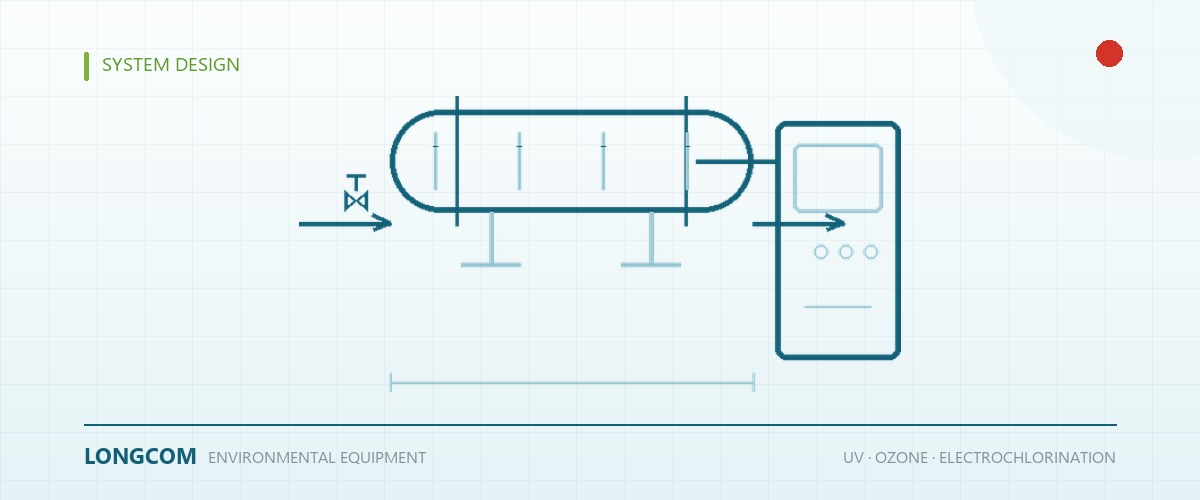
- In-line: in-line units are mounted outside the tank — either plumbed directly into the pipework or connected to the return line of a canister filter. They consume no space inside the tank, so they can be designed larger with more features for better sterilization. Installation is somewhat more complex, however, requiring some plumbing and mounting.
1.3 Power
Lamp wattage is a key factor. A higher rating means stronger light and better effectiveness against DNA-level microorganisms, but high-power lamps also draw a lot of electricity, so to be used effectively they should be paired with a fast flow rate that purifies more water per pass. A low-power lamp should be paired with a slow flow so the light can penetrate the water and kill bacteria efficiently.
1.4 Flow rate
Flow rate should follow your tank size: the larger the aquarium, the faster the flow needed so the sterilizer turns over all the water in the shortest time. For example, with a 200-gallon tank, a 50 gal/h flow is inappropriate — around 200–300 gal/h suits the volume.
1.5 Ease of installation
Units attach either by suction cups (the simplest, mainly for submersible units) or by mounting brackets (slightly more complex, used for in-line sterilizers).
2. FAQs
2.1 Do I really need a UV aquarium sterilizer?
Yes — it is an important accessory. Bacteria and other microorganisms appear in every tank over time, and conventional filters can only do so much; even triple-stage filters cannot handle these tiny organisms. Removing them matters because they suffocate fish — not literally, but by consuming all the oxygen in the water and leaving fish in an unlivable environment. Cloudy water also looks bad and obscures the fish and decorations.
2.2 How does a UV aquarium sterilizer work?
The principle is simple: the UV lamp inside the unit emits ultraviolet light at a specific wavelength (usually 250–270 nm). Water is guided to flow around the lamp, and when the light strikes a microorganism it mutates and destroys the DNA structure, effectively killing the organism or suppressing its growth. Deprived of these bacteria, the water becomes clean and clear.
2.3 How long should I run the unit?
It depends on several factors: tank size, sterilizer wattage, and how polluted the water is. For very green water in a large tank you need to run it much longer than for mild pollution in a small tank. There is no fixed answer; the essential rule is to run the unit until all the water is clear and transparent.
2.4 Do I need accessories to install it? What are they?
Most submersible sterilizers come with suction cups for immediate installation. External in-line sterilizers need mounting brackets for hanging or in-line installation.
2.5 How do I clean a UV aquarium sterilizer?
Easy — most units need cleaning every lamp change. Follow these steps:
- Disassemble the unit.
- Remove the UV lamp.
- Remove the foam filter and clean it thoroughly.
- Clean the inside of the sterilizer.
- Fit a new UV lamp.
- Reassemble the unit.
Contact Longkang for sizing support and quotations.