

How to Remove Algae and Bacteria from Aquariums
If you own a home aquarium, you have probably run into all kinds of problems: algae, bacterial infections, and other nuisances. Wouldn’t it be nice if there were a way to prevent these problems effectively? An aquaculture-grade UV sterilizer can help you avoid them, offering significant benefits for both the health and the aesthetics of your home aquarium.
1. How does a UV sterilizer work?
You have probably seen what a UV lamp looks like. You might imagine an aquarium UV sterilizer looks the same, casting an eerie blue glow into the water. That is not always the case, however: the lamp may be enclosed inside the sterilizer housing, invisible from outside.
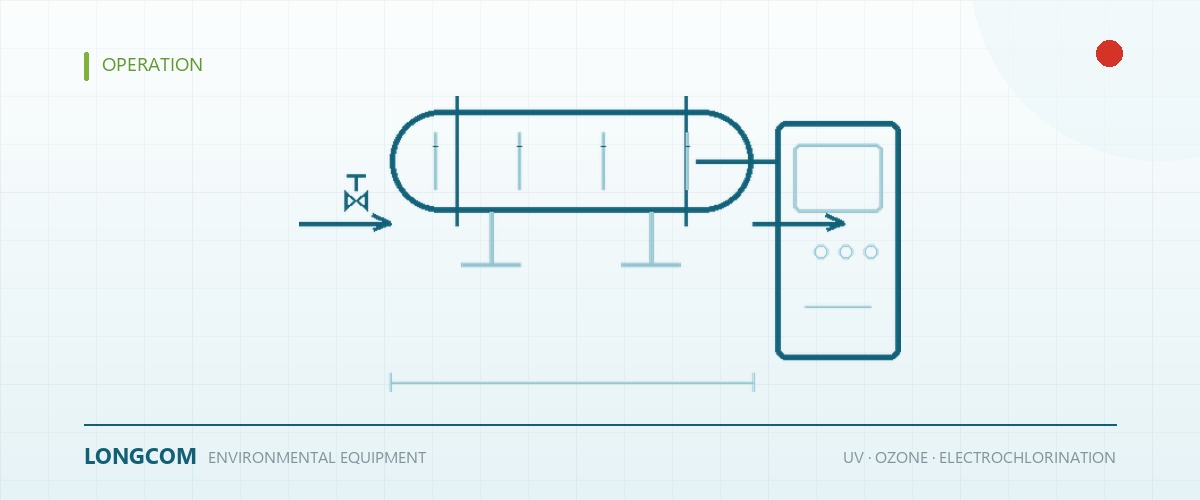
A UV sterilizer is an integral part of the filtration system. You place it last in your filter line, after your mechanical filter. Water then flows through the sterilizer and is exposed to UV light, which disinfects it — killing parasites, viruses, and algae as well as other microorganisms in the water.
It works by irradiating these microorganisms at a wavelength that mutates their DNA. The mutation makes them unable to reproduce, so the growth and spread of an infection stops. Because it only affects free-floating microorganisms in the water passing through the unit, you do not have to worry about your livestock.
These units help disinfect liquids in a wide variety of settings, from swimming pools to factories, and are useful in a home aquarium. So what are the benefits for your tank?
2. The unit targets parasites and bacteria
Many factors contribute to bacterial infections and parasites. Introducing new livestock is the most common cause: they can carry diseases or parasites you do not know about, and without proper quarantine you can end up with an outbreak on your hands. Another cause: your livestock population has reached a point where it becomes more vulnerable to disease.
Either way, your home aquarium may be at risk. A UV sterilizer helps prevent this: any free-floating parasite or bacteria in your home aquarium will flow through the unit. Because the process stops the organisms from reproducing, the spread of these infectious diseases is halted — in effect, your fish and other livestock avoid potentially expensive, even fatal, health problems.
But remember, only microorganisms that pass through the unit are affected. There is no residual effect, so parasites attached to fish are not killed — for example, the adult stage of ich.
3. The UV sterilizer kills harmful algae
Besides bacteria and parasites, a UV sterilizer also kills algae — the microorganism type that gives aquarists the most trouble. Algae are aquatic microorganisms that form green slime on the surfaces of your aquarium; they cloud your water. It is natural for an aquarium to have some algae, but excessive algae spoils the aesthetics of the tank. Algae can even affect fish health, depending on the type. Other contributing factors include excess nutrients and strong lighting. When algae are irradiated with UV, the sterilizer kills them the same way it kills other microorganisms: the radiation stops them from reproducing.
Because algae contribute heavily to water cloudiness, killing the free-floating organisms greatly improves your tank’s clarity. Install a UV sterilizer and you will quickly notice how clean the water is — everything in the tank becomes easy to see. Your home aquarium can go from murky and green to clean and clear with minimal effort — especially true for a beginner’s tank, which may have too many nutrients or too much light.
As noted above, the sterilizer only acts on free-floating organisms. It does not work on filamentous algae and other species attached to rocks, substrate, fish, and other surfaces; only microorganisms carried into the unit by the flow are affected.
4. What kind of UV sterilizer do I need?
Several things matter when deciding to install a sterilizer: wattage, flow rate, and maintenance. The sterilizer’s effectiveness depends on its ability to irradiate the microorganisms with sufficient UV. Different sizes and types require different doses to kill, as follows:
5. Germicidal UV dose of organisms (μW·s/cm²)
| Organism | Required dose |
|---|---|
| Viruses | 15,000 |
| Bacteria | 15,000 – 30,000 |
| Algae | 22,000 – 30,000 |
| Fungi | 45,000 |
| Protozoa | 90,000 |
Three factors determine a sterilizer’s performance: lamp intensity, contact time, and UV penetration.
- Lamp intensity: the higher the lamp wattage, the more radiation reaches the microorganisms. You will typically need to replace lamps twice a year to keep them working.
- Contact time: the longer microorganisms are exposed to the UV, the more thoroughly they are killed. Flow rate governs this: slower flow means longer exposure. Different microorganisms need different UV doses, and therefore different flow rates. A longer lamp also lengthens exposure with the same effect.
- UV penetration: to kill the microorganisms in your home aquarium, the UV must be able to reach them. If the water is too turbid, for example, UV may not penetrate effectively — which is why the sterilizer is placed after the mechanical or biological filter. It is also why keeping the lamp and sleeve clean matters: it prevents films or mineral deposits from forming and blocking some of the light.
Contact Longkang for sizing support and quotations.