

Ozone Generator or UV Sterilizer: Which Is Better?
Have you ever wondered whether you need a sterilizer on your tank — and if so, which one is best? This article compares ozone generators and UV sterilizers. Ozone is a gas made of three oxygen atoms, while the oxygen we breathe has two; this chemical structure makes ozone highly reactive, which is why it is such a powerful disinfectant.
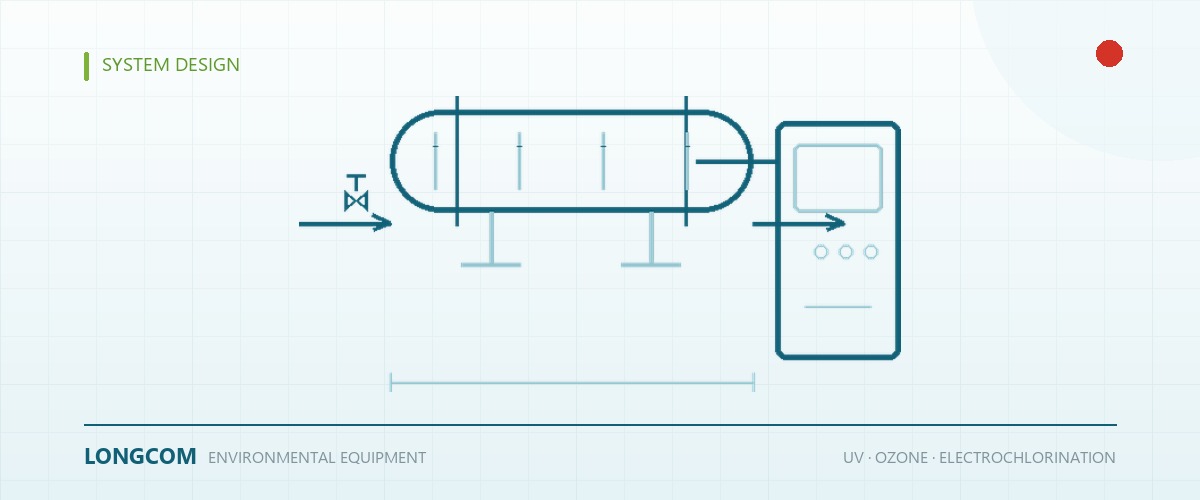
The lamp in a UV sterilizer is made of quartz, which makes sense because quartz does not filter out UV light. Water, however, filters light according to its depth, so the water flow space between the quartz lamp and the outer glass or plastic tube is usually only a few millimeters — a thicker gap would weaken the UV intensity and allow bacteria and other microbes to survive.
Our aquariums are sometimes invaded by pathogens, and adding a sterilizer may be enough to solve the problem without introducing any harmful chemicals. The sterilizer’s activity also helps eliminate excess organics and microalgae and/or reduce bacterial blooms (cloudy water). It can raise the water’s redox potential — beneficial for some animals — and reduce egg losses caused by fungi and mycobacteria.
1. Pros and cons of UV
Choosing which sterilizer to use is easy if you remember what each one does. If you want to avoid adding toxic compounds to the water while reducing bacteria and other microorganisms, a UV sterilizer is a good choice. After passing through the UV lamp the water contains far fewer bacteria, and with each circulation the water becomes purer, while the bacteria in the biological filter are unaffected by the treatment. It also helps keep the water nearly free of bacteria and microalgae — the water will be crystal clear.
UV sterilization does have one minor drawback: it cannot kill microorganisms that hardly move — those attached to the substrate or plant leaves — because only organisms passing through the plastic (or metal) tube are treated. One thing to note: titanium metal tubes have a stronger germicidal capacity than conventional units.
Another possible drawback comes from the construction. The inner quartz tube holding the lamp is fixed to the outer chamber by O-rings or other rubber seals. These usually work perfectly for at least a year, but can become brittle or crack over time. If that happens, when you reassemble the sterilizer after cleaning, some moisture can penetrate and reach the electrical area, causing a short circuit that may introduce toxic chemicals into the water (especially in saltwater). This is not an issue for high-quality UV units, so do your research before buying and always check the rubber parts carefully at each cleaning.
UV sterilizers are generally easier to use than ozone generators because nothing is dissolved into the water; the only significant hazard is water (especially saltwater) contacting the electrodes through poor maintenance.
2. Pros and cons of ozone
The situation is reversed for ozone generators. They need almost no maintenance (only an annual air filter cleaning) and are usually durable. However, ozone gas dissolves directly into the water and is highly toxic to fish, invertebrates, and humans. You must therefore dose the correct amount into the contact chamber (not the main aquarium) and filter the water before it reaches the main tank — activated carbon is effective for this, because a large carbon bed degrades ozone by-products. Most manufacturers recommend adding 0.3–0.5 mg of ozone per gallon of water per hour, but I have found that even half that keeps bacterial concentrations in the aquarium very low and oxidizes all organics without hindering the biological filter. The problem: if excess ozone enters the aquarium, the invertebrates die first, then the fish.
An interesting benefit of adding ozone is that ammonia converts immediately into nitrate — clearly a desirable result. It is also believed (though still debated) that the activity of skimmers in marine aquariums is significantly enhanced when combined with ozone. Microalgae and cyanobacteria have a hard life in the presence of ozone.
Knowing that even very low ozone doses can harm fish and invertebrates, it is important to be able to measure how much ozone is in the aquarium. The best way to determine the correct amount is to measure it indirectly through the water’s redox potential. Measure the redox potential before adding ozone, then let the water pass through the sterilizer and measure again.
If the difference does not exceed about 30 mV, the treated water can be considered safe. Remember, though, that these are not absolute measurements. If the water contains no oxidizable organic or inorganic compounds, the measured rise is entirely due to free ozone and its by-products, and even a 30 mV difference may be somewhat dangerous. In other cases, when the water is heavily polluted, the redox change is simply due to oxidation of various pollutants, and the water may be safe even if it shows a large difference.
To clarify your situation, run strong aeration for a long time. After three or four hours of aeration you will find the redox potential stays constant, meaning your water has reached a new baseline — all the ozone has been outgassed, the by-products are likely gone, and the higher redox potential is due only to oxidized organic compounds. Fortunately, this operation only needs to be done once when a new sterilizer is added.
The simplest ozone generators can be connected to the contact chamber (e.g. a skimmer), and the water can then pass through activated carbon to strip any accidental gas residue. Ozone generator settings follow the recommendations above. Other, more sophisticated systems include a continuous redox sensor that automatically adjusts the amount of gas dissolved, avoiding problems for fish and invertebrates. In the first period after installing an ozone generator, watch your animals closely and be ready to stop at any sign of trouble.
3. Final considerations
When deciding what suits your setup, remember the two systems have different strengths. Consider, for example, their use against specific diseases. Ozone can be deliberately dosed higher (up to a 35–40 mV difference) to treat some fish diseases. Dissolved ozone and its oxidation products act directly on the fish’s body (skin, gills, fins) and can quickly kill bacteria, fungi, and some protozoa — very effective, for example, against columnaris fin rot or black spot on shrimp.
As with any treatment, the subjects must be monitored strictly. The main advantage is that the oxidizing gas leaves solution quickly, and the aquarium immediately returns to its original state without carbon filtration, water changes, etc. Ozone is also an excellent choice when you need to disinfect water in a breeding or quarantine tank: you can run the ozone generator at full power and then aerate overnight, ensuring the water is pure and safe.
UV sterilizers are better suited to continuous use in freshwater aquariums. They add nothing to the water and kill everything that passes through the circulation pump (if the system is used as recommended), but they do not kill parasites attached to animals or embedded in mucus, parasites attached to rocks, and so on.
In short, both UV sterilizers and ozone generators are necessary — sometimes indispensable — tools for solving specific problems, but they should only be used when actually needed, with the correct precautions for each specific technology.
Contact Longkang for sizing support and quotations.