

Chlorine or UV Sterilizer for Swimming Pools?
Yes, there is an effective, healthier alternative to chlorine in residential pools! One of the best options around is safe, powerful ultraviolet light — the same wavelength used to pasteurise food, purify drinking water and sterilise medical equipment. Today’s pool UV sterilizers disinfect water by destroying a wide range of harmful pathogens. In fact, UV can eliminate 99.9% of disease-causing microorganisms in a swimming pool. Pools at universities, luxury resorts and the Olympic Games all rely on this advanced technology to maintain water quality, and your pool can too. Before we look at how a UV sterilizer delivers pristine pool water to hundreds of thousands of residential pool owners worldwide, it helps to understand why UV is a better choice than chlorine. To do that, let’s start with a brief overview of traditional chlorine and why it produces so many unwanted side effects.
1. How chlorine works in a pool
Chlorine is a type of pesticide and the most widely used water disinfection product. For decades, pool owners around the world have relied on its tablet, powder and liquid forms to maintain water quality. When added to a pool, the chemical breaks down into several compounds, including hypochlorous acid and the hypochlorite ion. These destroy pathogens by attacking lipids in microbial cell walls and enzymes inside the cells, inactivating the microorganisms and rendering them harmless.
Chlorine also controls most organic matter. Organic matter is material brought in by swimmers (and pets), including sweat, urine, saliva, body oils and sunscreen. It also includes algae and contaminants from leaves, rain and other debris that gradually accumulate in the pool. Because chlorine is distributed throughout all the pool water, it immediately fights organic matter as soon as swimmers introduce it.
Chlorine manages organic matter by mixing and binding with it. Once bound to organic matter, it forms by-products called chloramines, or combined chlorine. That is where the complications begin.
2. Chlorine, chloramines and the trouble they cause
Chloramines in pool water are the culprit behind many problems. To begin with, they make the pool uncomfortable for anyone in it. Effects include dry skin, burning eyes and faded hair. For people with skin conditions such as eczema or psoriasis, these chlorine by-products can make immersion in pool water almost unbearable.
Then there are the unpleasant odours. You have probably inhaled these smells; most people who swim in pools, or are near them, have experienced them. Along with the smell, the fumes can trigger or worsen breathing problems such as sneezing, wheezing and sinus congestion.
Chloramine vapours can also irritate or even damage your lungs, making them more vulnerable to infection and allergens. Research shows these chemical vapours are especially dangerous for children and for anyone with allergies or conditions such as asthma.
If you have pets, chlorine exposure affects them too. Dogs and cats that regularly drink from the pool are effectively ingesting it into their systems.
Even your deck and neighbouring landscaping can suffer from heavily chlorinated, chloramine-filled pool water. The threat comes from chemically laden water splashing out in high winds, vigorous play or water features. If it does, it is certainly unfriendly to nearby plant life and over time can bleach and accelerate the ageing of wooden or porous stone decking.
3. How a UV water sterilizer attacks pool pathogens
Through a fast, simple process, UV technology destroys spores, algae, bacteria, viruses and parasites lurking in the liquid playground. From start to finish, UV treatment takes place entirely inside a sealed disinfection chamber within the pool equipment, not in the pool itself. No one in the pool is ever exposed to UV light.
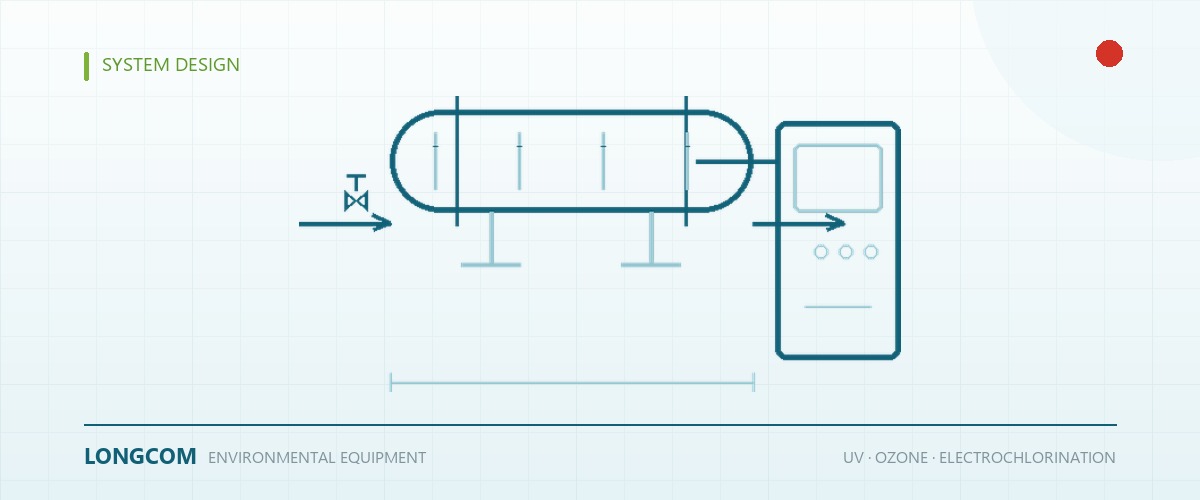
Here is how it works: as pool water circulates through the equipment for filtration and heating, it also enters the UV system’s sealed chamber. There, a special lamp emits intense, controlled germicidal rays. These rays treat the water inside a transparent quartz or polymer tube.
Once the UV light reaches the water, microorganisms cannot escape. Within seconds of passing through the tube, the light penetrates their cell membranes and disables their DNA. Because they can no longer reproduce, these inactivated microorganisms are effectively dead.
Unlike chlorine, UV can even defeat Cryptosporidium, also known as “Crypto”. This organism can survive in a pool for about a week and can even live in heavily chlorinated water.
Other pathogens that UV handles but chlorine does not include E. coli, Giardia and Cyclospora. These infectious agents can cause fatigue, nausea, weight loss, diarrhoea, abdominal cramps and, in extreme cases, death.
Note that even with the best UV system, a small residual chlorine level (comparable to that in municipal tap water) is still needed to keep the pool sanitised throughout the day. However, a high-quality UV sterilizer will let you use 75% less chlorine.
4. Choosing a UV system for your new pool (or adding one to your current pool)
For years pool owners and swimmers have had to cope with a host of problems caused by this powerful chemical and its unpleasant by-products. With the growing popularity of UV water sterilizers and alternatives such as ozone, that trend is changing. Relying on chlorine as the backbone of pool water sanitation is no longer your best or primary choice.
What makes UV pool sterilizers so ideal is that they never use potentially harmful chemicals to kill contaminants. Instead they rely on a physical process that adds nothing to the water — unlike chlorine, UV leaves no unwanted compounds in the pool.
Demand for UV systems is also growing because of their additional advantages: they are highly energy-efficient, easy to operate and require minimal routine maintenance. Compared with conventional chlorinated pools, they also maintain water more quickly, because pH and alkalinity are easier to balance.
Another advantage UV offers is reduced chloramines. Since UV reduces the chlorine demand, chloramines in the pool are greatly reduced. UV also helps with the small amounts of chloramines produced by trace chlorine levels: when UV hits the water, a process called photo-oxidation eliminates chloramines with radiant energy. With no strong, unpleasant chemical by-products around, both the water and the air around the pool are healthier.
5. Discussing UV options with a prospective pool contractor
If you are considering a new pool, take advantage of the water-treatment equipment the industry offers. When interviewing contractors about a new swimming pool, be sure to ask what type of system they provide and whether it includes a UV sterilizer.
A UV unit can work in almost any pool — round, above-ground, vinyl, fibreglass and concrete (gunite/shotcrete). The technology is also compatible with any popular brand of equipment, regardless of the manufacturer of your pump, filter, heater or other pool equipment.
You can also ask your pool builder to include an ozone generator in the equipment lineup for a more informed choice. Combining UV with ozone achieves higher water purity and lower residual chlorine levels.
There are many brands on the market, and the builder you consult should be pleased that you are already familiar with this excellent technology. To improve the chances that they recommend a reliable UV model, do your research and ask about the options proposed. Be sure to ask about the manufacturer as well as the UV lamp and warranty periods.
UV sterilizers are friendly to the pool, the swimmers and the environment. Without the typical chlorine load and the threats it brings, you can relax — everyone in and around the pool can enjoy the water without worry.
Contact Longkang for selection support and quotations.