

How UV Disinfection Systems Work and Where to Use Them
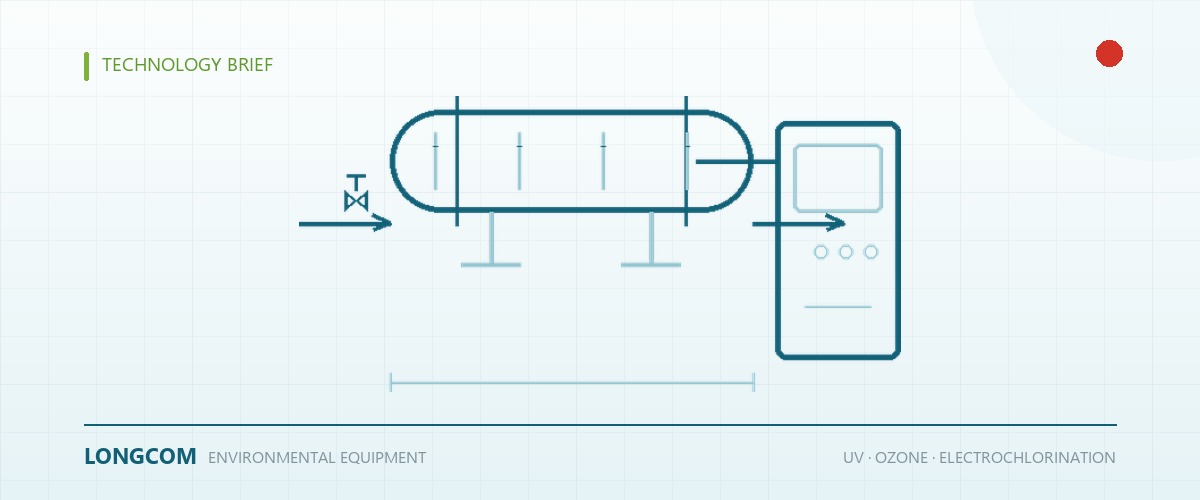
UV disinfection systems are a highly effective method of fighting microbial contamination in water. The microorganisms must be exposed to UV-C light at the right dose to disinfect the water effectively. UV systems serve many different applications, from drinking water purification for a single household to disinfected water for a whole township. UV treatment of water is regarded as a safer and more cost-effective way of producing disinfected water for industrial use.
1. How UV disinfection works
In UV water disinfection, UV light penetrates microorganisms and destroys their DNA. DNA plays a vital role in an organism’s functions and reproduction, so destroying it prevents the organism from being active and reproducing. This UV energy (240–280 nm) is present in sunlight but only in tiny amounts; high-output mercury discharge lamps (known as UV lamps) generate the same energy at far greater intensity.
When exposed to the correct UV dose, no bacteria, viruses, molds, or their spores survive, which is why UV is considered an ideal solution for water disinfection.
2. UV systems for water treatment
A UV disinfection system is more than a lamp inside a pipe. The reactor must be designed to ensure every microorganism receives sufficient UV exposure (dose). Based on the hydraulic characteristics of the water, reactors are optimized to guide the flow, maximizing dwell time and enhancing turbulence. A well-designed industrial UV water disinfection system consistently delivers excellent results in industrial applications.
UV disinfection suits almost any application that needs microbe-free, safe, pure water — and any point where the water may be contaminated before it reaches its final use.
3. Industrial applications
- Food and beverage: UV systems help achieve water quality to the specifications of the FDA (Food and Drug Administration).
- Biopharmaceuticals: water used in pharmaceuticals and health products and in CIP (clean-in-place) must be free of chemicals such as chlorine and ozone and of pathogens; most pharmaceutical companies rely on UV systems for water disinfection.
- Cosmetics: water free of microorganisms and toxins ensures quality and extends shelf life; UV sterilization is recommended throughout the global cosmetics industry.
- Centralized drinking water: UV drinking water systems are a simple, affordable way to ensure pure water at every tap in a home or office.
- Wastewater disinfection and reuse: against water shortages and rising freshwater costs, UV systems designed specifically for wastewater can disinfect tertiary-stage effluent so the water can be reused for secondary purposes such as flushing and gardening.
- Swimming pools: chlorine has traditionally kept pool water clean, but it is increasingly recognized that after chemical disinfection the chemicals react with many organic substances to form hundreds of harmful new compounds. UV is regarded as the safer, more cost-effective way to disinfect pools.
4. Benefits of UV systems
- Natural: UV is nature’s own purification method.
- Environmentally friendly: no toxic by-products form during UV disinfection.
- Effective: all known microorganisms are sensitive to UV.
- Economical: the lowest operating cost of any disinfection system.
- Safe and chemical-free: no chemicals added, so no danger of overdosing.
- Fast: instantaneous purification on contact.
- Easy to manage: well-designed systems feature advanced functions such as CFD (computational fluid dynamics) modeling, high-efficiency electronic ballasts, and extremely precise UV intensity monitors that make them efficient and easy to manage.
5. Does a UV system need periodic maintenance?
In some cases the water is not fully pre-treated and turbidity is low; then routine inspection and cleaning every 6 months is enough. Where turbidity and hardness are high, cleaning may need to be more frequent. UV lamps have a finite life and must be replaced once exhausted; in the unlikely event of premature lamp failure, the monitoring circuit signals that replacement is needed.
Contact Longkang for sizing support and quotations.