

Can You Use a UV Sterilizer in a Swimming Pool?
A swimming pool UV sterilizer turns pool-maintenance nightmares into pool-maintenance freedom. On top of that, UV outperforms other products on the market. A pool UV sterilizer uses the power of ultraviolet light to eliminate microorganisms, reduce chemical use and eliminate toxic by-products. With a UV sterilizer, your spa or hot tub will be safer, healthier and easier to manage than with traditional sanitation methods.
1. What is a UV pool sterilizer?
A UV (ultraviolet) pool sterilizer uses a cutting-edge, non-chemical process in which germicidal UV light disinfects water, air and surfaces that may be contaminated. It emits high-intensity germicidal light that alters or destroys the DNA or RNA of target organisms such as algae, bacteria, viruses, cysts and protozoa. The concentrated electromagnetic energy also destroys organic matter, preventing the formation of dangerous chlorine by-products.
2. Where did UV disinfection begin?
The ultraviolet spectrum was discovered through the identification of light waves. For nearly a century, scientists have known that UV light is a powerful neutralizer of algae, bacteria and viruses. They also found that the optimal UV wavelength for destroying microorganisms lies between 250 and 270 nm. That finding led scientists to apply UV disinfection technology to drinking water more than 30 years ago. Over the past decade, UV disinfection has become widespread in both drinking water and wastewater treatment. Today, UV sterilizers can disinfect the vast majority of water in all drinking water and wastewater applications.
3. How does a UV pool sterilizer work?
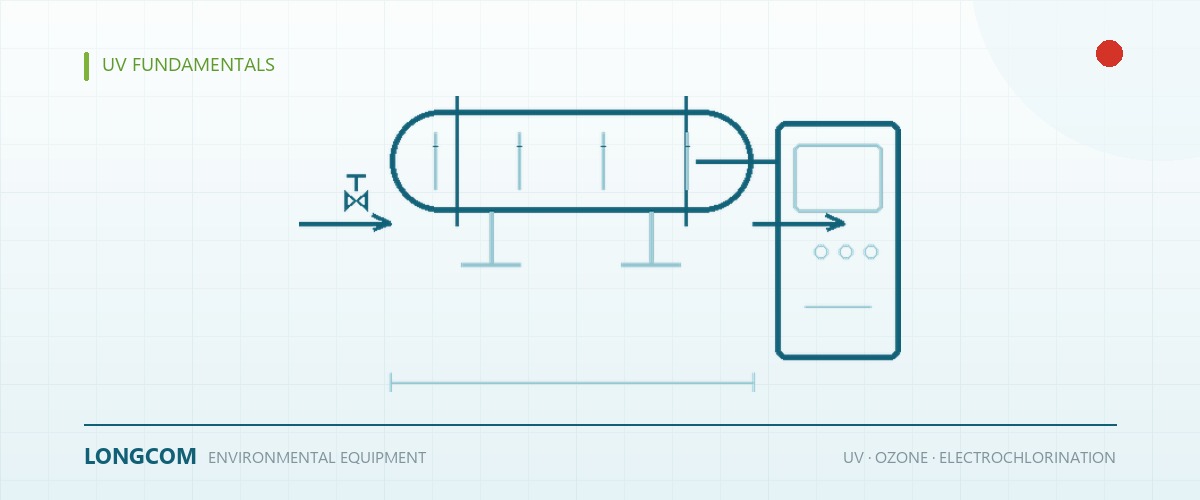
A pool UV sterilizer is installed inline, after the pool’s existing filtration system. It bombards the water flowing through with high-intensity germicidal UV light, which can kill more than 60 waterborne pathogens, including algae, bacteria, cysts and viruses. The UV lamp is housed in an industrial graphite chamber optimized for high flow. A highly specialized quartz-glass sleeve protects the lamp from the water while transmitting 99.9% of the UV light. The concentrated electromagnetic energy destroys organic matter and prevents the formation of dangerous chlorine by-products known as chloramines, which commonly cause red eyes, stinging, skin irritation, asthma and allergies. This energy penetrates the cell walls of bacteria, viruses, algae, cysts and all pathogens.
4. Is a UV sterilizer safe?
UV disinfection is very safe. The UV lamp is enclosed in a rugged, high-impact polymer housing. UV light cannot leave or escape the sterilization chamber, so it never enters the swimming pool. UV is a physical process rather than a chemical one, making it the most environmentally friendly choice for pool sanitation. There are no residual effects harmful to humans, animals, aquatic life, plants or the environment. UV also greatly reduces the need to generate, handle, transport or store hazardous chemicals.
5. Is UV disinfection effective?
UV is considered the best available technology for pool disinfection. Research shows that in chemical disinfection, 90% of the chemicals are used for oxidation and only 10% for sanitation. UV accomplishes both. Have you noticed the enviable water quality at the Olympic Games? Underwater cameras can film the entire pool with perfect clarity. The secret is UV disinfection. Now hundreds of commercial aquatic centres around the country have installed UV, while residential pool UV systems are smaller in size and scale. In addition, advances have made UV systems affordable for the average household.
6. What do water authorities say about UV?
According to the U.S. Environmental Protection Agency, “UV has been found to be an effective disinfectant. Easy installation, simple operation and maintenance, and low cost relative to chemical disinfection make UV a useful technology.” The World Health Organization notes that “when UV is used, lower free chlorine concentrations may be beneficial to health.” Some regions have begun requiring UV in public pools.
Contact Longkang for selection support and quotations.