

UV Disinfection for School and Hospital Drinking Water Systems
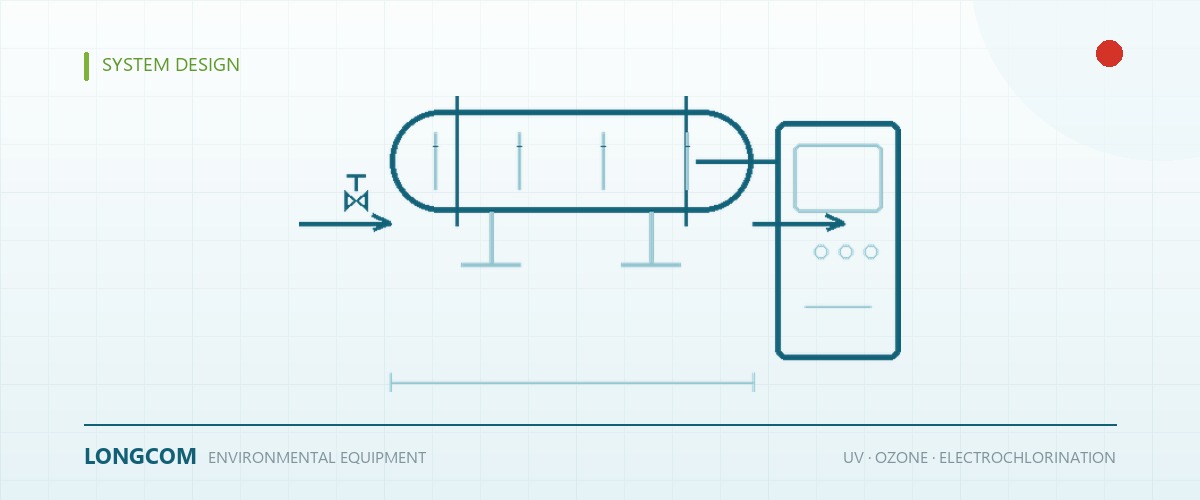
Schools and hospitals are densely occupied facilities, and drinking water safety directly affects the health of students, staff and patients. UV sterilizers are widely used for drinking water disinfection in schools and hospitals. Longkang provides drinking water disinfection solutions for many schools and hospitals. This article explains the application characteristics and the system design for these scenarios.
1. Characteristics of School Drinking Water
1.1 Water supply configuration
- Municipal water → water tank (or reservoir) → booster pump → UV sterilizer → teaching buildings / dormitories / canteens
- Or a direct-drinking water system: pretreatment → RO → UV → drinking points
- Distributed supply: drinking stations on each floor, each fitted with UV disinfection
1.2 Water use pattern
- Peak demand during class breaks and meal times
- High consumption due to large student and staff populations
- Many points of use: teaching buildings, dormitories, canteens, sports grounds
- Strong time-of-day variation: low demand during class hours
1.3 Water quality requirements
- Compliant with GB 5749 — Standards for Drinking Water Quality
- Direct-drinking water compliant with CJJ 110
- Total bacterial count ≤100 CFU/mL (drinking water) or ≤50 CFU/mL (direct-drinking water)
- Total coliforms: not detectable
- Joint oversight by public health authorities and education departments
1.4 Management requirements
- 24-hour supply for dormitories
- Reliable operation
- Simple maintenance
- Dedicated operating personnel
- Periodic public disclosure of water quality results
2. Characteristics of Hospital Drinking Water
2.1 Water supply configuration
- Municipal water → water tank → booster pump → UV sterilizer → hospital departments
- Direct-drinking water: points of use in outpatient and inpatient areas
- Special-use water: operating theatres, laboratories and preparation rooms (higher requirements)
2.2 Water use pattern
- Continuous 24-hour demand
- Numerous, widely distributed points of use
- Shared by patients, medical staff and visitors
- Steady consumption
2.3 Water quality requirements
- Drinking water: GB 5749 — Standards for Drinking Water Quality
- Direct-drinking water: CJJ 110
- Medical process water: higher standards (purified water and water for injection, requiring separate treatment)
- Strict bacterial control (patients may be immunocompromised)
- Stringent public health supervision
2.4 Management requirements
- 24-hour operation
- Standby equipment (supply interruption is not acceptable)
- Online monitoring
- Complete records
- Rapid fault response
3. Disinfection System Design
3.1 School scheme
- Disinfection position: booster pump discharge header
- Capacity: based on maximum hourly water consumption
- Typical schools: 10–50 m³/h
- Dose: ≥40 mJ/cm² (drinking water)
- Direct-drinking water systems: ≥60 mJ/cm²
- Standby: one duty + one standby for key schools
3.2 Hospital scheme
- Disinfection position: booster pump discharge header
- Capacity: based on maximum hourly water consumption
- Typical hospitals: 20–100 m³/h
- Dose: ≥40 mJ/cm² (drinking water)
- Direct-drinking water: ≥60 mJ/cm²
- Standby: one duty + one standby (hospitals cannot tolerate supply interruption)
- Online monitoring: UV intensity and flow
3.3 Selection example (school)
- School: 2,000 students and staff
- Water-use quota: 50 L/person·d (schools)
- Maximum daily consumption: 2,000 × 50 = 100 m³/d
- Maximum hourly consumption: 100 ÷ 8 × 2.0 = 25 m³/h (based on 8-hour water use)
- Selected sterilizer: LK-UV-30
3.4 Selection example (hospital)
- Hospital: 500 beds, 2,000 outpatient visits per day
- Water consumption: approx. 500 m³/d
- Maximum hourly consumption: 500 ÷ 24 × 2.5 = 52 m³/h
- Selected sterilizer: LK-UV-50 (one duty + one standby)
4. System Configuration
4.1 Standard configuration
- UV sterilizer
- Low-pressure UV lamps
- Quartz sleeves
- Electronic ballast
- Operation/fault indicator lamps
- Lamp elapsed-time counter
4.2 Recommended configuration (schools)
- UV intensity monitoring
- Audible and visual alarm
- Bypass line
- Automatic cleaning (when water quality is poor)
4.3 Recommended configuration (hospitals)
- Online UV intensity monitoring
- One duty + one standby with automatic changeover
- Remote monitoring (integrated with the hospital building automation system)
- Audible and visual alarm
- Automatic cleaning
- Flow monitoring
- Online water quality monitoring
5. Installation Requirements
5.1 School installation
- Inside the pump room
- Close to the booster pump discharge
- Horizontal installation of the unit
- Flanged connections
- Provide a bypass line
- Electrical interlock (pump start → sterilizer start)
5.2 Hospital installation
- Inside the pump room (dedicated space)
- One duty + one standby installed in parallel
- Automatic changeover valves
- Sanitary piping (for direct-drinking water)
- Connection to the hospital monitoring system
- Uninterruptible power supply (optional, to prevent supply loss during power failure)
5.3 General requirements
- Dry, well-ventilated environment
- Adequate maintenance clearance around the unit
- Reliable grounding
- Hydrostatic pressure test with water
- Water quality testing passed
6. Operation and Management
6.1 School management
- Daily inspection by facilities staff
- Daily operating log
- Monthly maintenance (cleaning and inspection)
- Quarterly water quality testing
- Semi-annual quartz sleeve cleaning
- Annual lamp replacement
- Public disclosure of water quality results
6.2 Hospital management
- 24-hour staffing
- Real-time monitoring of operating status
- Daily inspection records
- Monthly maintenance
- Monthly water quality testing
- Semi-annual quartz sleeve cleaning
- Annual lamp replacement
- Changeover to standby on fault
- Quarterly third-party testing
6.3 Emergency response
- Equipment fault: switch to standby or bypass
- Abnormal water quality: suspend supply, test and identify the cause
- Power failure: standby power supply (hospitals)
- Notify responsible personnel
- Log and report the incident
7. Application Benefits
7.1 Protecting health
- Effective inactivation of bacteria and viruses
- Prevents waterborne infectious diseases
- Protects the health of students, staff and patients
- Safe and reliable water quality
7.2 Operational safety
- Physical disinfection with no chemical hazard
- No chemical storage or leakage risk
- No risk of overdosing
- Safe and reliable equipment
7.3 Cost effectiveness
- Moderate capital investment
- Low operating cost
- Simple maintenance
- Long service life
7.4 Ease of management
- Automatic operation
- Visual status indication
- Fault alarms
- Complete records
8. Typical Cases
8.1 Case 1: drinking water disinfection at a secondary school
- School scale: 3,000 students and staff
- Water supply: water tank + variable-frequency pressure boosting
- Disinfection scheme: LK-UV-40
- Operation: 24 hours during school terms
- Water quality testing: compliant
- Five years of operation with a low fault rate
8.2 Case 2: drinking water disinfection at a tertiary grade-A hospital
- Hospital scale: 1,000 beds, 3,000 outpatient visits per day
- Water supply: water tank + variable-frequency pressure boosting
- Disinfection scheme: LK-UV-80 (one duty + one standby)
- Operation: 24-hour continuous
- Online monitoring: UV intensity and flow
- Water quality testing: compliant
- Three years of operation with zero fault-related shutdowns
9. Longkang Services
- Site survey and system design
- Equipment selection and flow calculation
- Professional installation, commissioning and acceptance
- Operator training
- Scheduled maintenance service
- Genuine spare parts supply
- 24-hour technical support
- Support with water quality testing
- Emergency repair service
- Lifetime after-sales service
Contact Longkang for selection support and system design for school and hospital drinking water applications.