

UV Sterilizer Installation in Direct Drinking Water Systems
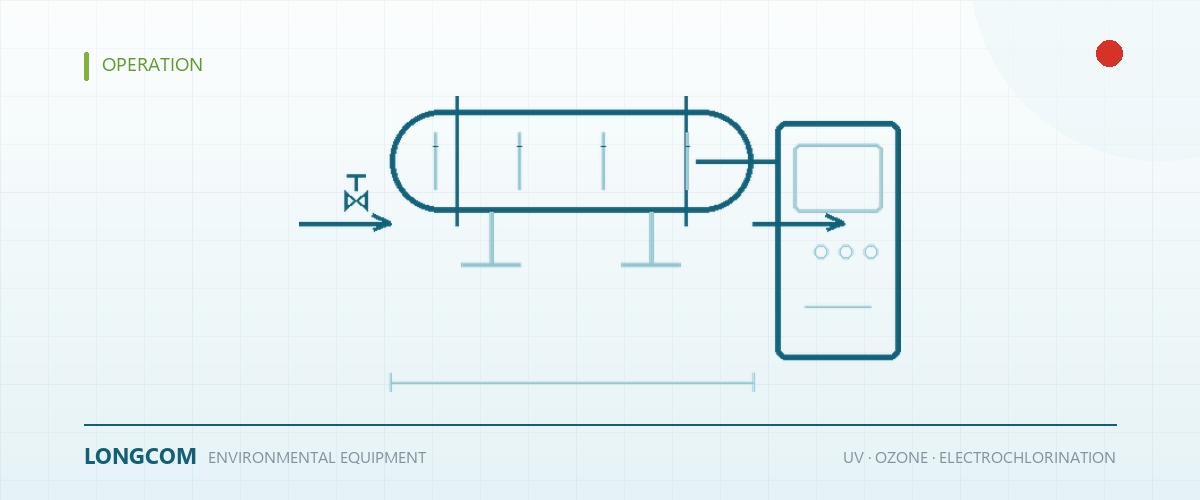
Piped direct drinking water systems demand high water quality, and UV sterilizers are important equipment for direct drinking water disinfection. Longkang UV sterilizers are suitable for direct drinking water systems, where installation has its own specific requirements. This article explains the key points for installing a UV sterilizer in a direct drinking water system.
1. Overview of direct drinking water systems
1.1 What is piped direct drinking water
- Piped direct drinking water is high-quality drinking water that, after advanced treatment, is delivered directly to users for drinking through an independent pipeline
- Standard: CJJ 110, Technical Code for Piped Direct Drinking Water Systems
- Water quality: better than GB 5749, suitable for direct drinking
- System composition: raw water → pretreatment → reverse osmosis or nanofiltration → disinfection → storage → circulation → users
1.2 Disinfection positions
- Main disinfection: after the reverse osmosis permeate, before water enters the clean water tank
- Circulation disinfection: on the circulation return pipe, disinfecting the network as it circulates
- Terminal disinfection: at the user endpoint (optional)
- UV sterilizers are used for main disinfection and circulation disinfection
1.3 Dose requirements
- Direct drinking water UV dose: ≥60 mJ/cm², higher than the 40 mJ/cm² used for domestic drinking water
- Inactivation rate: ≥99.999%
- Ensures the microbiological safety of direct drinking water
2. System configuration
2.1 Main disinfection
- Installed on the reverse osmosis permeate main
- Capacity: at least the system permeate output
- One duty unit plus one standby unit for important projects
- Linked with the circulation pump
2.2 Circulation disinfection
- Installed on the circulation return pipe
- Capacity: at least the circulation flow
- Circulation flow: one-half to one-quarter of the network volume per hour
- 24-hour continuous operation
2.3 Auxiliary equipment
- Online UV intensity monitoring
- Lamp elapsed-time counter
- Fault alarm
- Linkage with the direct drinking water control cabinet
- Remote monitoring
3. Installation environment
3.1 Clean water room
- Dedicated clean water room
- Clean, dry and well ventilated
- Temperature: 5–40 °C
- Humidity: ≤80% RH
- Floor: anti-slip tiles or epoxy flooring
- Drainage: provide a floor drain
- Adequate lighting
3.2 Installation position
- Close to the reverse osmosis equipment
- Easy to operate and maintain
- Install the equipment horizontally
- Fix it on a foundation or support
- Reserve maintenance clearance around the equipment
3.3 Piping requirements
- Sanitary piping: 304/316L stainless steel or food-grade PE
- Pipe connections: welding or clamps of sanitary type
- No dead corners and no blind legs
- Slope: ≥0.003, to allow complete drainage
- Provide an air release valve at the highest point
- Provide a drain valve at the lowest point
4. Installation steps
4.1 Foundation construction
- Steel-section support or concrete foundation
- Levelness ≤2 mm/m
- Height 0.3–0.5 m
- Firmly fixed
4.2 Positioning the equipment
- Move the equipment into position
- Level it
- Fix it
4.3 Pipe installation
- Sanitary-grade stainless steel piping
- Argon-arc welding, with argon backing inside the pipe to prevent oxidation
- Or clamp connections of the quick-fit type
- Pickling and passivation of the pipes
- Independent pipe supports
- Install the valves and filters
4.4 Electrical installation
- Power wiring
- Grounding
- Linkage wiring with the direct drinking water control cabinet
- Remote monitoring communication wiring
4.5 System flushing and disinfection
- Flush the pipes after installation
- Soak disinfection using a disinfectant such as hydrogen peroxide or sodium hypochlorite
- Flush until no residue remains
- Run the UV sterilizer with water flowing
- Water quality tests pass
5. Special requirements for direct drinking water installation
5.1 Sanitary-grade requirements
- Water-contact parts: 304/316L food-grade stainless steel
- Seals: food-grade EPDM or silicone
- Internal pipe surface finish: Ra ≤0.8 µm
- No sanitary dead corners
- Disinfection after installation
5.2 Prevention of secondary pollution
- Fully enclosed equipment with no openings
- Tank breathing valve fitted with an air filter
- Network circulation to avoid stagnant water
- Regular flushing and disinfection
- UV disinfection combined with other methods such as ozone
5.3 Online monitoring
- Online UV intensity monitoring
- Lamp elapsed-time counter
- Fault alarm, audible and visual plus remote
- Online water quality monitoring of turbidity, residual ozone and TOC
- Data uploaded to a monitoring platform
5.4 Linkage control
- Linkage with the reverse osmosis equipment, disinfecting during permeate production
- Linkage with the circulation pump, disinfecting during circulation
- Linkage with the tank level
- Automatic switchover to the standby unit on fault
- Remote start and stop
6. Circulation network disinfection
6.1 Circulation methods
- Same-path circulation: supply and return pipes of similar length, giving even water distribution
- Different-path circulation: simple but with uneven water distribution
- Same-path circulation is recommended
6.2 Circulation flow
- Circulation flow = network volume ÷ circulation cycle
- Circulation cycle: 2–4 hours for one complete circulation of the whole network
- Ensure water does not stagnate in the network
- Sterilizer capacity ≥ circulation flow
6.3 Installing the circulation sterilizer
- Installed on the return main, before water re-enters the clean water tank
- Return water is disinfected before it enters the clean water tank
- 24-hour continuous operation
- One duty unit plus one standby unit
7. Acceptance criteria
7.1 Installation acceptance
- Equipment installed correctly and firmly fixed
- Sanitary pipe connections with no leakage
- No sanitary dead corners
- Correct electrical wiring and reliable grounding
- Correct linkage wiring
- Clear labelling
7.2 Operation acceptance
- Normal water and power supply
- All lamps light up
- UV intensity meets the standard (≥60 mJ/cm²)
- Normal linkage control
- Normal circulation
- 24 hours of continuous operation without abnormality
7.3 Water quality acceptance
- Complies with the CJJ 110 direct drinking water standard
- Total bacterial count: ≤50 CFU/mL
- Total coliforms: not detected
- Faecal coliforms: not detected
- Pathogenic bacteria: not detected
- Third-party testing
7.4 Documentation handover
- Product certificate of conformity and instruction manual
- Sanitary permit for water-related products
- Test report
- Installation acceptance record
- Water quality test report
- Warranty card
8. Longkang’s direct drinking water project experience
- Familiarity with the CJJ 110 direct drinking water code
- Food-grade materials, hygienically safe
- Sanitary permit for water-related products
- UV dose ≥60 mJ/cm²
- Online monitoring and linkage control
- Professional installation team
- Comprehensive after-sales service
- Long-term supply of spare parts