

UV Disinfection Requirements and Methods of Use
UV disinfection is widely used for surfaces, indoor air and water, but its performance depends on wavelength, lamp intensity, exposure time and correct operating practice. Longkang summarises below the requirements, scope of application, use methods and precautions for UV disinfection equipment, based on established disinfection practice.
1. UV disinfection requirements
- The UV used for disinfection is C-band ultraviolet light with a wavelength range of 200–280 nm. The band with the strongest germicidal effect is 260–265 nm. A UV source used for disinfection must be a germicidal lamp capable of producing an irradiance value that meets the relevant national standard.
- At a voltage of 220 V, an ambient relative humidity of 60% and a temperature of 20 °C, the radiated 253.7 nm UV intensity of a lamp used for disinfection must not be lower than 70 µW/cm². A standard 30 W straight-tube UV lamp is measured at a distance of 1 m from the tube; special UV lamps are measured at their operating distance. The UV intensity meter used must be calibrated.
- The irradiance of a UV lamp gradually decreases during service, so the intensity of the disinfecting UV should be measured regularly and the lamp replaced promptly once it falls below the required level.
- The service life of a UV disinfection lamp — defined as the time for a new lamp (power ≥30 W) to decay to 70 µW/cm², or for a lamp (power <30 W) to decay to 70% of its original new-lamp intensity — should be not less than 1,000 hours.
2. Scope of application
- UV light can kill a wide range of microorganisms, including bacterial vegetative forms, spores, mycobacteria, viruses, fungi, rickettsiae and mycoplasmas. Surfaces, water and air contaminated by these microorganisms can all be disinfected with UV.
- UV radiation has low energy and weak penetration, and only kills microorganisms that are directly exposed. The surface being disinfected must therefore be fully exposed to the UV light.
- When disinfecting rough surfaces such as paper and textiles, the exposure time should be extended appropriately and both sides should receive irradiation.
- The optimum temperature range for UV disinfection is 20–40 °C; temperatures that are too high or too low both reduce the effect, so exposure may need to be prolonged. For air disinfection, a relative humidity below 80% is preferable; otherwise the exposure time should be extended.
- When UV is used to kill microorganisms protected by organic matter, a higher dose is required. Suspended particles in air and water can also reduce the disinfection effect.
3. Methods of use
3.1 Disinfection of object surfaces
- Irradiation method: preferably use a portable UV disinfection lamp for close-range moving irradiation, or use a suspended UV lamp. Small items can be placed in a UV disinfection cabinet for irradiation.
- Dose and exposure time: different microorganisms vary in sensitivity to UV, so the applied dose must reach the level required to kill the target microorganism.
3.2 Disinfection of indoor air
- Indirect irradiation: a high-intensity UV air disinfector is recommended. It provides reliable disinfection and can be used while people are present in the room; generally 30 minutes of operation is enough to achieve an acceptable result.
- Direct irradiation: when no one is in the room, a suspended or mobile UV lamp may be used for direct irradiation.
3.3 Disinfection of water and other liquids
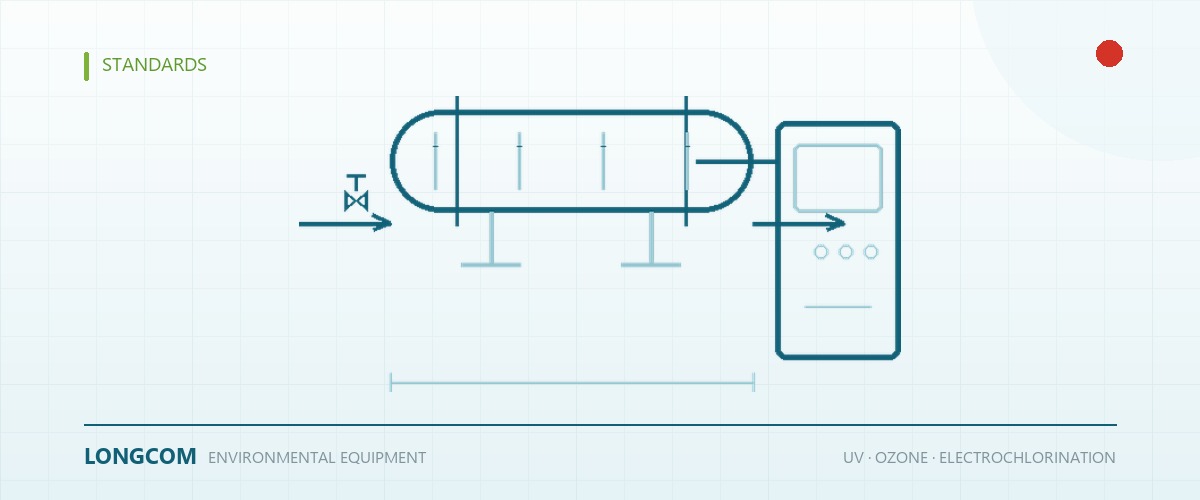
Either internal (submerged) or external irradiation may be used. With internal irradiation, the UV source should be fitted with a quartz glass protective sleeve. Whichever method is used, the water layer should be less than 2 cm thick, and the flow rate is determined by the intensity of the UV source. After disinfection, the water must meet the relevant national standard.
4. Precautions
- Keep the surface of the UV lamp clean during use. Wipe it with alcohol gauze every Monday and Thursday, and wipe it at any time if dust or oil is found on the tube.
- When disinfecting object surfaces, make sure the surface receives direct UV irradiation and an adequate dose.
- Calibrate the UV intensity meter at least once a year. The service life of a UV disinfection lamp should be not less than 1,000 hours.
- Never allow the UV source to shine on people, in order to avoid injury.
Contact Longkang for selection support in applying UV disinfection to your water, air or surface treatment requirements.