

Quartz Sleeve Material Selection
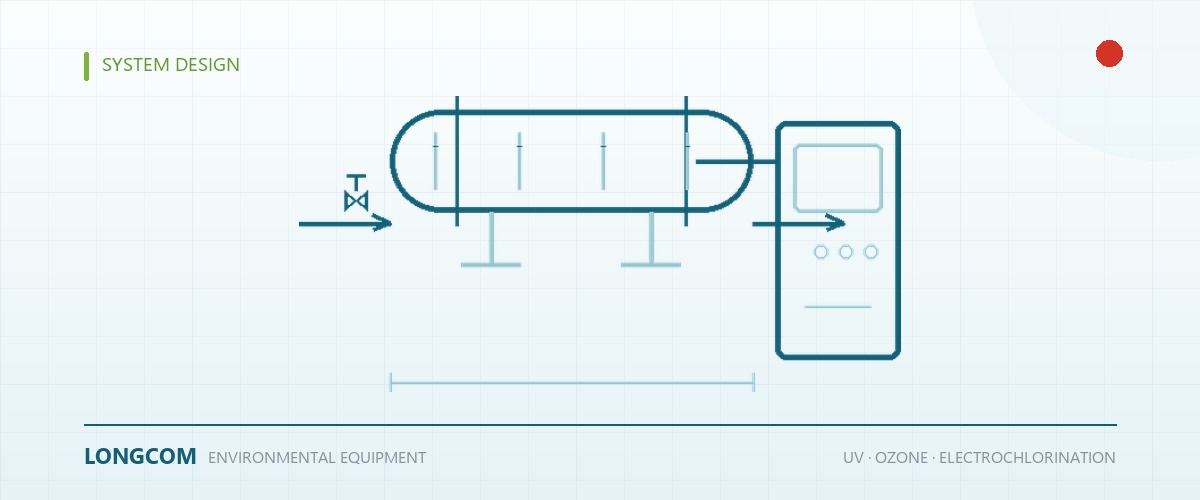
The quartz sleeve is an important part of a UV sterilizer. It protects the UV lamp while allowing UV light to pass through. The material and quality of the sleeve directly affect UV transmittance and disinfection performance. Longkang uses high-purity quartz sleeves to ensure effective disinfection. This article explains how to select quartz sleeve material.
1. The role of the quartz sleeve
- Protect the lamp: isolate the lamp from water so that contact with water cannot damage it
- Transmit UV light: allow 253.7 nm UV to pass efficiently and irradiate the water
- Pressure sealing: withstand water pressure and prevent leakage
- Electrical insulation: insulate electrically to prevent current leakage
2. Quartz glass versus ordinary glass
| Property | Quartz glass | Ordinary glass (borosilicate) |
|---|---|---|
| UV transmittance at 254 nm | At least 90 percent | No more than 30 percent |
| Silica content | At least 99 percent | 70–80 percent |
| Softening point | 1,700 degrees Celsius | 800 degrees Celsius |
| Thermal expansion coefficient | 5.5 × 10^-7 per degree Celsius | 30 × 10^-7 per degree Celsius |
| Thermal shock resistance | 1,100 degrees Celsius | 150 degrees Celsius |
| Corrosion resistance | Excellent | Good |
| Price | High | Low |
Key difference: ordinary glass has very low transmittance at 254 nm (no more than 30 percent), so most UV is absorbed and disinfection performance is greatly reduced. A quartz glass sleeve must be used.
3. Types of quartz sleeve material
1. Transparent quartz glass (JGS1)
- Silica content at least 99.99 percent
- UV transmittance at least 90 percent at 254 nm
- Hydroxyl content below 1 ppm
- Suitable for UV disinfection
- Longkang standard configuration
2. Ozone-filtering quartz glass (JGS2)
- Silica content at least 99 percent
- Transmits 254 nm and blocks 185 nm, the ozone-generating wavelength
- UV transmittance at least 85 percent
- Suitable where ozone is not wanted
- Recommended for drinking water disinfection
3. Standard quartz glass (JGS3)
- Silica content at least 99.5 percent
- UV transmittance at least 80 percent
- Lower price
- Suitable for less demanding applications
4. Quartz sleeve technical parameters
| Parameter | Specification |
|---|---|
| Material | High-purity quartz glass (JGS1 or JGS2) |
| Silica content | At least 99 percent |
| UV transmittance at 254 nm | At least 90 percent |
| Outer diameter tolerance | ±0.5 mm |
| Wall thickness tolerance | ±0.3 mm |
| Wall thickness | 1.5–2.5 mm |
| Length tolerance | ±1 mm |
| Temperature resistance | 1,100 degrees Celsius, instantaneous |
| Pressure resistance | At least 1.0 MPa |
| Surface roughness | Ra no more than 0.8 µm |
| End-face perpendicularity | No more than 0.1 mm |
5. Quartz sleeve specifications
| Applicable lamp power | Outer diameter | Inner diameter | Wall thickness | Length |
|---|---|---|---|---|
| 14 W | 23 mm | 20 mm | 1.5 mm | 350 mm |
| 28 W | 23 mm | 20 mm | 1.5 mm | 570 mm |
| 40 W | 25 mm | 22 mm | 1.5 mm | 860 mm |
| 80 W | 28 mm | 25 mm | 1.5 mm | 1,520 mm |
| 120 W | 28 mm | 25 mm | 1.5 mm | 1,520 mm |
| 160 W | 30 mm | 27 mm | 1.5 mm | 1,520 mm |
| 320 W | 33 mm | 30 mm | 1.5 mm | 1,520 mm |
6. Quartz sleeve sealing
1. Sealing method
- O-ring seal: fluoroelastomer or silicone rubber O-ring
- Seal seat: stainless steel
- Compression nut: stainless steel
2. Sealing materials
- Fluoroelastomer (FKM): resistant to 200 degrees Celsius, ageing resistant, recommended
- Silicone rubber (VMQ): resistant to 250 degrees Celsius, ageing resistant
- EPDM: resistant to 120 degrees Celsius, low cost
3. Sealing requirements
- No leakage in a 1.0 MPa water pressure test
- No leakage during long-term operation
- The sealing ring can be reused when the lamp is replaced
7. Quartz sleeve cleaning
1. Why cleaning is needed
- Calcium, magnesium and iron ions in water form scale on the sleeve surface
- Scale lowers UV transmittance
- Lower transmittance leads to an insufficient disinfection dose
- Regular cleaning maintains transmittance
2. Cleaning interval
- Good water quality, such as tap water: clean every three to six months
- Poor water quality, such as groundwater or hard water: clean every one to two months
- High iron content: clean once a month
3. Cleaning methods
- Manual cleaning: remove the sleeve and wipe it with citric acid or a dedicated cleaner
- Mechanical cleaning: fit an electric cleaning brush for automatic cleaning
- Chemical cleaning: clean by adding chemicals online
4. Longkang configuration
- Standard: manual cleaning, supplied with a cleaning brush
- Optional: automatic cleaning device with an electric brush and timer control
8. Quartz sleeve replacement
1. When to replace
- Broken sleeve: replace immediately
- Transmittance drop: replace if it is still below 80 percent after cleaning
- Ageing: replace after three to five years of use
- Seal failure: replace the sleeve and sealing ring if an aged ring leaks
2. Replacement procedure
- Cut the power and stop the water flow
- Remove the lamp
- Unscrew the seal seat
- Take out the old sleeve
- Install the new sleeve
- Replace the sealing ring
- Refit the lamp and seal seat
- Pass water and carry out a pressure test
9. Selection considerations
- Use quartz glass: ordinary glass cannot be used because UV cannot pass through it
- Choose high-purity quartz: JGS1 or JGS2, with transmittance of at least 90 percent
- Sufficient wall thickness: at least 1.5 mm for pressure and impact resistance
- Reliable sealing: a fluoroelastomer O-ring that does not leak
- Plan for cleaning: choose an automatic cleaning device for poor water quality
- Keep spares: sleeves are fragile, so keep one or two spares on hand
10. Longkang quartz sleeve commitment
- Use high-purity quartz glass of the JGS2 ozone-filtering type
- UV transmittance of at least 90 percent
- Uniform wall thickness and reliable pressure resistance
- Supplied with fluoroelastomer sealing rings
- Long-term supply of original manufacturer sleeves
- Optional automatic cleaning device
For quartz sleeve selection and specification support, contact Longkang.