

Longkang UV Sterilizer Selection Guide
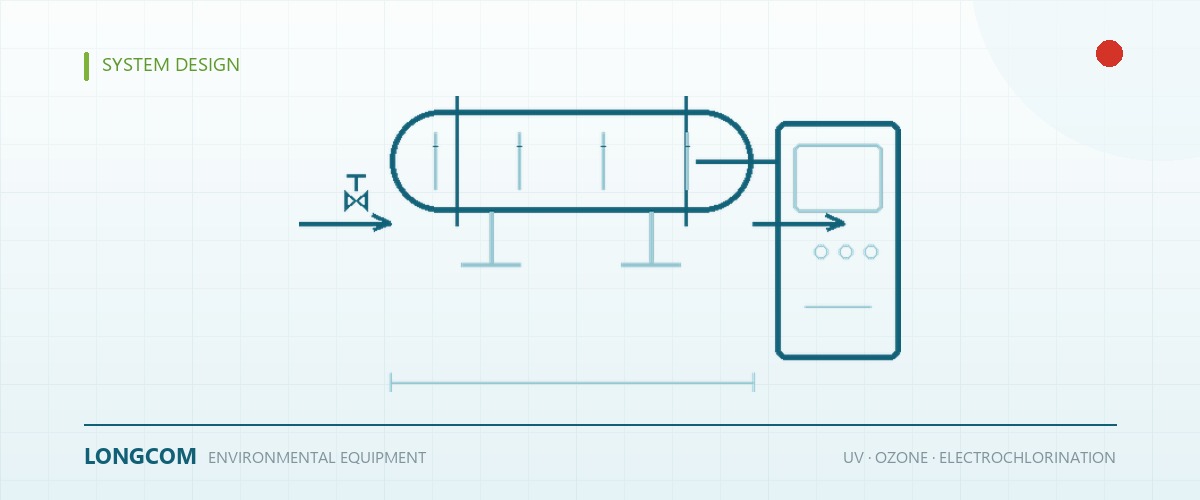
A UV sterilizer, also called a UV water disinfectant unit or UV water disinfection equipment, uses ultraviolet light at 253.7 nm emitted by UV lamps to irradiate water, destroy the DNA or RNA structure of microorganisms such as bacteria and viruses, deprive them of the ability to reproduce, and achieve disinfection. The Longkang UV sterilizer for drinking water uses a high-quality stainless steel chamber and imported UV lamps, offering high germicidal efficiency, low operating cost and no secondary pollution, which makes it an ideal choice for drinking water disinfection. Drawing on engineering practice, this article systematically explains how to select a UV sterilizer.
1. What is a UV sterilizer
A UV sterilizer mainly consists of the following parts:
- Stainless steel chamber: 304 or 316L stainless steel, forming the water flow channel
- UV lamps: low-pressure or medium-pressure mercury lamps emitting 253.7 nm UV light
- Quartz sleeves: high-purity quartz glass that protects the lamps while transmitting UV light
- Electronic ballast: supplies stable power to the lamps
- UV intensity monitor: monitors UV output in real time
- Control system: operation indication, fault alarm and timing functions
- Inlet and outlet: flange or threaded connections
Working principle: water to be disinfected enters the chamber through the inlet and flows through the area irradiated by the UV lamps. Microorganisms in the water are exposed to 253.7 nm UV light, their DNA/RNA structure is destroyed and they lose the ability to reproduce. Disinfection is complete when the water leaves through the outlet.
2. Core factors to consider in selection
2.1 Treatment capacity
- Treatment capacity is the primary parameter in selection
- Units: m³/h or L/min
- Common specifications: 0.5, 1, 2, 3, 5, 10, 20, 30, 50, 100 m³/h
- Select on the basis of the system’s maximum hourly water consumption, not the daily average
2.2 UV dose
- Dose = UV intensity × exposure time
- Unit: mJ/cm²
- Drinking water requirement: ≥40 mJ/cm² (GB 5749)
- Special requirements: direct drinking water ≥60 mJ/cm²; swimming pool water ≥80 mJ/cm²
- Dose determines germicidal performance; insufficient dose means incomplete disinfection
2.3 Water quality conditions
- Turbidity: ≤5 NTU (high turbidity impairs UV penetration)
- Colour: ≤15 degrees
- Iron content: ≤0.3 mg/L (iron deposits on the quartz sleeves)
- Poor water quality calls for pre-treatment or a higher dose
2.4 Installation position
- Indoor plant room: the standard model is sufficient
- Outdoor: a rainproof and sunproof enclosure is required
- Secondary water supply: install at the pump outlet or the tank inlet
- Direct drinking water: install at the end of the purification system
3. Longkang UV sterilizer model selection table
| Model | Capacity | Lamp power | Number of lamps | Inlet/outlet size | Typical application |
|---|---|---|---|---|---|
| LK-UV-0.5 | 0.5 m³/h | 14 W | 1 | DN20 | Household use, small direct drinking water systems |
| LK-UV-1 | 1 m³/h | 28 W | 1 | DN25 | Small commercial use, villas |
| LK-UV-2 | 2 m³/h | 40 W | 1 | DN32 | Small hotels, office buildings |
| LK-UV-5 | 5 m³/h | 80 W | 2 | DN40 | Medium-sized hotels, schools |
| LK-UV-10 | 10 m³/h | 160 W | 4 | DN50 | Residential communities, hospitals |
| LK-UV-20 | 20 m³/h | 320 W | 8 | DN65 | Large communities, factories |
| LK-UV-50 | 50 m³/h | 800 W | 20 | DN100 | Large water supply stations |
| LK-UV-100 | 100 m³/h | 1600 W | 40 | DN150 | Municipal supply, waterworks |
4. Selection procedure
4.1 Step 1: determine treatment capacity
- Calculate the system’s maximum hourly water consumption
- Secondary supply: use the design instantaneous flow or maximum hourly consumption
- Direct drinking water: use the peak consumption period
- Allow a 10% to 20% margin
4.2 Step 2: determine the UV dose
- Drinking water: 40 mJ/cm²
- Direct drinking water: 60 mJ/cm²
- For special requirements, follow the design documents
- Increase the dose when water quality is poor
4.3 Step 3: choose the lamp type
- Low flow (≤10 m³/h): low-pressure UV lamps
- High flow (>10 m³/h): multiple low-pressure lamps or medium-pressure lamps
- Complex water quality: medium-pressure UV lamps
4.4 Step 4: determine the chamber material
- Ordinary tap water: 304 stainless steel
- Water with high chloride content (seawater, groundwater): 316L stainless steel
- Food-grade requirement: food-grade 304 stainless steel
4.5 Step 5: confirm connections and electrical specifications
- Connections: flange or thread, matched to the pipe diameter
- Voltage: 220 V / 380 V
- Control: manual / automatic / remote
4.6 Step 6: confirm accessory configuration
- UV intensity monitor (recommended)
- Elapsed lamp running time counter
- Fault alarm
- Cleaning device (optional)
5. Common selection mistakes
- Sizing by daily average flow: use the maximum hourly flow instead, otherwise the dose will be insufficient at peak times
- Focusing only on power, not dose: higher power does not mean an adequate dose; chamber design and flow rate also matter
- Ignoring water quality: high turbidity and high iron content reduce disinfection performance
- No reserve margin: lamp output declines with age, so reserve about 20%
- Focusing only on price, not configuration: imported and domestic lamps differ by a factor of two in service life
6. Longkang selection service
Longkang provides professional selection guidance:
- Technical engineers recommend models based on flow and water quality
- A UV dose calculation report is provided
- A complete configuration list and quotation are provided
- Free site surveys for large projects
- A selection proposal within three working days
For selection support and project-specific advice on UV sterilizers, contact Longkang.