

UV Sterilizer Hydrostatic and Airtightness Testing
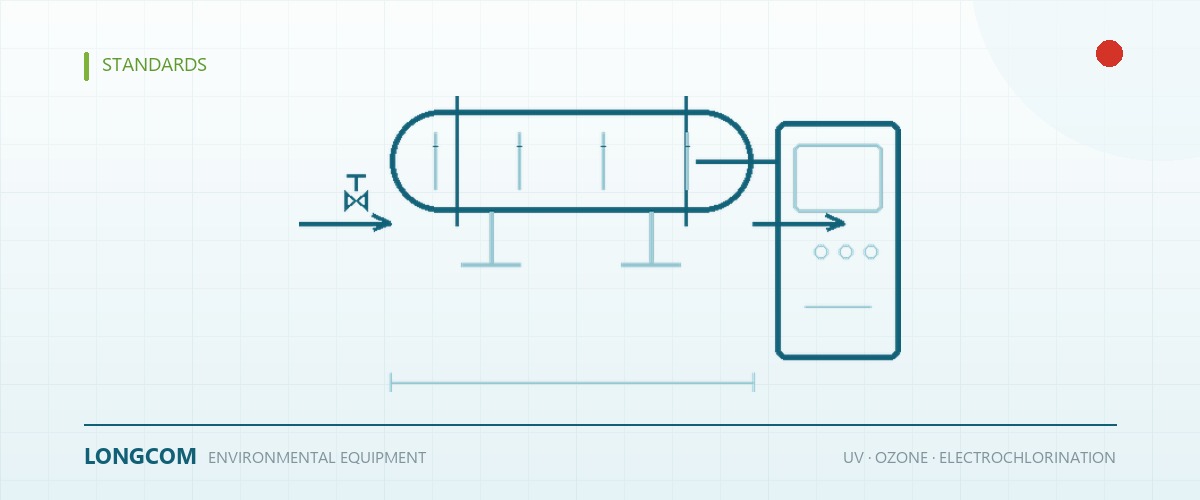
Hydrostatic and airtightness testing is a critical factory inspection item for UV sterilizers, confirming reliable pressure-bearing and sealing performance and preventing leakage during operation. Every Longkang UV sterilizer undergoes strict hydrostatic testing before it leaves the factory. This article explains the hydrostatic and airtightness testing process in detail.
1. Why testing matters
1.1 Why hydrostatic testing is required
- UV sterilizers operate under pressure (supply pressure 0.2–0.6 MPa)
- Chamber welds, lamp holder seals and flange seals may develop leaks
- Hydrostatic testing verifies pressure-bearing and sealing performance
- It prevents leakage during operation that could cause electrical short circuits or water accumulation in the pump room
1.2 Why airtightness testing is required
- Pneumatic testing is more sensitive and can detect tiny leaks
- It is a dry test that does not wet the equipment
- It serves as a supplement to hydrostatic testing
- In some cases a pneumatic test is used instead of a water test
1.3 Testing standards
- GB 150 — Pressure Vessels
- GB/T 19837 — UV Disinfection Equipment for Urban Water Supply and Drainage
- Test pressure: 1.5 times the rated working pressure
- Holding time: 10–30 minutes
- No leakage and no deformation means a pass
2. Hydrostatic test equipment
2.1 Test pump
- Electric or manual test pump
- Pressure range: 0–6 MPa
- Adjustable pressure
- Good pressure stability
2.2 Pressure gauge
- Accuracy: class 1.6 or better
- Range: 1.5–2 times the test pressure
- Calibrated and within its validity period
- Clear dial
2.3 Test fixtures
- Blinding plates: seal the inlet and outlet
- Water inlet connector: connects to the test pump
- Air vent valve: releases air
- Hose: connects the test pump to the equipment
2.4 Other items
- Water tank: supplies test water
- Thermometer: measures water temperature
- Record sheet: records test data
- Flashlight: checks for leakage
3. Hydrostatic test parameters
3.1 Test pressure
- Rated working pressure: 1.0 MPa (standard model)
- Test pressure: 1.5 times rated pressure = 1.5 MPa
- Custom high-pressure model: calculated as 1.5 times rated pressure
- Test pressure must not exceed the chamber design pressure
3.2 Holding time
- Standard: 10 minutes (GB/T 19837)
- Longkang: 30 minutes (more stringent)
- A pressure drop of no more than 1 percent during holding means a pass
3.3 Test medium
- Clean water
- Water temperature: 5–50 °C
- Water quality: clean and non-corrosive
- Drain and dry after testing
3.4 Ambient temperature
- 5–40 °C
- Avoid low temperatures (water may freeze)
- Avoid direct sunlight
4. Hydrostatic test procedure
4.1 Pre-test preparation
- Inspect the equipment: chamber welding complete and all connections installed
- Seal the inlet and outlet: blind all openings (leaving one water inlet and one air vent)
- Connect the test pump: attach the inlet to the test pump
- Check the pressure gauge: confirm it is intact and its calibration is valid
- Check the equipment appearance: no obvious defects
4.2 Filling and venting
- Open the air vent valve
- Start the test pump and fill slowly
- Water flows out of the vent valve, confirming air has been fully expelled from the chamber
- Close the air vent valve
- Continue filling and begin increasing pressure
4.3 Pressure increase
- Increase pressure slowly in stages:
- Stage 1: raise to 0.5 MPa, hold for 2 minutes, inspect
- Stage 2: raise to 1.0 MPa, hold for 2 minutes, inspect
- Stage 3: raise to 1.5 MPa (test pressure)
- Pressure increase rate: ≤0.2 MPa/min
- Check for abnormalities during pressure increase
4.4 Holding inspection
- After reaching test pressure, stop the test pump
- Hold for 30 minutes
- Record pressure every 5 minutes
- Check all welds and sealing surfaces:
- Shell longitudinal seam
- Circumferential seam
- Flange weld
- Lamp holder seal
- Drain outlet seal
- Air vent seal
- Inspect carefully with a flashlight
- No leakage, no deformation and no pressure drop means a pass
4.5 Depressurization and draining
- After holding, slowly release pressure
- Open the air vent valve
- Open the drain valve and empty the chamber
- Blow dry the interior with compressed air
- Remove the test fixtures
4.6 Records
- Equipment number
- Test pressure
- Holding time
- Pressure change
- Inspection result
- Test operator’s signature
- Date
- Archived
5. Airtightness testing (optional)
5.1 Principle of airtightness testing
- Fill the chamber with compressed air
- Hold pressure and observe pressure changes
- Alternatively, apply soapy water and check for bubbles
- Pneumatic testing is more sensitive and can detect tiny leaks
5.2 Airtightness test parameters
- Test pressure: 1.0 times rated pressure (or 0.6 MPa)
- Holding time: 10 minutes
- Pressure drop: ≤1 percent means a pass
- Medium: clean compressed air
5.3 Airtightness test procedure
- Seal all openings
- Fill with compressed air to the test pressure
- Hold for 10 minutes
- Observe pressure changes
- Or apply soapy water to welds and sealing surfaces and watch for bubbles
- No leakage means a pass
- Release pressure
5.4 Airtightness test precautions
- Pneumatic testing is hazardous and requires protection
- Operators stand to the side, not directly in front of the equipment
- Pressure must not exceed the design pressure
- Ensure good ventilation
6. Common leak locations and treatment
6.1 Weld seam leakage
- Location: shell longitudinal seam, circumferential seam, flange fillet weld
- Cause: welding defects (porosity, slag inclusion, incomplete penetration)
- Treatment:
- Mark the leak location
- Grind out the defect
- Repair weld
- Polish
- Retest pressure
6.2 Lamp holder leakage
- Location: lamp holder-to-chamber weld and seal seat
- Cause: welding defects, O-ring not seated correctly, or damaged O-ring
- Treatment:
- Weld leakage: repair weld
- Seal leakage: reinstall or replace the O-ring
- Retest pressure
6.3 Flange leakage
- Location: inlet and outlet flanges
- Cause: uneven flange sealing face, damaged gasket, or bolts not tightened
- Treatment:
- Inspect the sealing face
- Replace the gasket
- Tighten bolts evenly
- Retest pressure
6.4 Drain and vent leakage
- Location: drain valve and air vent valve
- Cause: poor valve sealing or threaded leaks
- Treatment:
- Replace the valve
- Apply sealant tape to threads
- Retest pressure
7. Testing precautions
- Safety first: stand to the side during testing, not directly in front of the equipment
- Increase pressure slowly: rate ≤0.2 MPa/min to avoid shock
- Expel all air: compressible air affects holding stability
- Suitable water temperature: 5–50 °C, avoiding freezing or high heat
- Gauge calibration: the pressure gauge must be calibrated and within its validity period
- Dry after testing: drain and blow dry the interior to prevent corrosion
- Complete records: archive the test record of every unit for traceability
8. Longkang hydrostatic testing commitment
- Every UV sterilizer undergoes hydrostatic testing before it leaves the factory
- Test pressure is 1.5 times rated pressure (1.5 MPa)
- Pressure is held for 30 minutes (above the 10-minute national standard)
- No leakage and no deformation means a pass
- The test record of every unit is archived
- Test operators are certified
- Pressure gauges are calibrated regularly
- Failed units are retested after repair
- Every unit is ensured to have reliable pressure-bearing and sealing performance