

Techniques to Extend UV Lamp Service Life
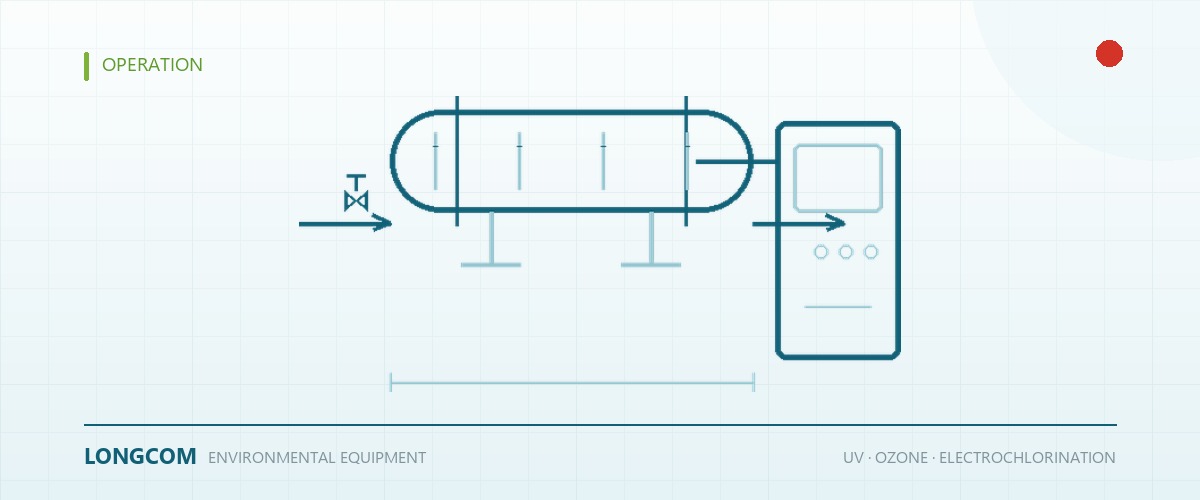
UV lamps are the main consumable component of a UV sterilizer. Extending lamp service life reduces operating costs and cuts the maintenance workload. Longkang provides professional guidance on extending lamp life. This article explains the various techniques for extending UV lamp service life in detail.
1. Factors Affecting Lamp Life
1.1 Definition of lamp life
- Lamp life is the operating time until UV output decays to 70% of its initial value
- Low-pressure lamps: 8,000–12,000 hours
- Medium-pressure lamps: 6,000–8,000 hours
- It is not the time until the lamp extinguishes completely
1.2 Factors that affect lamp life
- Number of switching cycles: frequent on/off switching shortens life
- Operating temperature: excessively high or low temperatures affect life
- Power quality: voltage fluctuations affect life
- Ballast matching: poor matching affects life
- Water quality: scaling on the quartz sleeve causes the lamp to overheat
- Ventilation: poor heat dissipation affects life
2. Reducing the Number of Switching Cycles
2.1 Why frequent switching shortens lamp life
- When a lamp starts, its electrodes are bombarded by ions
- Each start wears the electrodes once
- Frequent starting accelerates electrode wear
- The effect is smaller for low-pressure lamps and larger for medium-pressure lamps
- Each on/off cycle of a medium-pressure lamp reduces life by about 1 hour
2.2 Methods to reduce switching
- Continuous operation: 24-hour running without frequent switching
- Interlocked control: interlock with the water pump so the lamp is lit while the pump runs
- Delayed shut-off: after the pump stops, the lamp switches off after a 5–10 minute delay
- Avoid repeated on/off switching within a short period
2.3 Reasonable operating modes
- Continuous supply systems: 24-hour operation
- Intermittent supply systems: interlock with the pump to reduce idle running
- Low night-time flow: keep the lamp running (do not switch it off)
- Switch off only for maintenance
3. Controlling Operating Temperature
3.1 Ideal lamp operating temperatures
- Low-pressure lamp wall temperature: 40–60 °C
- Medium-pressure lamp wall temperature: 600–900 °C (the lamp itself); water temperature 5–45 °C
- Both excessively high and excessively low temperatures affect life
3.2 Water temperature control
- Inlet water temperature: 5–45 °C
- Excessively high temperature: poor lamp heat dissipation, shortened life
- Excessively low temperature: difficult lamp starting, low output
- High-temperature water (>45 °C) must be cooled before disinfection
3.3 Ambient temperature
- Control cabinet ambient temperature: 5–40 °C
- Ballast operating temperature: −10–50 °C
- Excessively high temperature: ballast overheating, shortened life
- Ventilation and heat dissipation: keep the control cabinet well ventilated
3.4 Avoiding low-flow operation
- When flow is too low, the water carries away less heat
- Lamp heating raises the water temperature
- The lamp overheats and its life is shortened
- The minimum flow should not be lower than 20% of the rated flow
4. Stabilizing the Supply Voltage
4.1 Effect of voltage on lamp life
- Excessively high voltage: lamp over-power, accelerated electrode wear, shortened life
- Excessively low voltage: insufficient lamp power, difficult starting, electrode wear
- Voltage fluctuations: repeated surges affect life
- Ideal voltage: 220 V ±5%
4.2 Methods to stabilize voltage
- Check the supply line: adequate conductor size to reduce voltage drop
- Install a voltage stabilizer when voltage fluctuates significantly
- Avoid sharing the line with high-power equipment
- Measure the voltage regularly
4.3 Avoiding voltage surges
- Avoid closing the switch under load (inrush current)
- The ballast has a soft-start function
- Start multi-lamp equipment in stages (to reduce simultaneous starting surges)
5. Selecting a Matched Ballast
5.1 Importance of ballast matching
- The ballast and the lamp must be matched (power, current, voltage)
- Mismatch causes the lamp to operate under abnormal conditions
- Over-power: shortened life
- Under-power: low output, difficult starting
- A well-matched ballast extends lamp life
5.2 Advantages of electronic ballasts
- High-frequency operation: high lamp efficiency, low electrode wear
- High power factor: ≥0.95
- Soft start: reduces starting surges
- Constant-power output: power stays stable during voltage fluctuations
- Comprehensive protection: over-current, over-voltage, over-temperature
- Longkang supplies high-efficiency electronic ballasts as standard
5.3 Regular ballast inspection
- An aging ballast produces unstable output
- This affects lamp life
- Check ballast output regularly
- Replace faulty units promptly
6. Keeping the Quartz Sleeve Clean
6.1 Effect of sleeve scaling on the lamp
- Scaling on the sleeve blocks UV transmission
- UV is absorbed by the sleeve and converted into heat
- The sleeve and lamp temperatures rise
- The lamp overheats and its life is shortened
- Disinfection performance drops at the same time
6.2 Regular sleeve cleaning
- Clean periodically according to water quality (every 1–6 months)
- Maintain sleeve UV transmittance at ≥85%
- Reduce heat accumulation
- Extend lamp life
6.3 Automatic cleaning devices
- Fit an automatic cleaning device
- Automatic cleaning every day
- Keeps the sleeve clean
- Reduces manual maintenance
7. Water Quality Pretreatment
7.1 Effect of water quality on the lamp
- High-turbidity water: suspended solids adhere to the sleeve, causing rapid scaling
- High-hardness water: calcium and magnesium scaling
- High-iron water: iron scaling (severe)
- Highly corrosive water: corrodes the chamber and the sleeve
- Rapid scaling leads to frequent sleeve cleaning and more lamp removals (affecting life)
7.2 Pretreatment measures
- High turbidity: filtration (sand filtration, fine filtration)
- High hardness: softening
- High iron: iron removal (manganese sand filtration)
- High corrosivity: adjust pH, add corrosion inhibitor
- Install a Y-type strainer before the equipment
7.3 Reducing scaling
- Pretreatment reduces scale-forming substances
- The sleeve scales more slowly
- Cleaning intervals become longer
- Fewer lamp removals
- Extended lamp life
8. Correct Installation and Maintenance
8.1 Correct installation
- Install the lamp centered, without contacting the sleeve wall
- Ensure good lamp-head contact, with no looseness
- Ensure good ventilation and normal heat dissipation
- Support the piping independently so it does not load the equipment
- Avoid vibration
8.2 Correct replacement
- Wear gloves to prevent fingerprint contamination
- Handle gently to avoid impact
- Insert the lamp head firmly for good contact
- Do not touch the lamp glass with bare hands
- Fingerprints burn in at high temperature, affecting transmittance and heat dissipation
8.3 Regular maintenance
- Check lamp operating status regularly
- Measure UV intensity regularly
- Clean the sleeve regularly
- Check electrical connections regularly
- Address abnormalities promptly
9. Replacing Lamps at the Right Time
9.1 Do not replace too early
- Lamp life is defined as decay to 70%
- Above 70% the lamp can still be used normally
- Replacing too early increases costs
- Replace based on operating time or UV intensity
9.2 Do not replace too late
- Beyond its service life, UV output continues to decline
- The disinfection dose becomes insufficient
- The lamp may fail suddenly
- Replace promptly once the service life is reached
9.3 Replace all lamps together
- Replace all lamps in multi-lamp equipment
- Ensures uniform UV intensity
- Avoid mixing old and new lamps (uneven intensity)
- Keep records after replacement
10. Summary of Lamp Life Extension Techniques
| Technique | Method | Effect on lamp life |
|---|---|---|
| Reduce switching | Continuous operation, interlocked control | +10%–20% |
| Control temperature | Water 5–45 °C, ambient 5–40 °C | +10%–15% |
| Stabilize voltage | Voltage stabilizer, line checks | +5%–10% |
| Match the ballast | High-efficiency electronic ballast | +10%–15% |
| Clean the sleeve | Regular cleaning, automatic cleaning | +10%–20% |
| Pretreat water quality | Filtration, softening, iron removal | +5%–10% |
| Correct installation | Centered, good contact, heat dissipation | +5%–10% |
| Correct maintenance | Regular checks, prompt action | +5%–10% |
Applying these techniques together can extend lamp service life by 30%–50%.
11. Longkang Services
- Lamp life optimization solutions
- High-efficiency electronic ballasts
- Automatic cleaning devices
- Water quality pretreatment solutions
- Installation guidance
- Maintenance training
- Genuine original lamp supply
- Regular maintenance service
- Lifetime technical support